















Budapest Autumn Guide: The Ultimate Guide to Visiting Budapest in Autumn
Budapest in autumn has a way of making the city feel completely different. The intense heat of summer begins to fade, the trees turn shades of yellow and red, and the streets become more comfortable for long walks. Cafés bring out their seasonal menus, wine bars start pouring more Hungarian reds and whites, and the parks become some of the best places in the city to spend an afternoon.

Photo by @norbertlepsik
September can still feel almost like summer, with warm days and plenty of sunshine, while October brings the classic autumn colours that make Budapest so photogenic. By November, the city becomes cooler and quieter, with shorter days and more reasons to step inside a thermal bath, museum, café or cosy restaurant. This makes autumn one of the best seasons to visit Budapest if you want to experience more than the city’s main sights. You can walk along the Danube without the summer heat, hike through the Buda Hills beneath changing leaves, sit outside for brunch when the weather allows, take a river cruise at golden hour, explore Hungarian wine, and spend an afternoon in one of Budapest’s historic thermal baths.
There is also plenty happening across the city during the season. September brings wine festivals and the beginning of the autumn cultural calendar, October has national commemorations and a packed programme of arts and food events, while November slowly introduces the atmosphere of the coming Christmas season. If you are wondering when to visit Budapest in autumn, what the weather is like, what to pack, which parks are worth seeing, where to find the best autumn views, and what to do when the weather turns cold or rainy, this guide covers it all.
Why Visit Budapest in Autumn?
Autumn is arguably one of the easiest seasons in which to enjoy Budapest. Summer can bring hot days and large numbers of visitors, while winter comes with much shorter daylight hours and colder weather. Autumn sits comfortably between the two. September is usually the warmest part of the season. You can still have sunny afternoons that feel like summer, while mornings and evenings are more comfortable for walking and sitting outside.
October is often the sweet spot for visitors who want proper autumn scenery, comfortable walking temperatures and colourful parks. By November, temperatures drop and rainy, grey days become more common, but the city also starts preparing for Christmas. The changing weather is actually part of the appeal. One day might be perfect for hiking in the Buda Hills, while another calls for a long lunch, a museum visit and a few hours in a thermal bath.

Photo by @norbertlepsik
Autumn also changes the pace of Budapest’s tourist areas. The busiest summer period is over, making it easier to enjoy places such as Buda Castle, the Fisherman’s Bastion and the Danube without quite as much pressure from summer crowds. And then there is the light. Lower autumn sunshine can give Budapest’s historic buildings, bridges and riverfront a particularly beautiful appearance, especially in the morning and late afternoon.
What Is the Weather Like in Budapest in Autumn?
The biggest thing to remember about autumn in Budapest is that September, October and November can feel like three different seasons.
September in Budapest
September is usually the safest choice if you want warm weather without the peak of summer. Days can still be quite warm, while evenings are more comfortable for walking and sitting outside. This is an excellent month for outdoor sightseeing. You can spend the morning exploring the city centre, have lunch on a terrace, walk along the Danube in the afternoon and finish the day with a rooftop drink. Bring layers rather than a heavy coat. A light jacket or cardigan is useful in the evening, especially later in the month.
October in Budapest
October is classic autumn. Temperatures are generally cooler, the trees become increasingly colourful, and the city feels particularly inviting for walking. This is the month to head into the parks and hills. City Park, Margaret Island, Gellért Hill and the Buda Hills all take on a completely different appearance as the leaves change. Rain is possible, so a compact umbrella and waterproof shoes are useful additions to your luggage.
November in Budapest
November is noticeably colder and darker. You can still have beautiful sunny days, but you should expect more rain, wind and chilly evenings. The advantage is that November is excellent for Budapest’s indoor attractions. This is the time to visit museums, libraries, historic cafés and thermal baths, then settle down for Hungarian food and wine somewhere warm. By the second half of the month, the city also starts moving towards the Christmas season, so you may begin to see festive decorations and seasonal events appearing around central Budapest.

Photo by @norbertlepsik
See Budapest’s Autumn Colours in the Buda Hills
If you want to see Budapest at its most colourful, leave the city centre behind for a few hours and head into the Buda Hills. Normafa is one of the city’s favourite places for an autumn walk. The area sits around 479 metres above sea level and offers forest trails, open areas and panoramic views towards Budapest and the surrounding hills. It has been a popular destination for walkers for generations, and autumn is one of the best times to explore it. There are several routes around Normafa, so you can make your walk as short or as long as you like. A popular option is to continue towards János Hill and the Elizabeth Lookout (Erzsébet-kilátó), where you can look across Budapest from one of the city’s highest points.
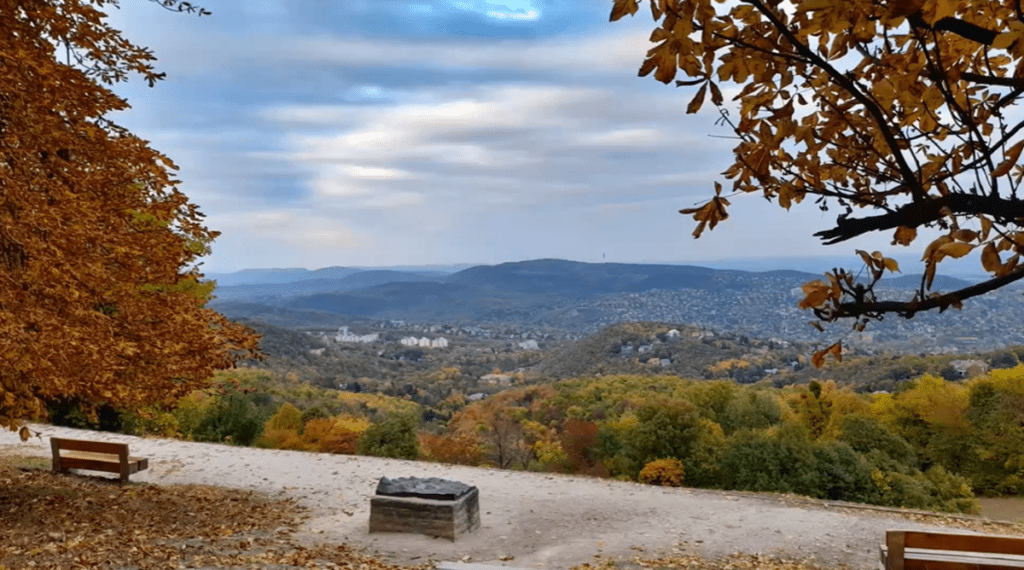
The changing leaves are the main attraction in October. Beech, oak and other trees cover large sections of the hills, creating a much more rural setting than you might expect to find inside Budapest. For a longer day outdoors, combine Normafa with the Children’s Railway or the chairlift. You can turn a simple hike into a full afternoon exploring the hills. The area is also easy to reach by public transport, which is one reason it remains such a popular local escape. Normafa is accessible by bus from Széll Kálmán tér, while the Children’s Railway provides another route through the Buda Hills. If the forecast promises clear weather, this should be high on your autumn Budapest list.
Walk Through City Park in Autumn
City Park (Városliget) is one of the easiest places to enjoy autumn without leaving the central part of Budapest. The park covers a huge area behind Heroes’ Square and combines wide paths, mature trees, open lawns, a lake and several major attractions. It is home to Vajdahunyad Castle, the Budapest Zoo, the Széchenyi Thermal Bath and several museums, so you can easily combine a walk with another activity.
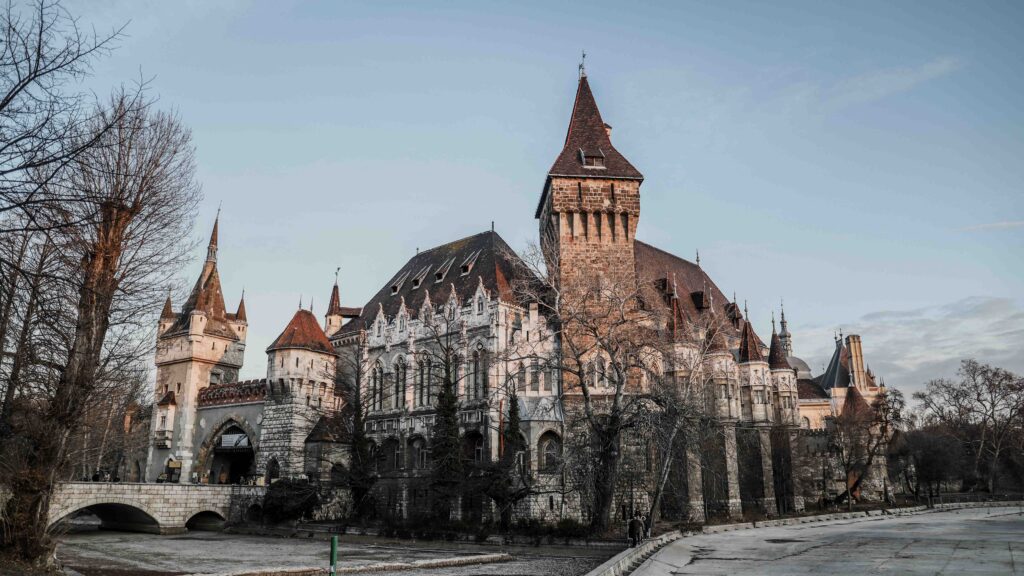
Photo by @norbertlepsik
Autumn is particularly good here because the trees around Vajdahunyad Castle create beautiful views across the water. Take your time around the castle complex, then continue towards Heroes’ Square or the Széchenyi Bath. The park was originally created as part of the Millennium celebrations of 1896 and has remained one of Budapest’s major recreational areas. Today, locals use it for running, walking, cycling and simply spending time outdoors. On a sunny October afternoon, there is little need for a complicated plan. Grab a coffee, walk through the park and see where the paths take you.
Take an Autumn Walk on Margaret Island
Margaret Island (Margit-sziget) sits in the middle of the Danube between Margaret Bridge and Árpád Bridge and is one of Budapest’s favourite recreational areas. Autumn is an especially pleasant time to explore it because the summer heat has disappeared and the trees begin changing colour. The island has broad walking paths, large lawns, gardens, historic ruins and plenty of places to stop for a break.

Photo by @norbertlepsik
The 5.3-kilometre running track follows the edge of the island, but you do not need to be a runner to enjoy it. You can simply wander through the quieter paths, visit the Japanese Garden, see the ruins of the medieval Dominican convent, or walk towards the Water Tower. On a warmer September or early October day, bring some food and have a picnic on the grass. Later in autumn, the island becomes better suited to a crisp afternoon walk, especially when the leaves are at their most colourful. It is also a great place for photographers. The combination of old trees, the Danube, gardens and distant city views gives you plenty of variety without needing to travel far.
Walk Through Gellért Hill
Gellért Hill offers one of the best combinations of nature and city views in Budapest. The climb is not particularly long, but it is steep in places, so allow yourself enough time rather than treating it as a quick stop between attractions. In autumn, the paths are surrounded by changing foliage, while the higher sections open up to views across the Danube.
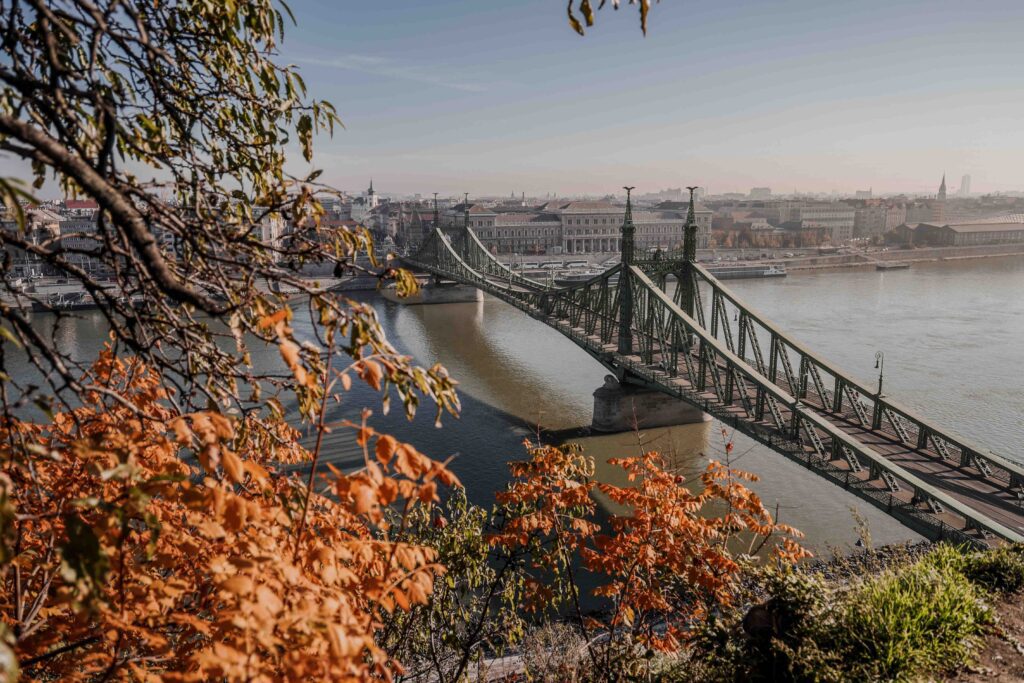
Photo by @norbertlepsik
From the viewpoints, you can see Parliament, Buda Castle, the bridges, the Pest skyline and the river cutting through the middle of the city. Late afternoon is particularly rewarding. As the sun drops lower, the warm light catches the buildings and bridges while the trees around the hill become increasingly colourful. Gellért Hill is also an easy place to combine with other parts of the city. Walk down towards the Danube, cross Liberty Bridge, explore the Great Market Hall, or continue towards the Buda side.
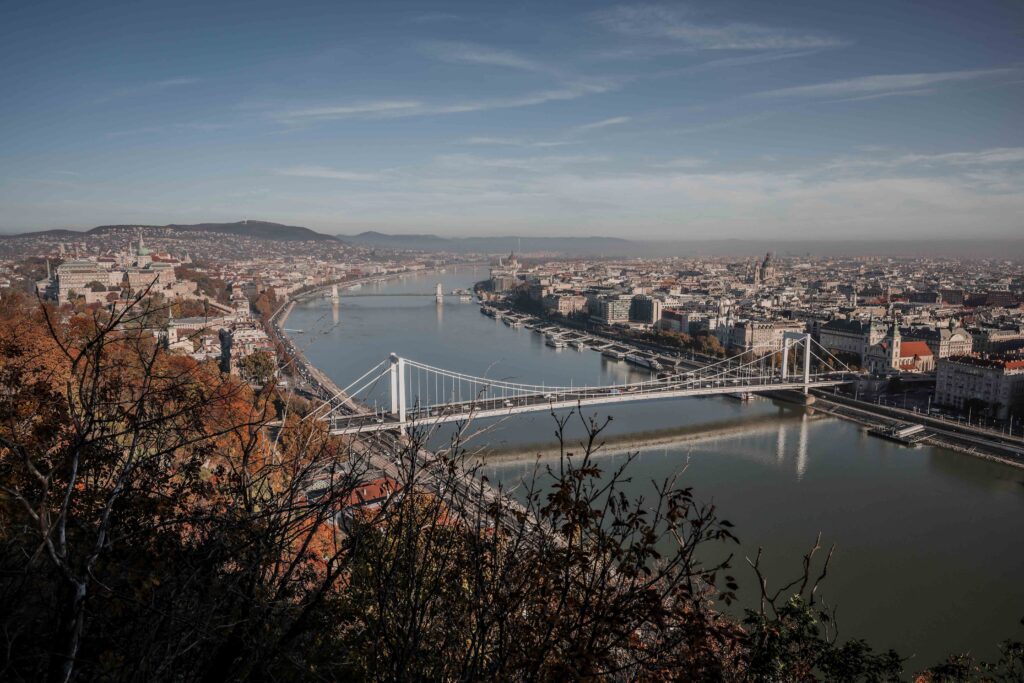
Photo by @norbertlepsik
Check out our blogpost about Gellért Hill here
Take a Walk Along the Danube
You do not need to head into the hills to enjoy autumn scenery. Some of the best walks are right in the centre. The Danube Promenade is ideal for a relaxed walk with constant views of Budapest’s architecture. On the Pest side, you have the Parliament, Buda Castle across the river and several of the city’s historic bridges. On the Buda side, the views towards Pest are just as impressive.
Autumn is particularly good for this because the cooler air makes longer walks much more comfortable than they can be in July or August. Go around sunset if the weather is clear. The lower sun can give the riverfront a warm glow, followed by the gradual illumination of the city after dark. And if your feet need a break, this is the perfect place to replace a walk with a Danube river cruise.

Photo by @norbertlepsik
See Budapest from the Danube on a River Cruise
A Danube river cruise works particularly well in autumn. The cooler weather means you can spend time outside on deck without dealing with summer heat, while the lower afternoon sun creates excellent conditions for seeing Budapest’s most famous landmarks from the river. From the water, the city looks completely different. Parliament rises directly beside the river, Buda Castle covers the hillside, and the historic bridges connect the two sides of Budapest.

Photo by @norbertlepsik
A late afternoon cruise is ideal in September and October because you may catch both daylight and the first city lights. Evening cruises offer a different experience, with Budapest illuminated against the dark water. Autumn is also a good season for a more relaxed cruise experience. Rather than rushing between viewpoints, you can sit back and see the major sights from one continuous panorama. For visitors who want to combine sightseeing with a memorable evening, a Danube cruise is one of the easiest additions to an autumn Budapest itinerary.
Reserve your tickets to our Danube River Cruises by clicking here!
Explore Budapest’s Thermal Baths
Autumn is when Budapest’s thermal baths really start to make sense. The city is famous for its thermal water and historic bathhouses, and cooler weather creates the perfect contrast between warm water and fresh air. Széchenyi Thermal Bath is the most famous option, with its large outdoor pools surrounded by the distinctive yellow Neo-Baroque building. It is located in City Park, making it easy to combine with an autumn walk.
Gellért Thermal Bath offers a more historic indoor setting, while Rudas Bath has a long Ottoman history and one of the city’s most distinctive thermal bathing environments. You can spend a few hours in the pools, take a sauna, book a massage or simply enjoy the architecture. It is also one of the best options for a rainy autumn afternoon. If you have never visited a Budapest thermal bath before, autumn is arguably the ideal time to start.
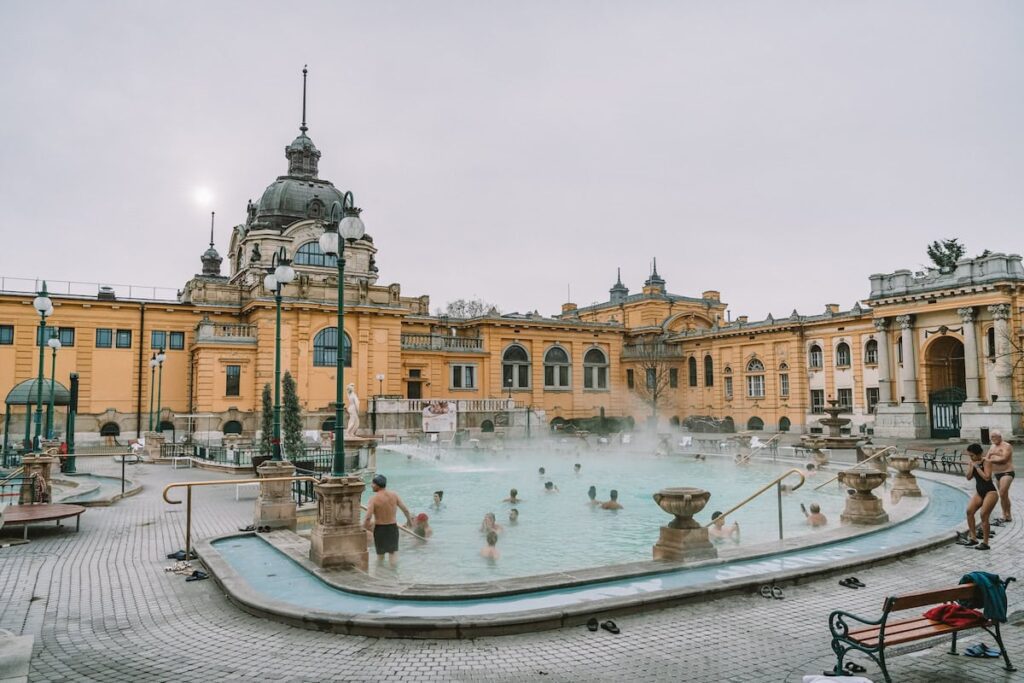 Photo by Live like it’s the weekend
Visit a Budapest Wine Festival
Autumn is harvest season, so it should come as no surprise that wine plays an important role in Budapest’s seasonal calendar. The Budapest Wine Festival is traditionally held at Buda Castle in September and brings together wines from Hungary’s major wine regions. The setting alone makes it worth considering: you can taste Hungarian wines while looking over the Danube and the Pest skyline.
Hungary has 22 wine regions, from Tokaj in the northeast to Villány in the south. A festival like this makes it possible to sample different styles in one place and discover varieties that you may not encounter outside Hungary. If you are new to Hungarian wine, look for Furmint, Olaszrizling, Kékfrankos, Kadarka, Egri Bikavér and, of course, Tokaji Aszú. Even outside the festival, autumn is an excellent season to visit Budapest wine bars and try Hungarian bottles from different regions.
 Photo by aborfesztival.hu
Try Hungarian Autumn Food
Autumn is a great season for eating in Budapest. Hungarian cuisine is particularly well suited to cooler weather, with hearty soups, stews, roasted meats, mushrooms, pumpkin dishes and seasonal desserts appearing on menus. Look for dishes using wild mushrooms, pumpkin, cabbage and game, depending on the restaurant and time of year. Hungarian classics such as goulash, chicken paprikash and beef stew are also particularly satisfying when temperatures drop.
Autumn is also a good time to explore Hungarian wine alongside local food. A glass of red from Eger or Szekszárd works beautifully with richer dishes, while Furmint and other Hungarian whites are a natural match for lighter meals. And then there are Budapest’s bakeries and cafés. When an afternoon becomes too chilly for sightseeing, finding a good pastry and coffee is hardly a difficult decision.
Have Brunch on a Budapest Terrace
September can still be warm enough for alfresco brunch, while the first half of October often offers beautiful afternoons for sitting outside. This is one of the easiest ways to enjoy the changing season. Instead of rushing through breakfast before sightseeing, find a good café or brunch restaurant, order something substantial and take your time. Central neighbourhoods such as District V, District VI and District VII have plenty of cafés and restaurants, while Buda offers quieter options away from the busiest tourist streets. As the weather becomes colder, many terraces add blankets and outdoor heaters, but do not count on outdoor seating throughout November. Have an indoor option in mind.
 LuLu Bottomless Brunch – find your tickets here
Explore Budapest’s Markets
Autumn brings plenty of seasonal produce to Budapest’s markets. The Great Market Hall (Nagycsarnok) is the obvious starting point, particularly if you want to see Hungarian ingredients and traditional products under one roof. But smaller neighbourhood markets can be even more interesting if you want to see where locals shop.
Look for pumpkins, apples, pears, grapes, peppers, mushrooms and other autumn produce. You will also find Hungarian cheeses, cured meats, pickles, honey and paprika products. Markets are useful for more than buying souvenirs. They give you a much better understanding of the ingredients that appear in Hungarian cooking. If you are staying in an apartment, buying some local products and preparing a simple meal can also be a fun way to spend a rainy afternoon.
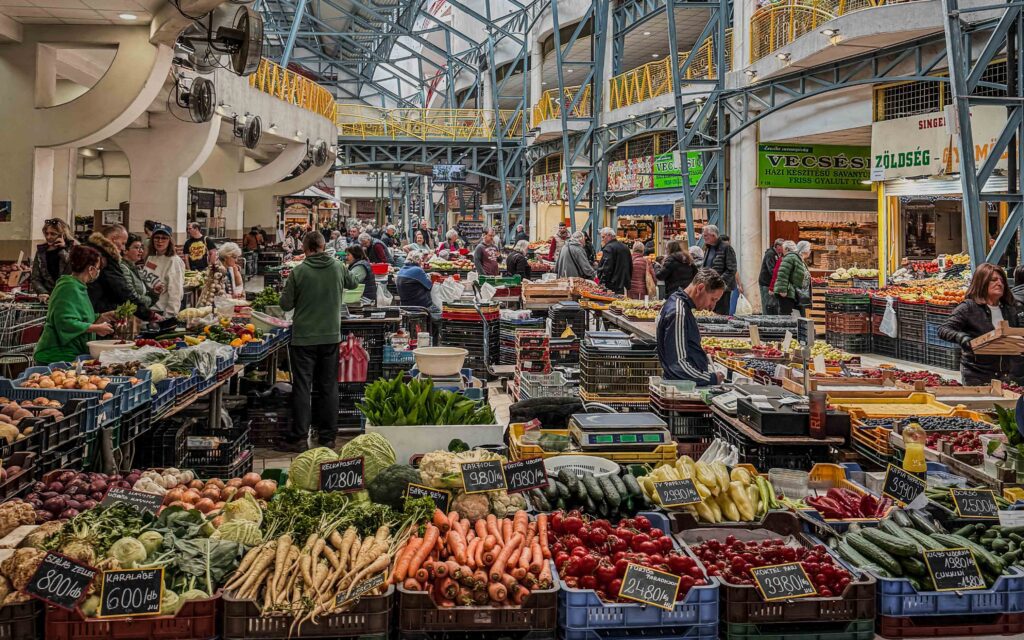
Photo by @norbertlepsik
Explore the Roman Beach at Római-part
Római-part, or Roman Beach, is one of Budapest’s most relaxed riverside areas. Located in northern Buda, the riverside promenade has a completely different character from the central Danube waterfront. You will find trees, cycling paths, casual restaurants and food spots along the river. Autumn is a particularly good time to visit. The crowds are smaller than during summer, the trees start changing colour, and the Danube gives the area a calm backdrop. Grab something to eat, walk beside the river and watch the boats pass. It is an easy way to spend a few hours away from the main tourist areas without actually leaving Budapest.
Cycle Around Budapest
Autumn is one of the best seasons for cycling in Budapest. The temperatures are generally much more comfortable than in summer, and the city has an increasingly useful network of cycle lanes and routes. MOL Bubi, Budapest’s public bike-sharing system, makes it easy to explore without renting a bike for the entire day. You can pick up a bike, cycle through the city and return it at another station.
The Danube embankments are particularly enjoyable by bike, allowing you to combine several landmarks in one ride. You can also cycle towards Margaret Island, City Park or further along the Buda riverside. If you are visiting in September or October, cycling can be a great way to cover more ground while still spending most of the day outdoors.
Photograph Budapest in Autumn
For photographers, autumn gives Budapest an almost unfair amount of material. The city’s architecture already provides plenty of subjects, but autumn adds colour and texture to the familiar views.
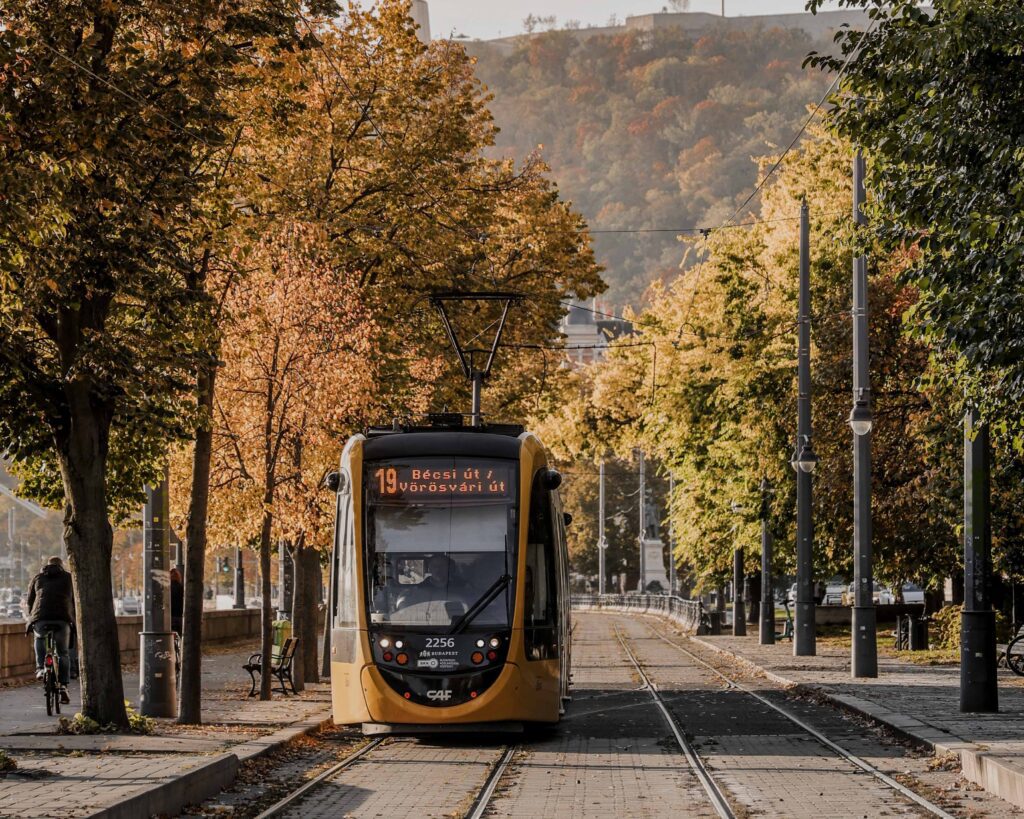
Photo by @norbertlepsik
Some of the best combinations include:
- Vajdahunyad Castle and City Park: The castle’s Gothic and Renaissance-inspired details look particularly good surrounded by autumn foliage.
- Buda Castle: Walk around the castle district and look for views where the colourful trees frame the historic buildings.
- Gellért Hill: Combine autumn vegetation with wide views of the Danube and Pest.
- Normafa: For a more natural setting, head into the Buda Hills and photograph the changing forest.
- Margaret Island: The large trees and quieter paths are ideal for autumn portraits and street photography.
- Danube at sunset: The lower autumn sun can produce beautiful light across the river and the Parliament.
If photography is one of your priorities, October is usually the safest month for finding strong autumn colours, although the exact timing changes every year depending on weather.
Take a Day Trip to Szentendre
If you have more than a few days in Budapest, autumn is an excellent time for a day trip to Szentendre. The small town on the Danube is known for its historic centre, colourful buildings, narrow streets, galleries, cafés and riverside setting. It feels very different from Budapest without requiring a long trip. An autumn afternoon here can easily be spent wandering through the old streets, stopping for coffee, visiting small museums and galleries, and walking down towards the Danube.
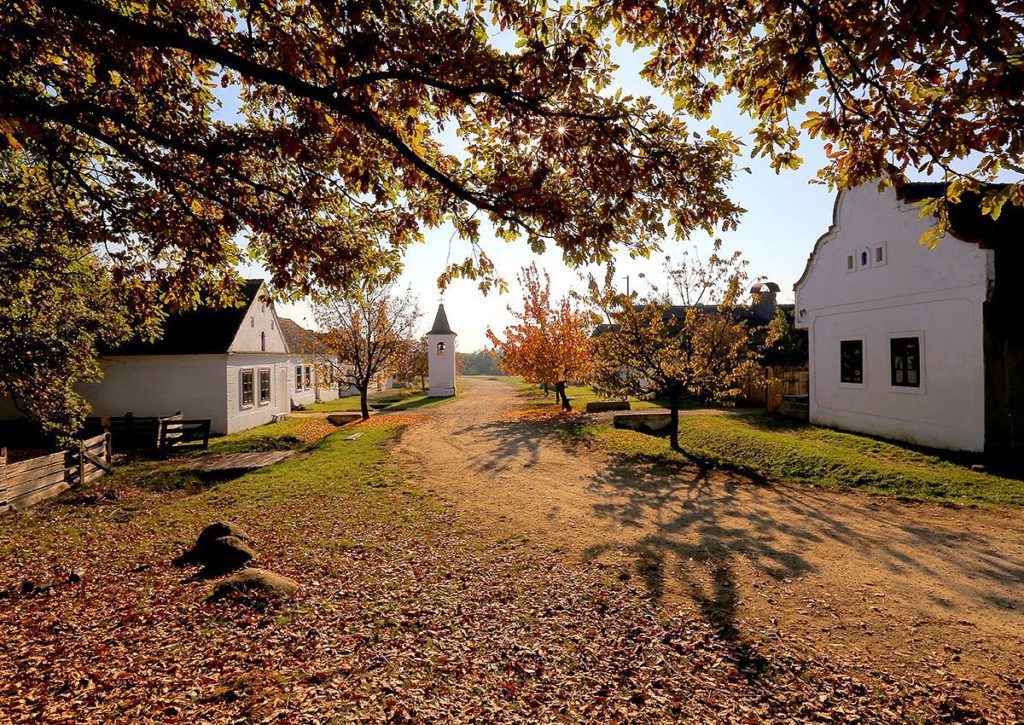
It is especially attractive in October when the surrounding landscape starts changing colour. You can return to Budapest by train or take a boat when seasonal services are operating, turning the day trip into a nice contrast between town, river and countryside.
Visit Budapest’s Museums on Rainy Days
Not every autumn day will be perfect for walking, and that is where Budapest’s museums come in. The Hungarian National Museum, Museum of Fine Arts, Hungarian National Gallery, House of Terror and Museum of Ethnography are just some of the places where you can spend several hours indoors. The city is particularly good for museum hopping because many major institutions are relatively close to public transport and each other.
You can also look beyond the biggest museums. Budapest has smaller galleries, photography exhibitions, design spaces and cultural institutions that are often more intimate and less crowded. Rain does not have to ruin your itinerary. It can simply change it.
 Looking for unique museums in Budapest? Check out our blogpost here – Photo by terrorhaza.hu
Spend an Afternoon in a Historic Café
Budapest has a long café tradition, and autumn is the perfect season to experience it. When the temperature drops, find a historic café, order coffee and cake, and give yourself an hour without a schedule. New York Café is the city’s most famous example, with an ornate interior that feels almost theatrical. Central Café (Centrál Kávéház) offers another connection to Budapest’s literary and café culture.
But you do not have to visit the most famous names. One of the pleasures of Budapest is finding smaller cafés where locals sit with coffee, laptops, newspapers or books. Try a slice of cake, a coffee or hot chocolate and simply watch the city outside.
Explore Budapest’s Architecture Without the Summer Heat
Autumn is one of the best seasons for an architecture-focused walk. Budapest’s historic centre is packed with buildings from the late 19th and early 20th centuries, particularly around the Inner City, Andrássy Avenue, District VI, District VII and the Palace District. Start around Parliament and walk towards St. Stephen’s Basilica. Continue along Andrássy Avenue towards Heroes’ Square, or explore the side streets around the Opera House.
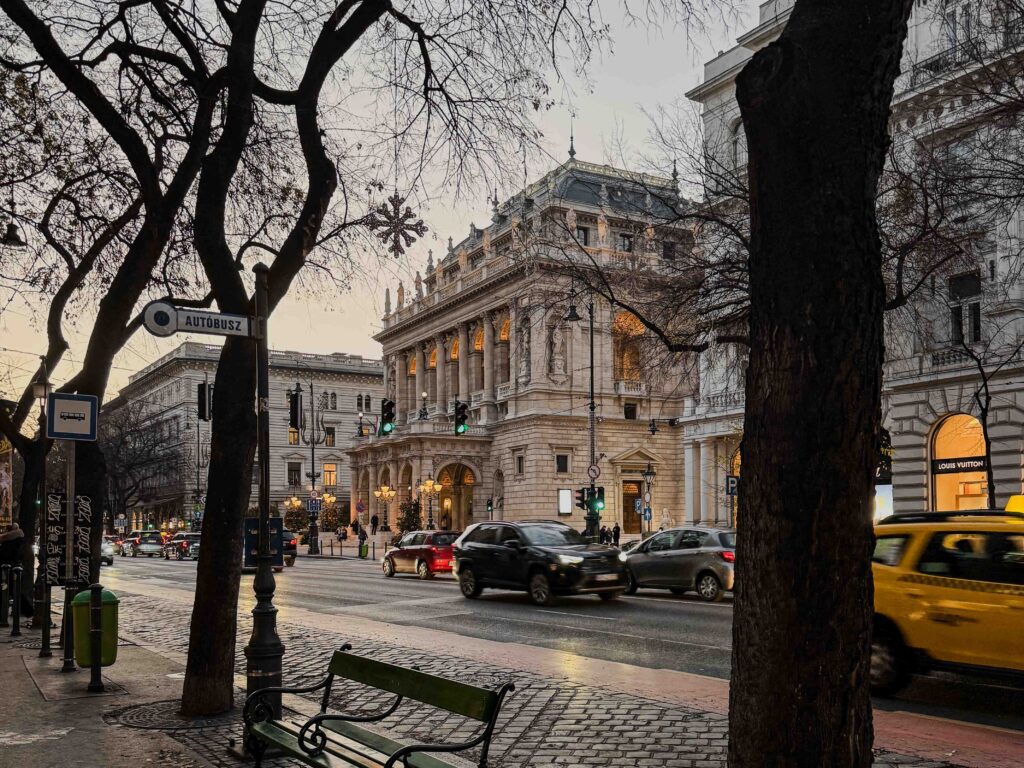
Photo by @norbertlepsik
In Buda, the Castle District offers a completely different architectural story, with medieval foundations, Baroque buildings and later reconstructions. The cooler weather makes it much easier to spend several hours looking up at façades, entering courtyards and stopping for photographs. This is also a good season for guided architecture walks, particularly if you want to understand how Budapest developed during its extraordinary period of growth in the late 19th century.
Experience October 23 in Budapest
October 23 is one of Hungary’s national holidays and commemorates the 1956 Hungarian Revolution and the beginning of the country’s 1989 political transition. The date is especially significant in Budapest because many of the events of 1956 took place directly in the capital. On October 23, you may encounter official ceremonies, commemorations, exhibitions and temporary programmes around locations connected to the revolution.
It is worth remembering that this is a public holiday, so opening hours for museums, shops and other attractions can change. If your visit overlaps with October 23, check individual opening times before planning your day. For anyone interested in Hungarian history, however, the date offers an opportunity to understand a particularly important chapter in the country’s modern past.
Discover Budapest’s Jewish Quarter in Autumn
The Jewish Quarter is one of the city’s most interesting neighbourhoods at any time of year, but autumn makes it especially enjoyable to explore on foot. The area around Kazinczy Street, Rumbach Street and Dohány Street combines historic synagogues, residential buildings, cafés, restaurants, bars, galleries and small shops. The neighbourhood also carries the visible history of Budapest’s Jewish community and the destruction and persecution experienced during the Second World War.

Photo by @norbertlepsik
Visit the Dohány Street Synagogue and Jewish Museum, explore the surrounding streets and take time to notice the details of the older buildings. By evening, the area changes character again, with restaurants and bars filling up. It is a good example of how Budapest’s historical layers and contemporary city life exist almost side by side.
Enjoy Budapest’s Rooftop Views
Autumn sunsets can be spectacular in Budapest, particularly when the air is clear. There are plenty of rooftop bars around the city offering views over the Parliament, Buda Castle, the Danube and the surrounding rooftops. September is particularly good for this because the weather can still be warm enough to sit outside comfortably.
October evenings can be cooler, but many rooftop venues have covered areas and heaters. For the best views, arrive before sunset rather than after dark. You will get to see the city in daylight, watch the colours change and then see Budapest light up as evening arrives.
 Interested in the best rooftop bars in Budapest? This guide will definitely help you! – Photo by @norbertlepsik
Go for a Danube Sunset
If you only have one evening with clear skies, consider spending it beside the Danube. Walk from the Parliament towards Chain Bridge, stop around the riverfront and watch the light change over Buda. Alternatively, cross the river and find a viewpoint on the Buda side. The combination of autumn light, the river and Budapest’s historic skyline is hard to beat.
A river cruise takes this one step further by putting you directly in the middle of the view. Sunset cruises are especially good in September and October, when the sun sets earlier than during summer but still leaves enough daylight for a scenic ride.
What to Do in Budapest When It Rains
Rain is part of autumn, so it is worth having a backup plan. Fortunately, Budapest is unusually good at rainy-day activities. Visit a thermal bath. Spend several hours inside the Hungarian National Gallery. Explore the Parliament if you have booked a tour. Visit the Great Market Hall. Spend an afternoon in a historic café. Try a wine tasting. Have a long Hungarian lunch. Explore the House of Music Hungary or another museum in City Park.
You can also simply embrace the weather. Budapest’s historic streets can look fantastic after rain, particularly when the pavement reflects the façades and streetlights. Take an umbrella, wear waterproof shoes and turn a short walk into a photography session. The important thing is not to build an autumn itinerary that depends entirely on sunshine.
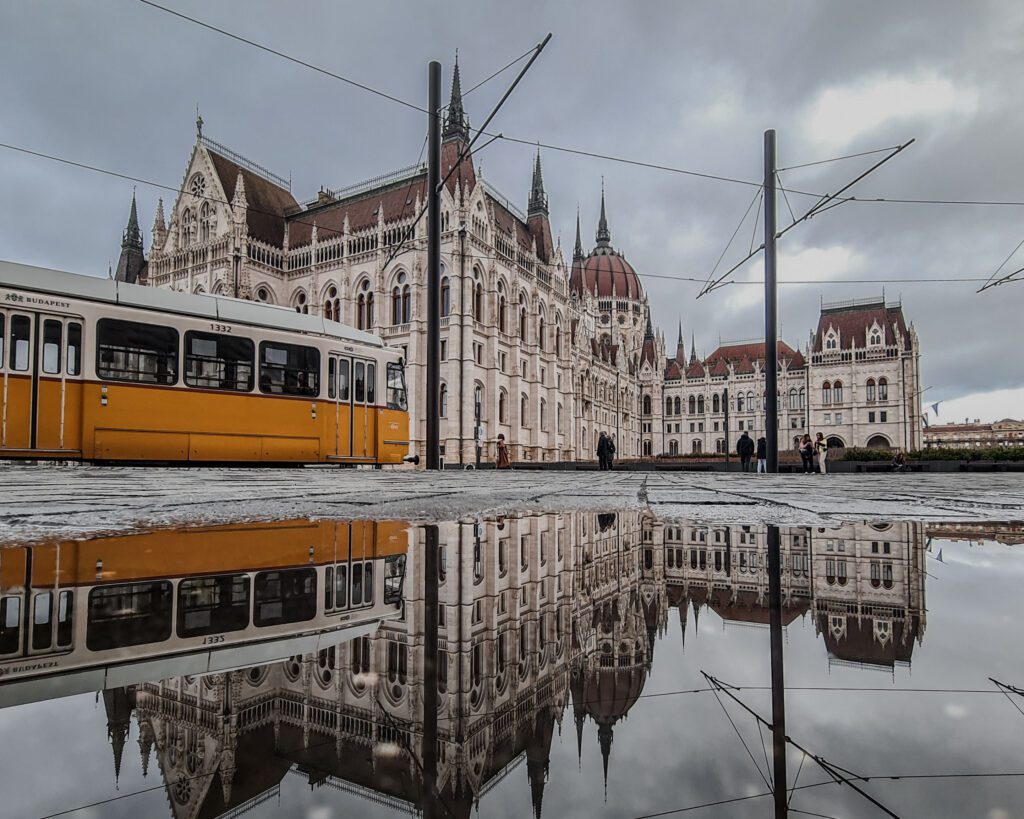
Photo by @norbertlepsik
Autumn Festivals and Events in Budapest
Autumn brings a strong cultural and gastronomic programme to Budapest. September is particularly associated with wine, with the Budapest Wine Festival at Buda Castle traditionally forming one of the major events of the month. Food festivals and seasonal gastronomic programmes also become more common as temperatures cool.
October brings a mixture of cultural programmes, contemporary art, film, food and sporting events. The Budapest Marathon is another major autumn event, while October 23 brings national commemorations throughout the city.
November is quieter, but the city begins preparing for Christmas. Depending on the year, festive markets and seasonal decorations can start appearing towards the middle or latter part of the month. The exact dates and programmes change every year, so always check official event pages before planning your visit around a specific festival.
Where to Stay in Budapest in Autumn
Your ideal neighbourhood depends on the type of autumn trip you want.
- District V is excellent for first-time visitors who want to be close to Parliament, the Danube, St. Stephen’s Basilica and the main Pest sights.
- District VI works well for visitors interested in architecture, cafés, the Opera House and Andrássy Avenue.
- District VII is ideal if restaurants, bars, nightlife and the Jewish Quarter are high on your list.
- District I and the Castle District offer a quieter atmosphere and some of Budapest’s best views, particularly at night.
- District XIII is a good option if you want to stay near the Danube while being slightly removed from the busiest tourist areas.
If your priority is greenery and outdoor activities, staying closer to Buda can make trips to Normafa and the hills easier.
What to Pack for Budapest in Autumn
Packing for Budapest in autumn is all about layers. For September, bring lighter clothes, a jacket for the evening and comfortable walking shoes. For October, add warmer layers and a waterproof jacket. You may experience warm afternoons followed by surprisingly cold evenings. For November, bring a proper coat, waterproof footwear, an umbrella, warm layers and something suitable for windy weather.
Regardless of the month, comfortable shoes are essential. Budapest is a walking city, and you will probably cover much more ground than you expect. If you plan to visit thermal baths, pack swimwear and flip-flops. And if photography is important to you, a small waterproof cover for your camera or bag can be useful on rainy days.
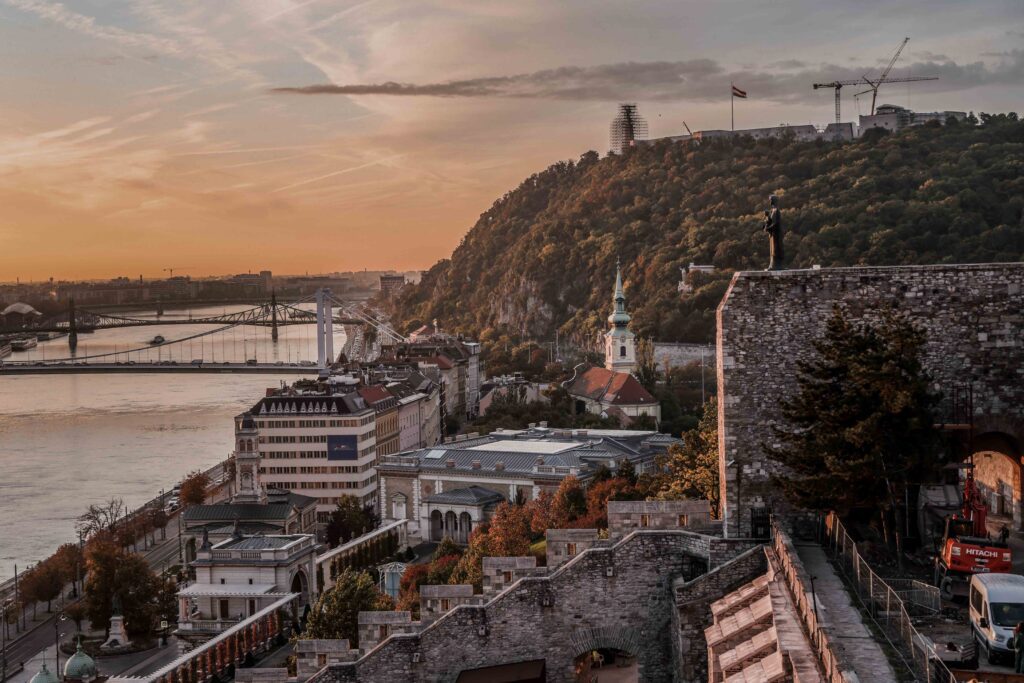
Photo by @norbertlepsik
How Many Days Do You Need in Budapest in Autumn?
Three days gives you enough time to see the major sights and experience some of Budapest’s autumn atmosphere. With 3 days, focus on the Parliament and Danube, Buda Castle, the city centre, one thermal bath, a few major neighbourhoods and at least one park. With 4 to 5 days, you can slow down and add Normafa, Margaret Island, a wine experience, museums and a longer Danube cruise. With a week, you can combine Budapest with a day trip to Szentendre, explore more of the Buda Hills, visit several thermal baths, take your time with museums and discover some of the city’s less touristy neighbourhoods. Autumn rewards a slower itinerary. You do not need to see everything in one day.
A Perfect Autumn Day in Budapest
Start with breakfast or brunch somewhere in the city centre. After coffee, walk towards the Danube and follow the riverfront while the city is still relatively quiet. Cross one of the historic bridges and explore the Buda side, or continue through Pest towards the Parliament.
Have a long Hungarian lunch and then head towards City Park. Walk around Vajdahunyad Castle, take photographs among the autumn trees and continue towards Heroes’ Square. In the late afternoon, make your way to a thermal bath. Spend a few hours in the warm water and let the colder air outside become someone else’s problem.
Then finish the day with a Hungarian wine tasting or dinner. If the sky is clear, take an evening Danube cruise. Budapest’s illuminated skyline from the river is one of those views that never really gets old.

Photo by @norbertlepsik
Budapest in September, October or November?
Choosing the right month depends on what you want from the trip.
- September is best if you want warmer weather, outdoor dining, long evenings and a mix of summer and autumn. It is also a strong month for wine events.
- October is the best choice for classic autumn scenery. The parks and Buda Hills become increasingly colourful, temperatures are comfortable for walking, and the city has a strong cultural calendar.
- November is better suited to travellers who enjoy museums, thermal baths, cafés, restaurants and a quieter atmosphere. The weather is less reliable, but the city begins moving towards its winter season.
If your priority is colourful foliage and outdoor photography, choose October. If you want warmth and longer days, choose September. If you prefer indoor culture, thermal baths and the beginning of the festive season, November has its own appeal.

Why Autumn Belongs in Budapest
Budapest is beautiful throughout the year, but autumn brings together many of the things that make the city particularly enjoyable. The weather is generally comfortable for walking, the parks turn colourful, the Buda Hills become a destination in their own right, Hungarian wine enters its seasonal spotlight, and the city’s restaurants and cafés become increasingly inviting as the temperature drops.
You can spend one day hiking through the forests of Normafa, another exploring museums and thermal baths, and another simply walking along the Danube with no particular destination. And perhaps that is the best way to experience Budapest in autumn. Do not try to fill every hour. Leave room for a long coffee, an unexpected viewpoint, a riverside walk or an afternoon spent watching the leaves change.
From the golden trees of City Park to the hills of Buda and the evening lights reflected on the Danube, autumn gives Budapest a completely different character. It is a season for walking, eating, drinking, exploring and taking your time, and the city is very good at all five.