














Hungarian Food Guide: A Culinary Journey Through Tradition & Flavor
Hungarian Cuisine: A Taste of History & Heritage
Hungarian cuisine is a true reflection of the country’s rich history, shaped by centuries of cultural influences. It blends Central European traditions with Ottoman, Austrian, and even Balkan elements, creating a unique gastronomic identity. While hearty and filling, Hungarian food is far from being one-dimensional. It balances bold spices, smoky flavors, and creamy textures, making it a delight for both adventurous eaters and those who love comforting, home-cooked meals.
One of the defining features of Hungarian cooking is paprika, a deep red spice made from dried peppers. First introduced from the New World in the 16th century, paprika quickly became the heart and soul of Hungarian dishes. Whether in mild, sweet, or spicy variations, it gives food its characteristic color and flavor. Other essential ingredients include garlic, onions, caraway seeds, sour cream, lard, and dill, all of which contribute to the depth of flavors in traditional dishes.
Hungary’s diverse culinary scene ranges from rustic countryside cooking to modern urban interpretations, where chefs breathe new life into classic recipes. Whether you’re exploring a small village tavern or a high-end Budapest bistro, you’ll find traditional dishes prepared with passion, keeping Hungary’s rich food heritage alive.
Must-Try Hungarian Dishes
🍲 Gulyás (Goulash) – The ultimate Hungarian dish, gulyás is a hearty beef soup infused with paprika and slow-cooked with onions, potatoes, and carrots. Unlike the thicker, stew-like versions found abroad, authentic Hungarian gulyás is more brothy yet incredibly rich in flavor. Traditionally, it’s cooked in a bogrács (cauldron) over an open fire, adding an extra layer of smokiness.

Photo – Kismező Étterem – Autentikus magyar étterem
🥩 Pörkölt & Paprikás – These two meat-based dishes are staples of Hungarian cuisine. Pörkölt is a slow-simmered meat stew, cooked with onions, paprika, and minimal liquid, creating a thick, flavorful sauce. Chicken paprikash (Paprikás Csirke), on the other hand, is a creamier version, enriched with sour cream for a velvety finish. Both are best enjoyed with nokedli (Hungarian dumplings).
🌶️ Halászlé (Fisherman’s Soup) – A fiery, paprika-heavy fish soup traditionally prepared along the Danube River and Lake Balaton. It’s made with freshwater fish such as carp or catfish and is often served with slices of fresh white bread to soak up the intense broth.
🥒 Lecsó – A Hungarian take on ratatouille, lecsó is a vibrant vegetable dish made with peppers, tomatoes, onions, and paprika. It can be served as a side dish, a vegetarian main course, or combined with sausages and eggs for a more filling meal.
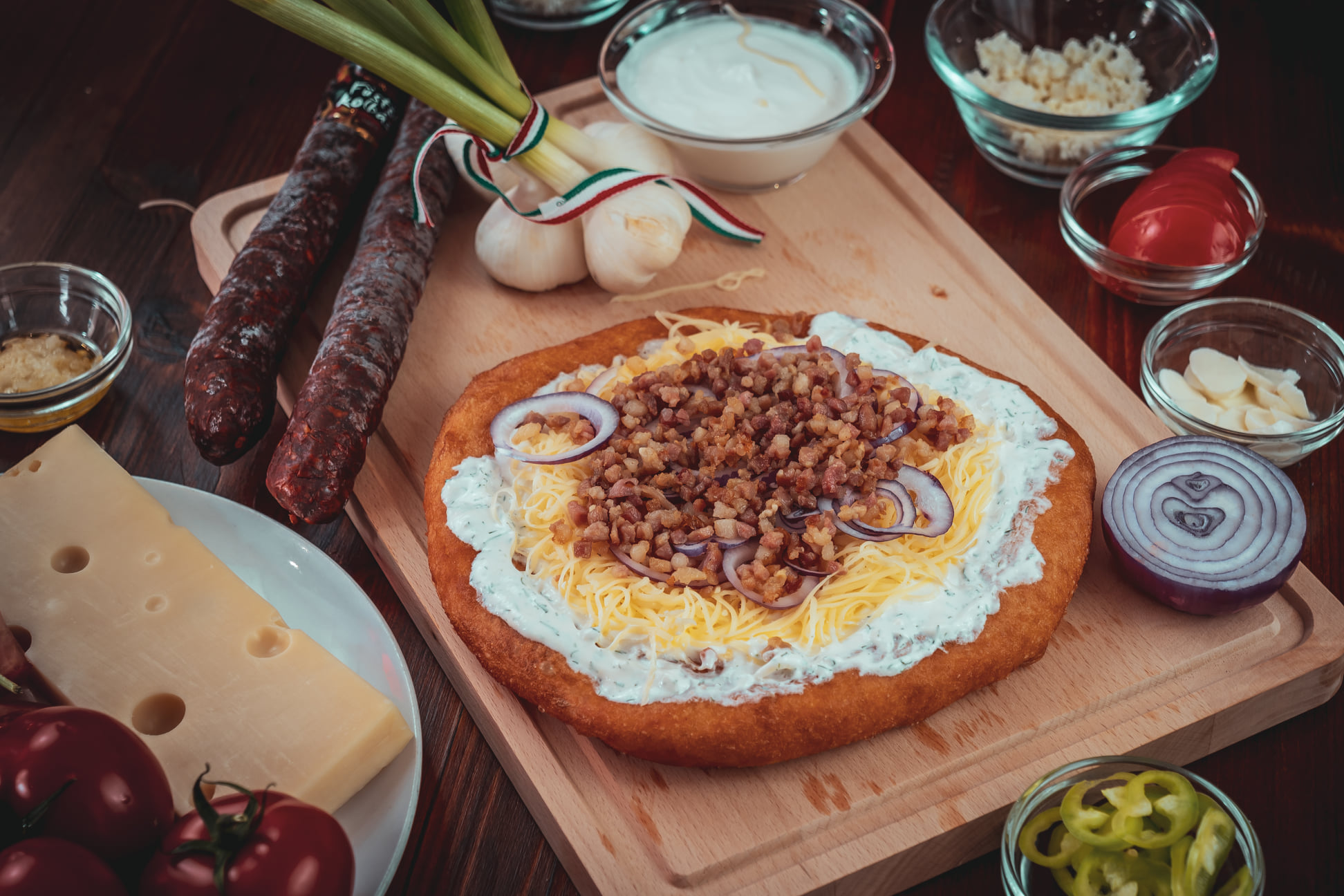
🥖 Lángos – One of Hungary’s most beloved street foods, lángos is a deep-fried dough traditionally topped with sour cream, garlic butter, and cheese. Today, many vendors offer creative toppings, from ham and mushrooms to sweet Nutella variations. It’s best enjoyed fresh, hot, and crispy from a food stall.
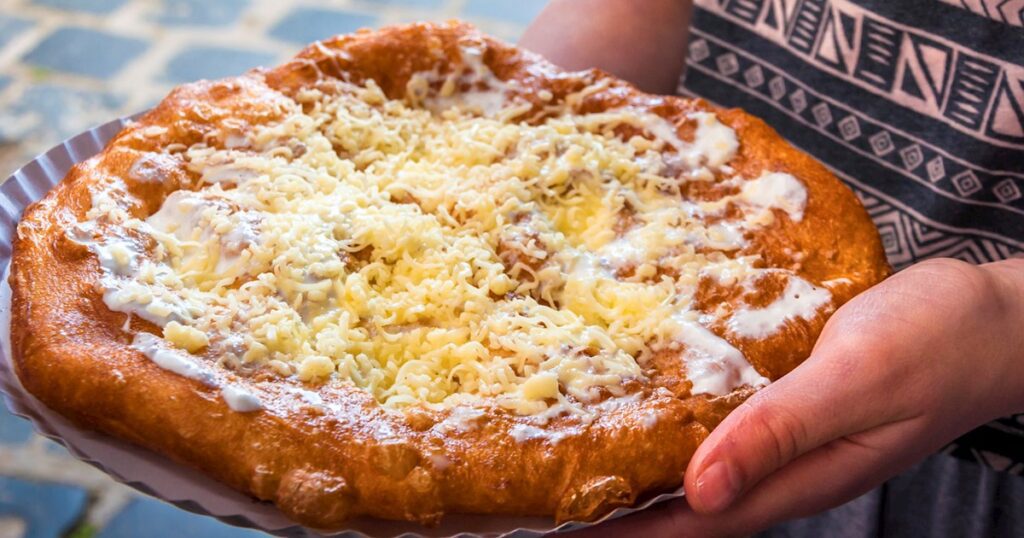
Photo – TasteAtlas
🌭 Kolbász & Hurka (Hungarian Sausages & Blood Sausages) – Hungarian sausages are famous for their smoky, paprika-rich flavors. Whether grilled, cured, or boiled, they’re often served with mustard, fresh bread, and pickled vegetables. Hurka, a type of blood or liver sausage, is also a local delicacy for those who love strong, earthy flavors.
🥞 Hortobágyi Palacsinta – This savory stuffed crepe is filled with minced meat, rolled up, and covered in a rich paprika sauce, making it a comforting and flavorful dish.
🍰 Dobos Torte – Hungary’s most famous dessert, this layered sponge cake is filled with chocolate buttercream and topped with a caramel glaze, giving it a beautiful golden crunch. It was created in the 19th century by the renowned confectioner József Dobos, and it remains a favorite among
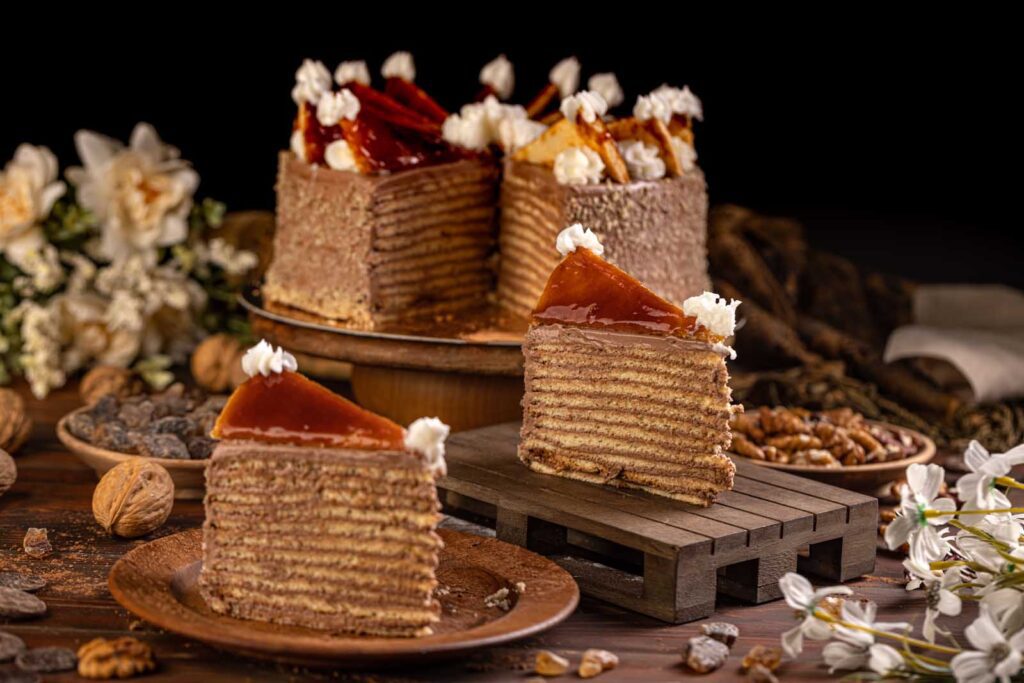
Photo – The Planet D
🌰 Chimney Cake (Kürtőskalács) – A sweet pastry originating from Transylvania, chimney cake is made by wrapping dough around a wooden cylinder, rolling it in sugar, and baking it over an open fire. The result? A crispy, caramelized exterior and a soft, fluffy inside. It’s commonly dusted with cinnamon, walnuts, or cocoa powder.

Photo – CNN
🍒 Rétes (Hungarian Strudel) – A flaky pastry filled with apple, cherry, poppy seed, or cottage cheese. Unlike its Austrian counterpart, Hungarian rétes tends to be thinner and crispier, making it a light yet indulgent treat.
🥚 Madártej (Hungarian Floating Island) – A delicate dessert consisting of vanilla custard topped with fluffy, poached egg whites, often dusted with caramel or cocoa powder.
Where to Taste These Hungarian Classics
From traditional taverns to street food markets and high-end restaurants, Budapest offers countless places to indulge in Hungarian cuisine. Here are some general recommendations on where to try different types of dishes:
📍 For Traditional Hungarian Home Cooking
Seek out classic Hungarian taverns (csárda-style restaurants) that serve authentic, hearty dishes in a cozy, rustic setting. These spots often follow time-honored recipes, preserving the flavors of Hungary’s culinary past.
📍 For Street Food Lovers
Markets, festivals, and dedicated food stalls are the best places to try lángos, chimney cakes, and grilled sausages. Some vendors also serve gulyás in bread bowls, making for an unforgettable experience.
📍 For a Modern Take on Hungarian Cuisine
Many Budapest restaurants blend tradition with innovation, offering contemporary interpretations of classic Hungarian dishes. Expect creative plating, fine-dining twists, and seasonal ingredients while still enjoying the familiar, comforting flavors of Hungary.
📍 For Dessert Enthusiasts
Hungary’s café culture is deeply rooted in history, and many historic confectioneries serve classic cakes, strudels, and pastries in an elegant setting. Visiting a traditional Hungarian café is a must for those who love sweets.
Whether you’re savoring a bowl of goulash by the Danube, biting into a crispy lángos at a market, or indulging in a rich slice of Dobos Torte at a historic café, Hungary’s culinary delights are waiting to be explored.
Hungarian cuisine is a reflection of the country’s history, landscape, and culinary traditions. From rich stews to sweet pastries, each dish carries a story of Hungary’s past while remaining a beloved part of everyday life. Whether you’re a foodie or just someone eager to explore a new culture through its flavors, Hungary’s bold, warming, and unforgettable dishes will leave a lasting impression.
Which Hungarian dish are you most excited to try? Let us know in the comments! 😊🍽️