












Vajdahunyad Castle: Budapest’s Most Unexpected Time Travel
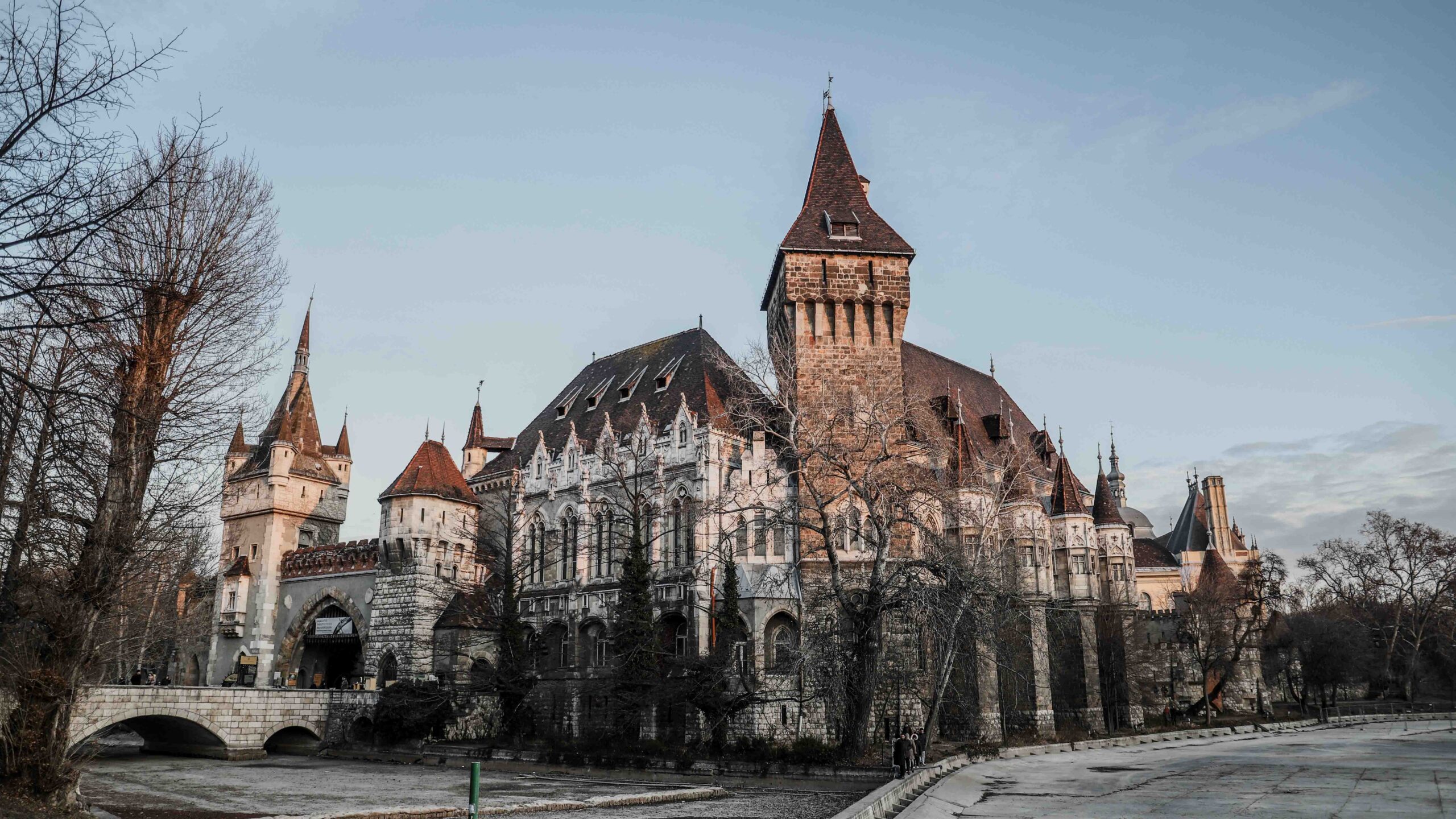
At first glance, Vajdahunyad Castle feels like something much older than Budapest itself. Towers, arches, courtyards, and details that seem pulled from different centuries all come together in one place, right in the middle of City Park (Városliget). It looks medieval, almost cinematic, the kind of place where you expect knights or old legends to appear around the corner.
But here’s the twist. Vajdahunyad Castle is not medieval at all.
It was built in 1896 for the Millennial Exhibition, celebrating one thousand years of Hungarian history. What you see today is essentially a carefully designed illusion, a place created to tell a story about the past rather than to belong to it. And somehow, that makes it even more interesting.
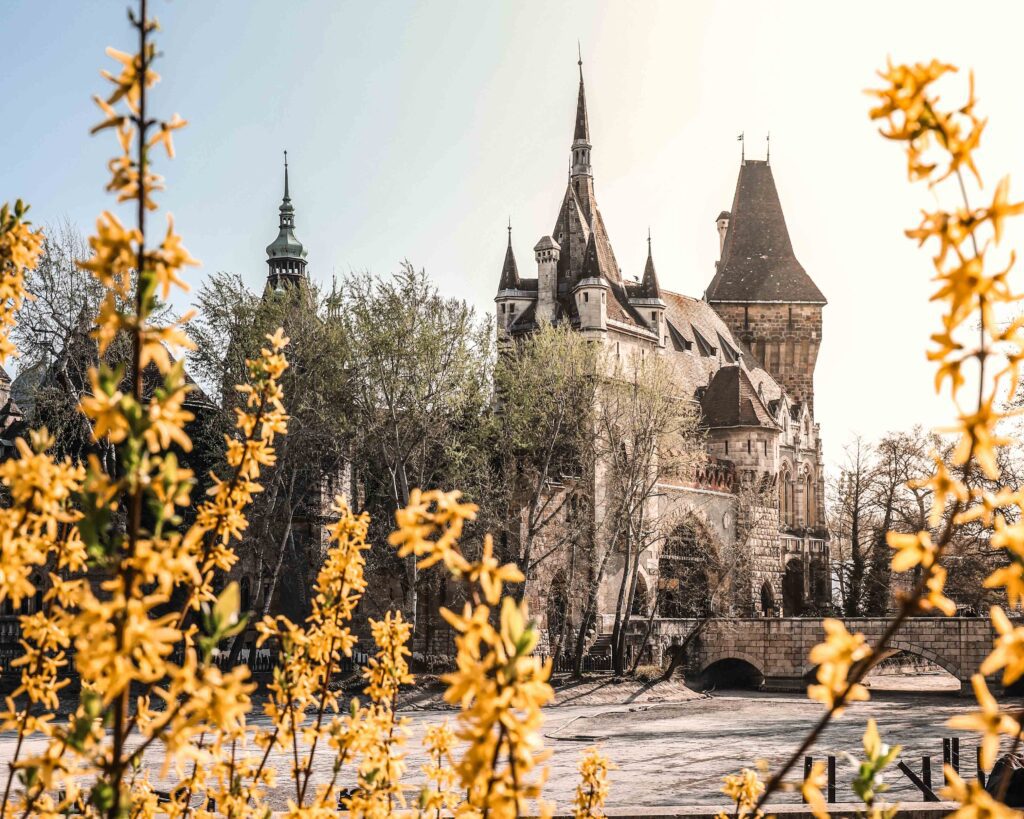
Photo by @norbertlepsik
A Castle That Was Never Meant to Last
The original version of the castle was never supposed to stay. It was built quickly from wood and cardboard as part of the exhibition, a temporary structure meant to impress visitors for a short period of time. But Budapest had other plans.
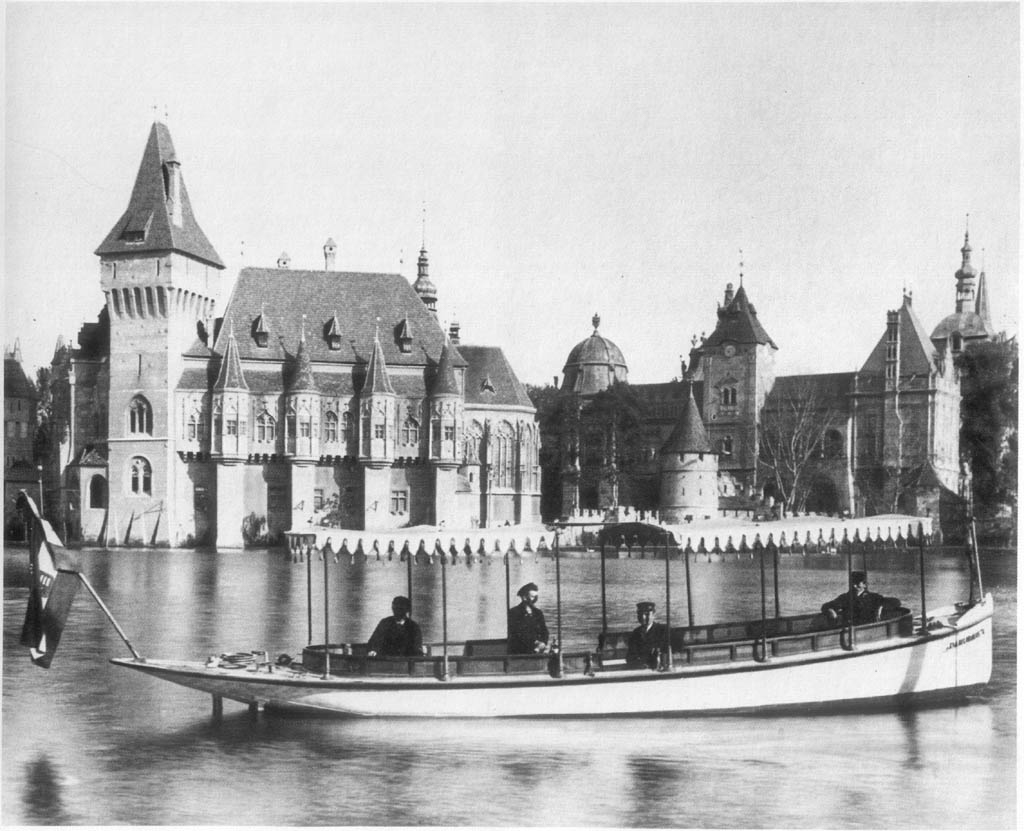
Photo source – atw.hu / Budapest anno
People loved it. The mix of styles, the dramatic silhouette by the lake, the way it captured something familiar yet unexpected, it all worked. So a few years later, the castle was rebuilt using stone and brick, completed in its current form in the early 1900s. What started as a temporary attraction quietly became one of the city’s most recognizable landmarks.
Four Architectural Worlds in One Place
What makes Vajdahunyad Castle stand out is not just how it looks, but how many different stories it tells at once. The complex was designed by architect Ignác Alpár to showcase the architectural history of Hungary, blending multiple styles into a single composition.
As you walk through it, you move between different eras almost without noticing. There are Romanesque details inspired by medieval churches, Gothic towers referencing Transylvanian castles, Renaissance courtyards with more balanced proportions, and Baroque elements that feel grand and decorative. Each section mirrors a real building from the historical Kingdom of Hungary, brought together into one place like an architectural collage. The most striking part is the Gothic section, inspired by the original Hunyad Castle in today’s Romania, which gave the entire complex its name.
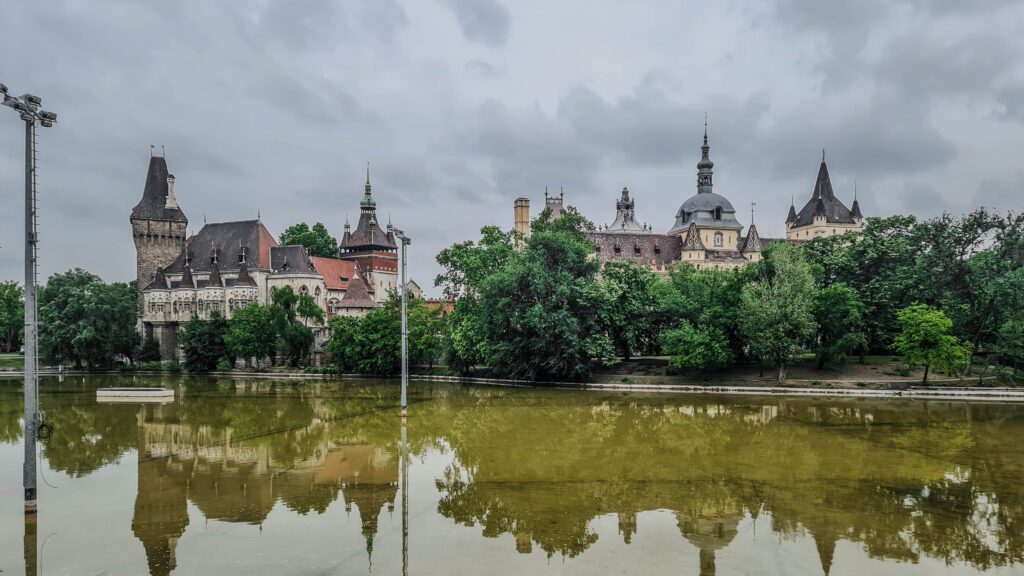
Photo by @norbertlepsik
Details You Might Miss
Beyond the main façades, Vajdahunyad Castle is full of smaller details that give it character. In the courtyard, you will find the statue of Anonymus, the mysterious medieval chronicler of King Béla III, sitting with his hood covering his face. It is one of the most photographed statues in Budapest, partly because of its slightly eerie presence.
Look closer and you might also notice unexpected references, like the bust of Béla Lugosi, the Hungarian actor known for playing Dracula, quietly placed among the historical figures. These layers add a playful dimension to the castle, mixing history, legend, and cultural references in a way that feels very Budapest.
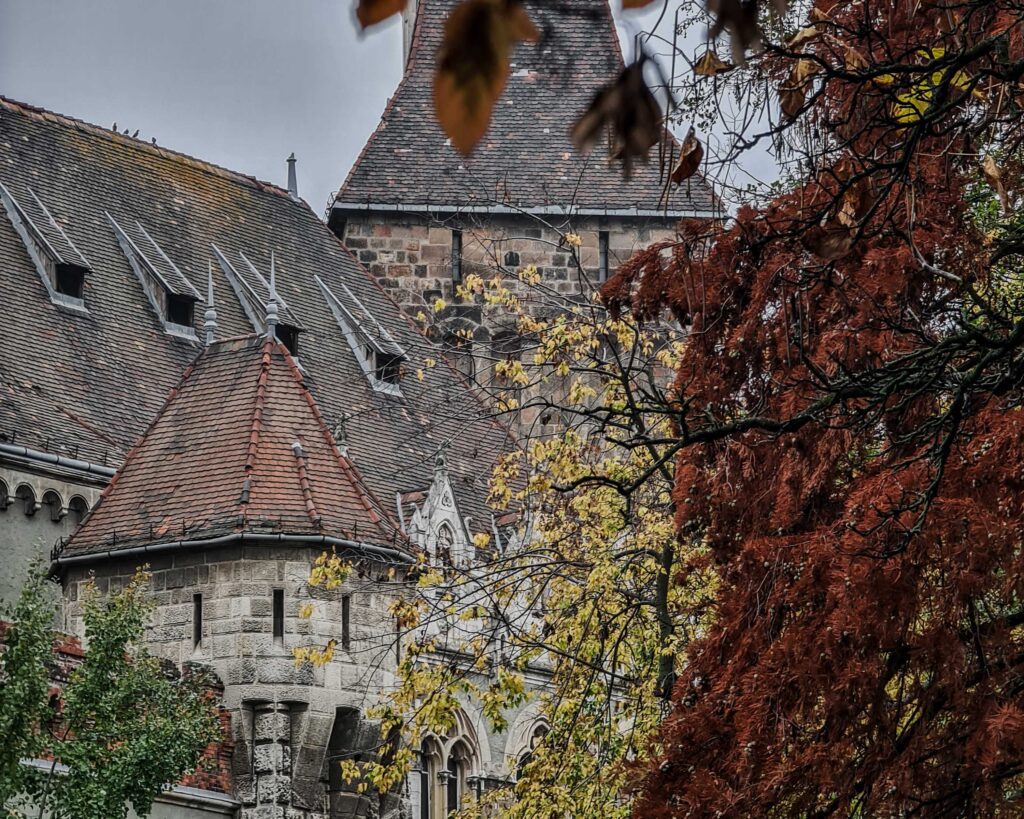
Photo by @norbertlepsik
A Museum Inside a Storybook Setting
Today, the castle is home to the Museum of Hungarian Agriculture, one of the largest institutions of its kind in Europe. Inside, exhibitions cover everything from traditional farming and winemaking to forestry and animal breeding, offering a surprisingly detailed look at a side of Hungarian history that often stays in the background.
Even if you are not planning to visit the exhibitions, the building itself is worth exploring. Staircases, halls, and architectural details continue the same layered story that starts outside.
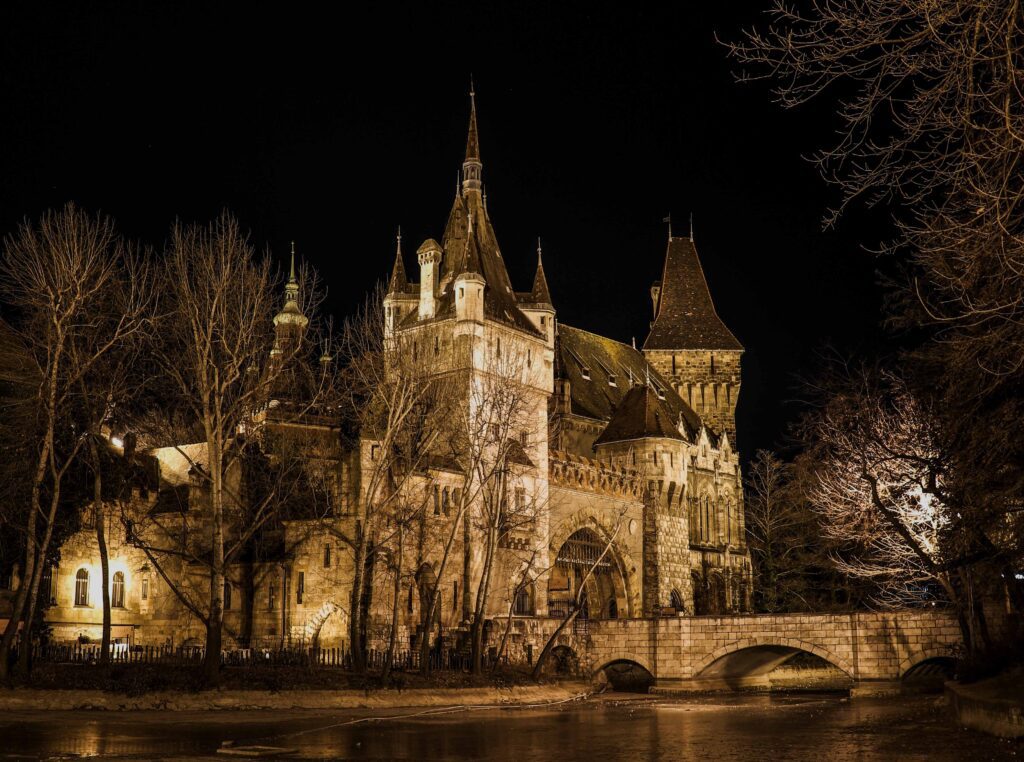
Photo by @norbertlepsik
A Place That Changes with the Seasons
Part of Vajdahunyad Castle’s charm comes from its setting. Surrounded by the lake of City Park, it constantly changes with the seasons. In spring, the trees around it bloom and reflect in the water. In summer, the area fills with people walking, boating, and sitting by the lake. In winter, the same water turns into one of Europe’s largest outdoor ice rinks, with the castle as a dramatic backdrop. Few places in Budapest transform so visibly throughout the year while keeping the same identity.
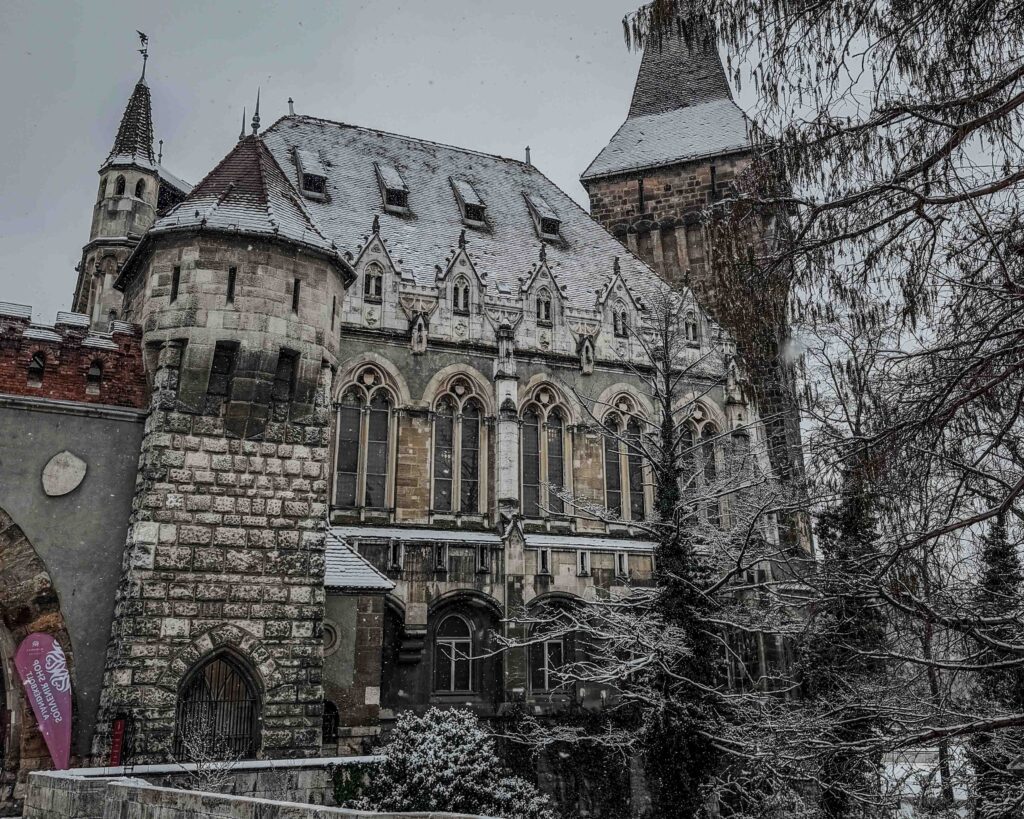
Photo by @norbertlepsik
A Different Kind of Landmark
Vajdahunyad Castle is not about authenticity in the traditional sense. It was never a royal residence, never a defensive structure, and never part of medieval history. And yet, it manages to capture something essential about Hungary’s past by bringing together fragments of it in one place.
It is a reminder that Budapest does not always reveal itself in obvious ways. Sometimes, the most memorable places are the ones that reinterpret history rather than simply preserve it. And that is exactly why Vajdahunyad Castle stays interesting, even for those who have walked past it countless times.