












Night Cruises on the Danube: What to Expect
Budapest at night is already a different version of itself, but seeing it from the Danube changes the perspective completely. The city does not feel distant or fragmented anymore. It lines up along the river in a continuous flow of light, bridges connecting both sides like quiet anchors. A night cruise is not about moving fast or covering distance. It is about staying in one place while the city moves around you.
The First Impression as You Step On Board
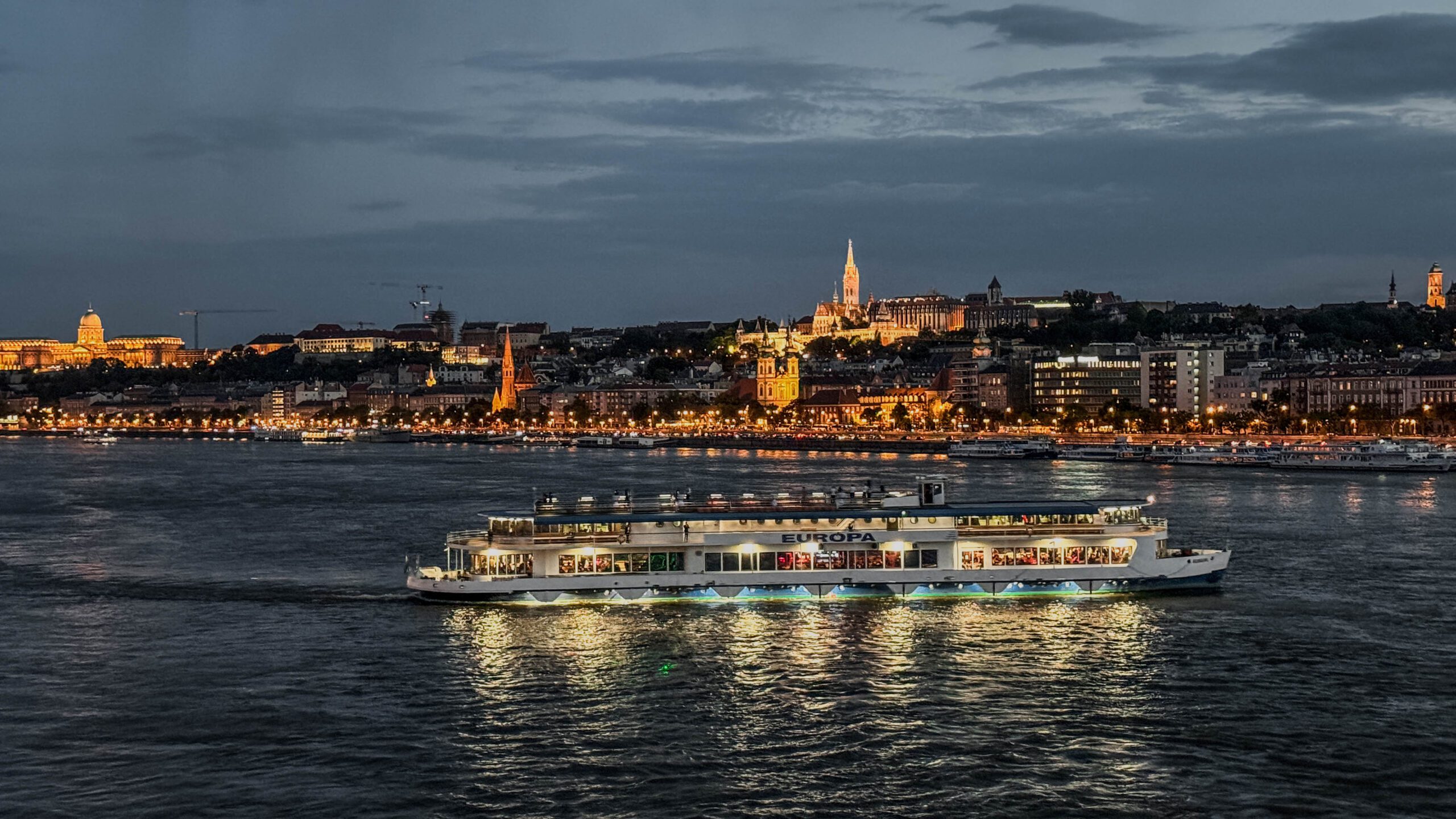
The experience usually starts quietly. You board, find your place, and within minutes the shore begins to shift away. The river opens up, and Budapest starts to unfold from the center outward.
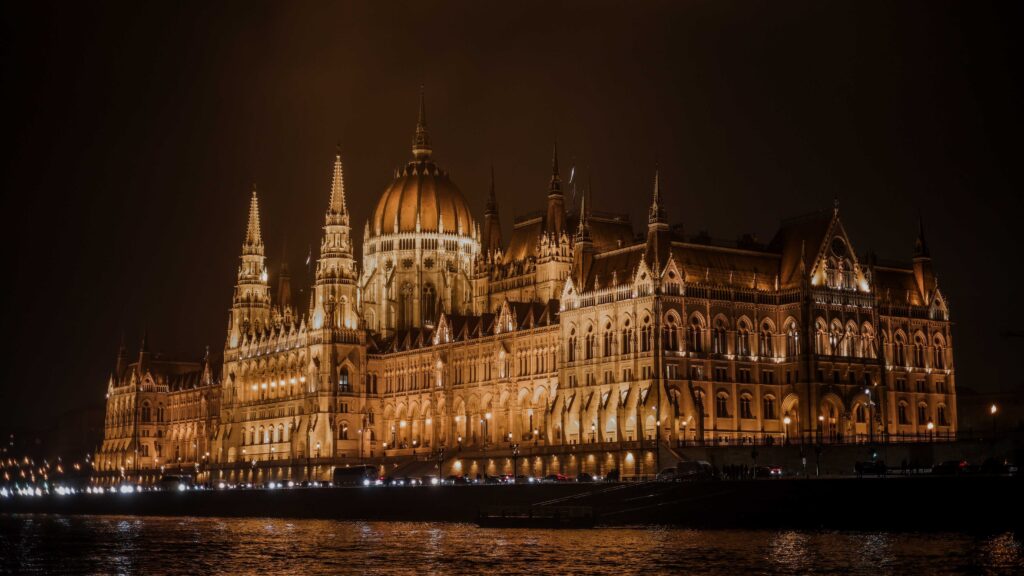
Photo by @norbertlepsik
On one side, Buda rises gently with darker silhouettes and soft hillside outlines. On the other, Pest stretches along the water with illuminated façades, reflections breaking slightly with every movement of the river. There is no single focal point at first, just a gradual realization that the entire city is visible at once.
If you are joining a structured experience, this is where it begins to make sense to book in advance.
Parliament, Bridges, and the River Axis
As the cruise continues, certain landmarks naturally take focus. The Hungarian Parliament Building dominates the riverfront with its Neo-Gothic structure fully illuminated. From the water, its scale becomes more readable, stretching horizontally along the bank rather than towering above it.

Photo by @norbertlepsik
Further along, bridges connect the two sides in a steady rhythm. The Chain Bridge is often the most photographed, its stone pillars and suspension lines forming a clean visual frame at night. Each crossing adds a layer of depth, almost dividing the cruise into segments without actually interrupting it. This is also where the river itself becomes more noticeable. The Danube reflects light unevenly, so nothing appears perfectly still. Buildings double and distort slightly, creating a version of the city that feels familiar but not identical.
What You Actually See Along the Way
A night cruise is not just about a single highlight. The value is in how many different perspectives appear in a short span of time. You pass sections where the riverbank feels formal and structured, then areas where it becomes more open and quiet. On the Buda side, the Castle District sits higher above the water, with Buda Castle forming a dark silhouette against the night sky. On the Pest side, long façades and public buildings maintain a continuous line of light. There are moments where everything feels balanced, and others where one side clearly dominates the view. That contrast is part of what defines the experience.

Photo by @norbertlepsik
Different Cruise Styles and Atmospheres
Not all night cruises in Budapest feel the same. Some are designed as quiet sightseeing experiences, where the focus stays on the views and the movement of the river. Others add more structure, with commentary, drinks, or dinner service.
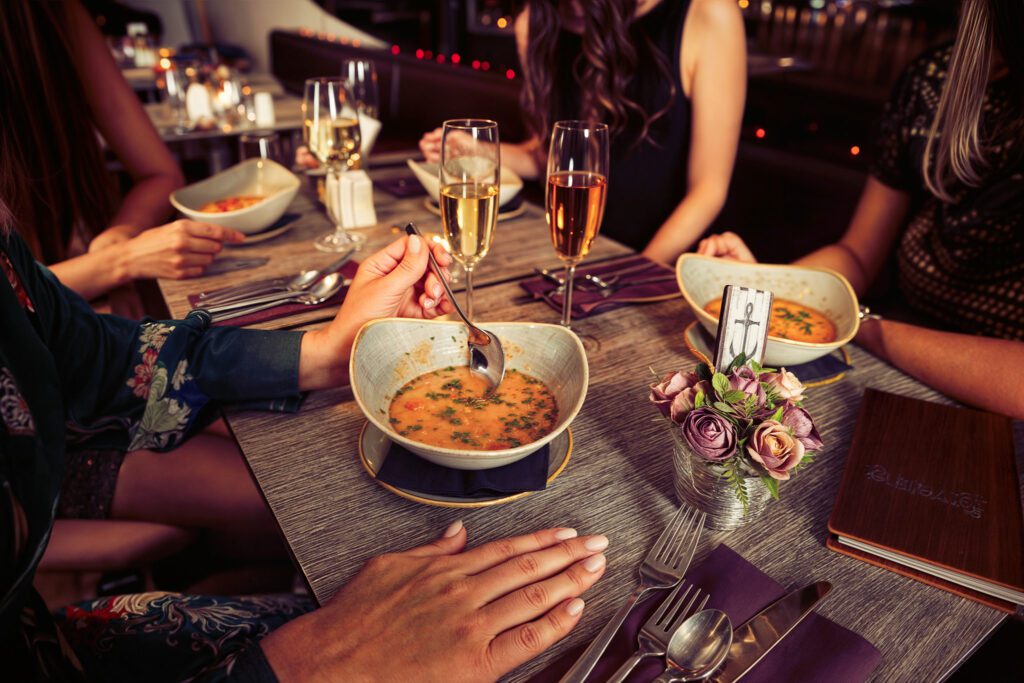
Photo by Silverline Cruises
If you are choosing between options, it often comes down to how you want to experience the city. A simpler cruise keeps attention on the skyline itself, while more curated versions add a social or dining element without changing the route. In both cases, the river remains the main frame. Everything else adjusts around it.
Dinner, Drinks, or Just the View
Some cruises include dinner service, turning the experience into a slower evening on the water. Tables are set along the windows, and the city becomes a moving backdrop. Hungarian dishes or lighter international menus are often served depending on the format.
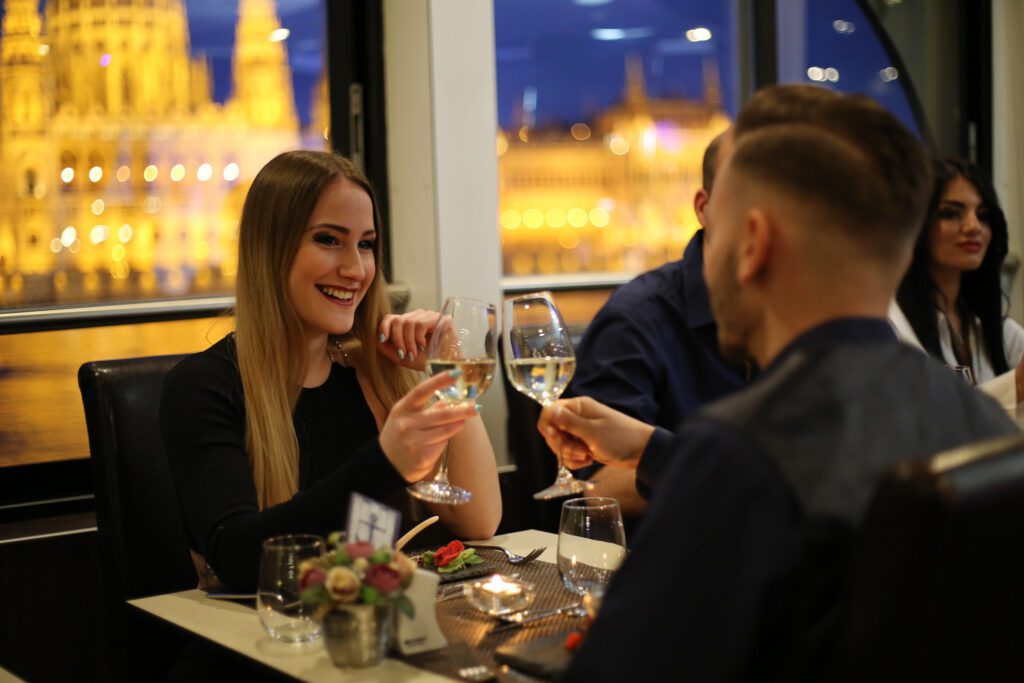
Photo by Silverline Cruises
Other options focus on drinks only, which keeps the atmosphere more open. You move freely, step outside if the deck is available, and spend more time observing than sitting. If your goal is purely the view, it is worth choosing a format that keeps distractions minimal.
When the City Feels Closest
One of the most interesting parts of a night cruise is how close the city feels despite being separated by water. You are not inside the streets, but you are not removed from them either.

Photo by @norbertlepsik
Trams move along the riverbanks, bridges carry steady traffic, and buildings remain fully lit at eye level. The Liberty Bridge often appears in a softer, greenish glow, while the Parliament remains bright and detailed in contrast. There is a constant sense of proximity. You are not looking at Budapest from afar, but from within its central line.
A Different Way to Understand the City
By the end of the cruise, what stays with you is not a single landmark, but the structure of the city itself. The way both sides relate to the river, how bridges divide and connect at the same time, how light reshapes familiar buildings into something slightly new.
Budapest is often described as a city best seen from its bridges, but from the water, that idea becomes more complete. Everything aligns in one continuous view, without interruption.
And once you step back onto land, the perspective does not fully disappear. You start recognizing the same rhythm from the embankments, from the bridges, from the streets near the river. The cruise does not replace the city experience. It reorganizes it, just for a moment, in a way that tends to stay with you longer than expected.