










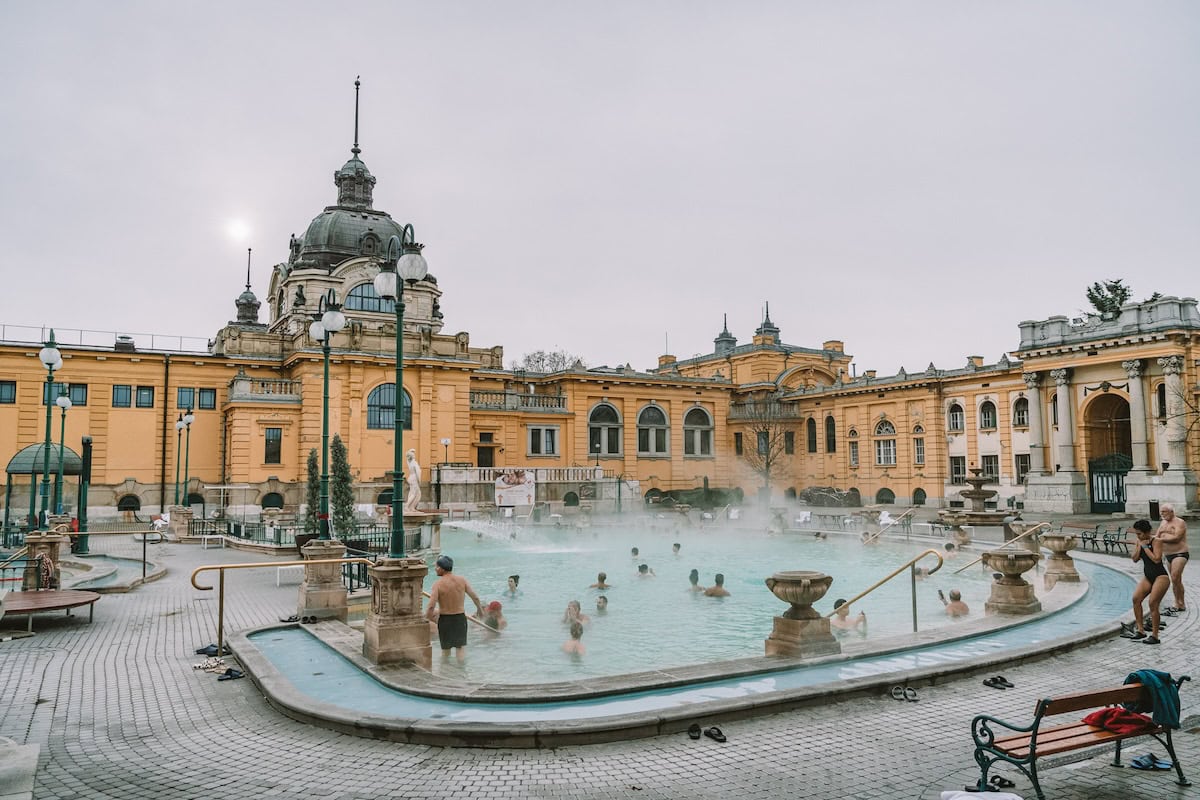
Széchenyi Thermal Bath: Budapest’s Golden Palace of Relaxation
Budapest has always had a special relationship with water. Built on more than a hundred thermal springs, the city has earned its nickname as the “City of Spas”, with bathing culture dating back thousands of years. Among all of Budapest’s historic baths, Széchenyi Thermal Bath (Széchenyi Gyógyfürdő és Uszoda) is perhaps the most recognizable. With its bright yellow Neo-Baroque architecture, outdoor pools, and grand atmosphere, it has become one of the city’s most iconic experiences.
Located in City Park (Városliget), just a short walk from Heroes’ Square (Hősök tere), Széchenyi is more than a place to relax. It is a meeting point where history, architecture, and everyday Budapest life come together. Locals visit for regular wellness routines, older generations come for therapeutic treatments, and visitors from around the world arrive to experience one of Europe’s largest and most famous thermal bath complexes. Whether you visit on a cold winter morning when steam rises above the outdoor pools, or on a warm summer afternoon surrounded by historic walls, Széchenyi offers one of the most memorable ways to experience Budapest.
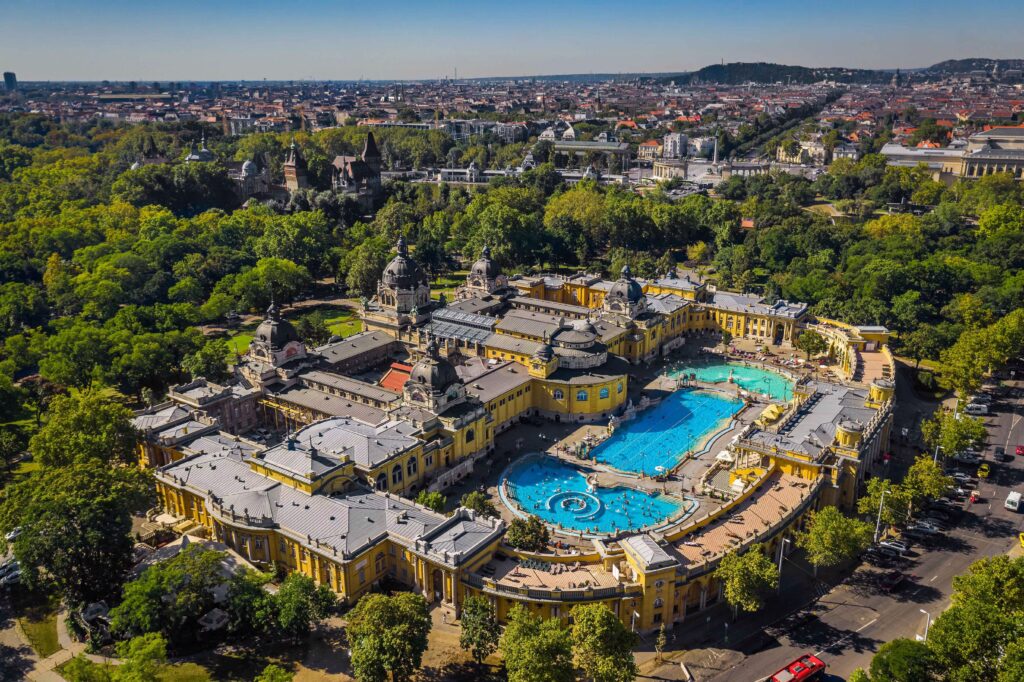 Photo by HeadOut
The Origins of Széchenyi Thermal Bath
The story of Széchenyi begins with Budapest’s long connection to underground thermal waters. While the city’s bathing tradition goes back to Roman times and continued during the Ottoman period, the modern spa culture of Budapest developed mainly in the late 19th and early 20th centuries. The first thermal well in City Park was discovered in the late 19th century after several attempts to find hot water beneath the area. The successful drilling of the artesian well in 1879 opened the way for the construction of a large public bath complex. The current Széchenyi Thermal Bath opened its doors in 1913, designed by architects Győző Czigler and Ede Dvorák in an impressive Neo-Baroque style.
At the time, it was considered one of Europe’s most modern spa facilities. The design reflected the ambition of turn-of-the-century Budapest, a city experiencing rapid growth and looking to create grand public spaces for culture, recreation, and health. Over the decades, the bath expanded with additional pools, treatment areas, and renovations, becoming the large complex visitors know today.
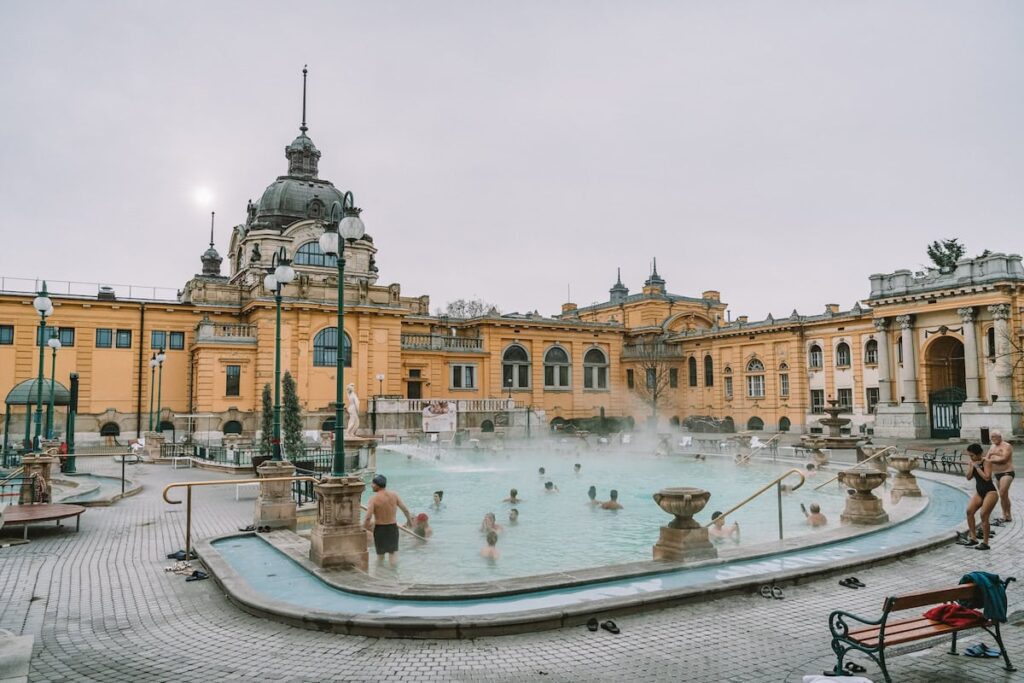 Photo by Live Like It’s the Weekend
Why Is Széchenyi So Popular?
Part of Széchenyi’s popularity comes from its unique setting. Few thermal baths in the world combine historic architecture with outdoor bathing in such a dramatic way. Sitting in warm thermal water while surrounded by a grand yellow palace-like building is an experience that feels distinctly Budapest. The outdoor pools are the highlight for many visitors. Steam rising from the water during colder months creates an unforgettable atmosphere, while summer evenings bring a completely different energy with people enjoying the open-air pools under the Budapest sky.
The bath is also deeply connected to local culture. For many Budapest residents, thermal bathing is not a once-in-a-lifetime attraction but part of everyday wellness. Elderly locals often spend hours playing chess beside the pools, friends meet for a relaxing afternoon, and regular visitors return throughout the year. This mix of tradition and accessibility is what makes Széchenyi stand out. It is both a famous landmark and a real part of city life.
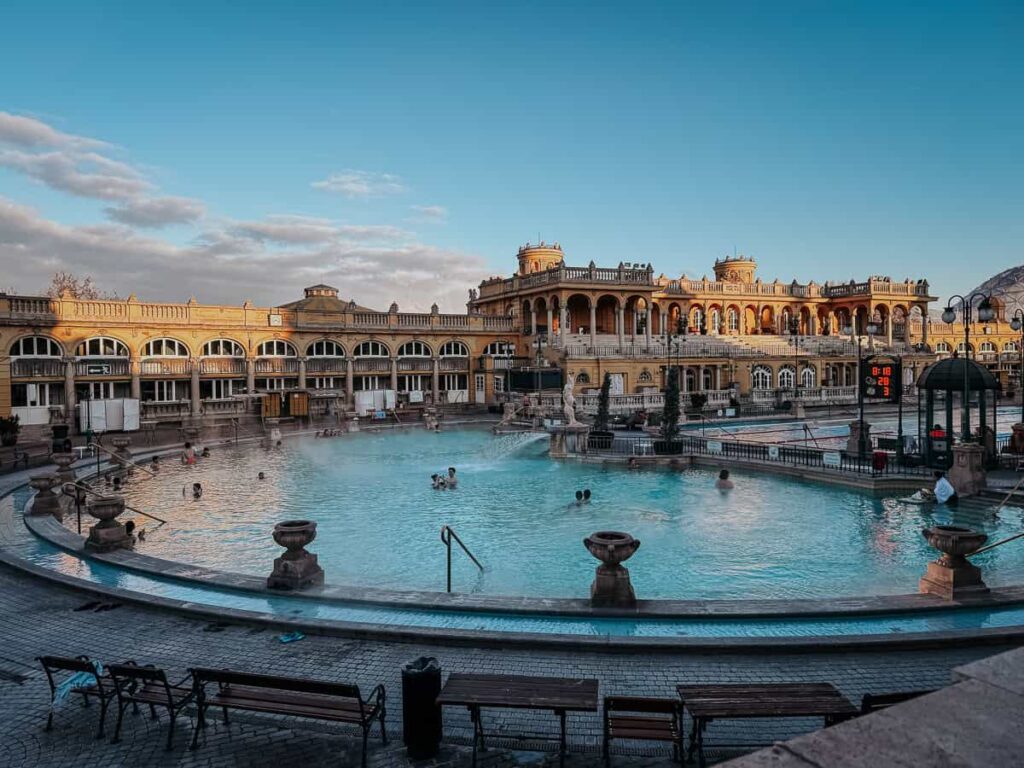 Photo by Never Two Full
The Health Benefits of Thermal Bathing
Hungary’s thermal waters have been valued for centuries, and many visitors come to Széchenyi not only for relaxation but also for the potential wellness benefits associated with mineral-rich thermal water. The bath’s water contains minerals such as calcium, magnesium, and sulphate, which are traditionally associated with supporting relaxation and general wellbeing. Warm thermal water can help relax muscles, reduce everyday tension, and improve circulation. Many people also find that spending time in warm water helps them recover after physical activity or simply unwind after a busy week.
Széchenyi also offers various therapeutic treatments, including physiotherapy, massages, and medical bathing options. These services are part of Hungary’s long-established spa tradition, where thermal water is used alongside professional treatments. Of course, thermal bathing is not a replacement for medical care, and people with specific health conditions should always check whether hot baths are suitable for them. For most visitors, however, a few hours in the pools provide a deeply relaxing break from sightseeing.
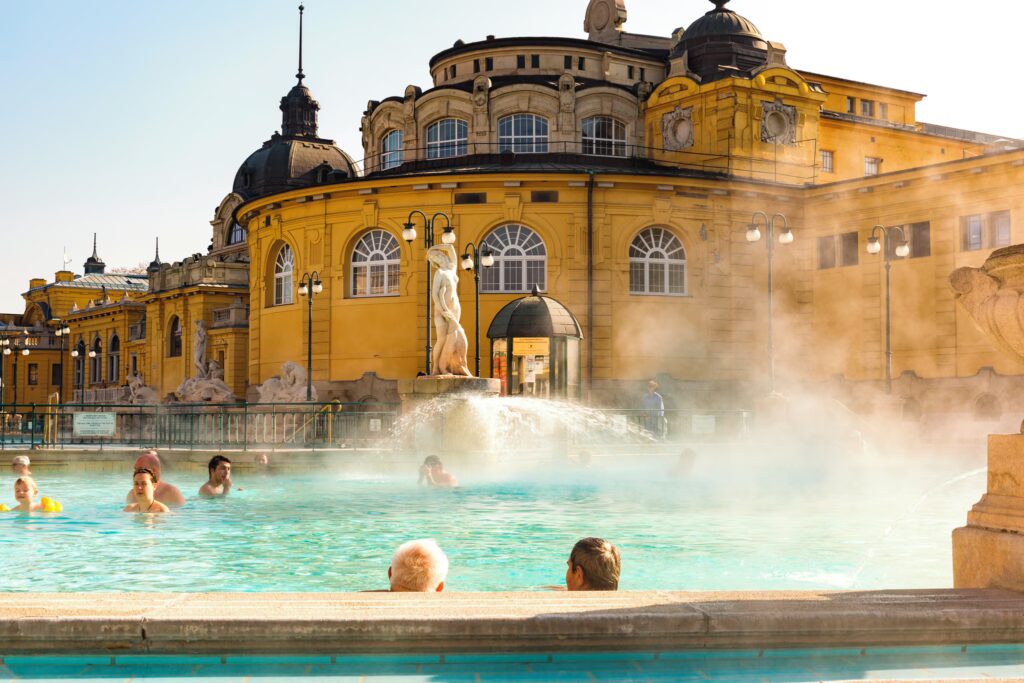 Photo by jet2holidays
What to Know Before Visiting Széchenyi Thermal Bath
A little preparation can make your visit much more enjoyable. Here are some useful tips before heading to one of Budapest’s most famous baths.
Choose the Right Time to Visit
Széchenyi can get busy, especially during summer weekends and peak tourist periods. If you want a calmer experience, mornings or late afternoons are usually better choices. Visiting during winter is also highly recommended, as the contrast between the cold air and warm outdoor pools creates one of the bath’s most memorable experiences.
Bring the Essentials
You will need swimwear, a towel, and flip-flops. While these items can be rented or purchased at the bath, bringing your own is usually more convenient. A waterproof phone case can also be useful if you want to capture photos without worrying about splashes.
Allow Enough Time
Széchenyi is much larger than many first-time visitors expect. It is worth setting aside at least two to three hours to properly enjoy the pools, indoor areas, and atmosphere. Rushing through a visit means missing much of what makes the bath special.
Explore Beyond the Outdoor Pools
The famous outdoor pools are only one part of Széchenyi. Inside, you will find numerous thermal pools with different temperatures, steam rooms, saunas, and beautifully decorated halls. Take time to explore the building itself, as the architecture is a major part of the experience.
Combine It with City Park
Széchenyi is located in one of Budapest’s most enjoyable areas. Before or after your visit, explore City Park, walk around Vajdahunyad Castle, visit Heroes’ Square, or enjoy a coffee nearby. The area offers plenty to see within walking distance.
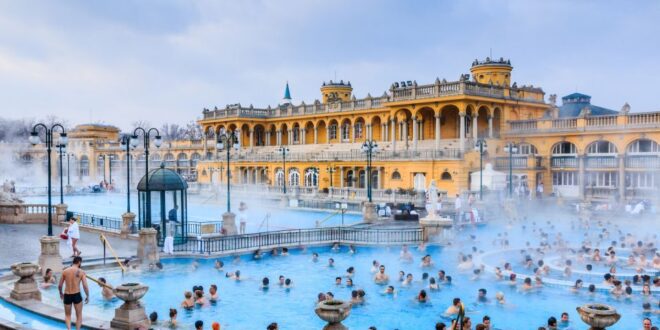 Photo by szechenyibaths
A Budapest Experience Like No Other
Széchenyi Thermal Bath represents something essential about Budapest. It combines history, architecture, wellness, and everyday local traditions in one place. It is not simply a beautiful building with pools inside, it is a reflection of the city’s centuries-old relationship with thermal water.
From the first discovery of its underground springs to today’s visitors relaxing beneath the Neo-Baroque walls, Széchenyi continues to connect Budapest’s past and present. And that is exactly why a visit here remains one of the experiences that stays with you long after leaving the water.