














Blog search
Budapest’s Neighborhoods Uncovered: XV. District – Suburban Life and Industrial Heritage
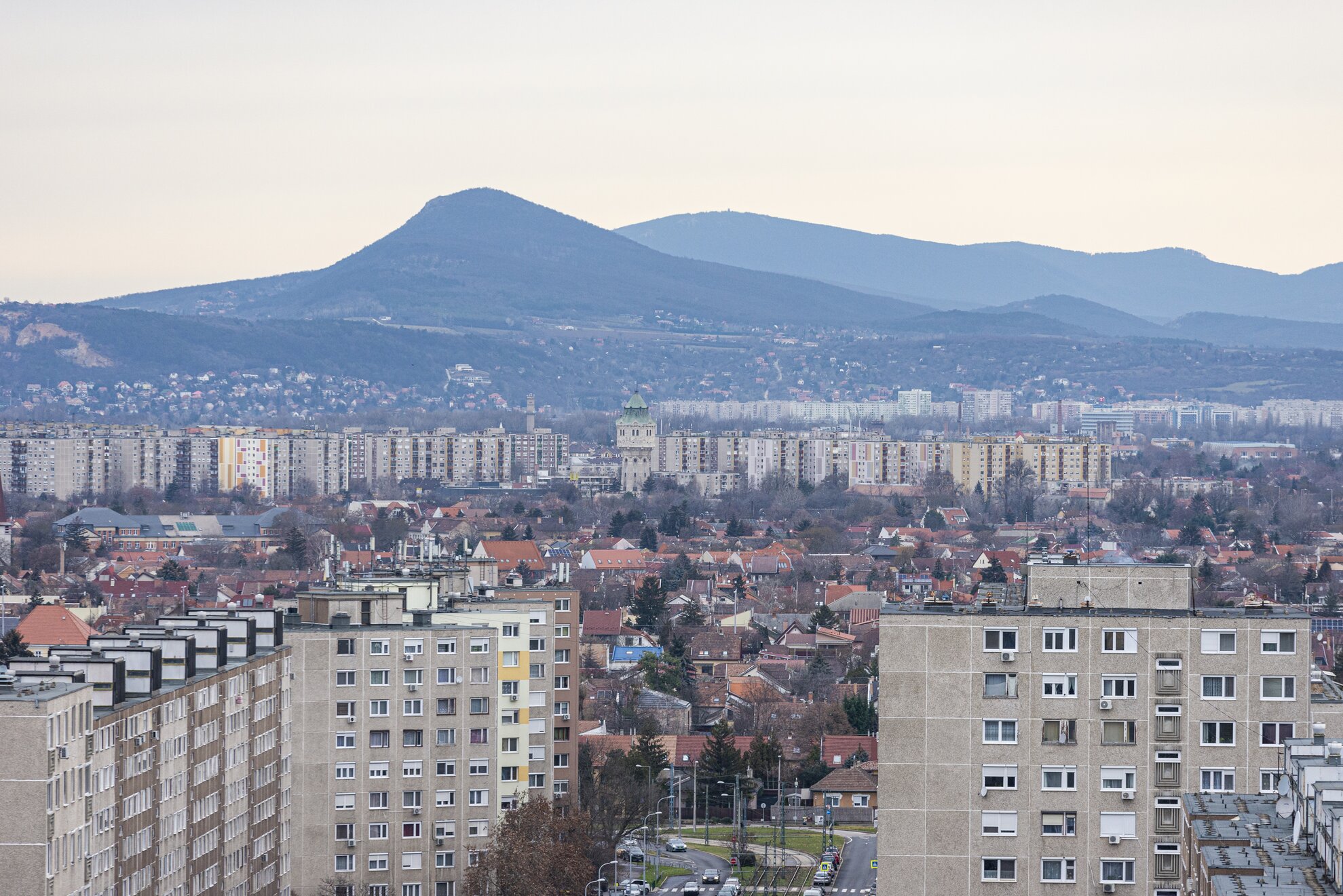
Located on the northeastern edge of Budapest, the XV. District offers a side of the Hungarian capital that many visitors rarely experience. Known collectively as Rákospalota, Pestújhely, and Újpalota, the district is defined less by monumental landmarks and more by the everyday rhythm of local life. Quiet residential streets, historic village centers, socialist-era housing estates, and green public spaces come together to create a neighborhood that tells the story of Budapest beyond its postcard attractions.
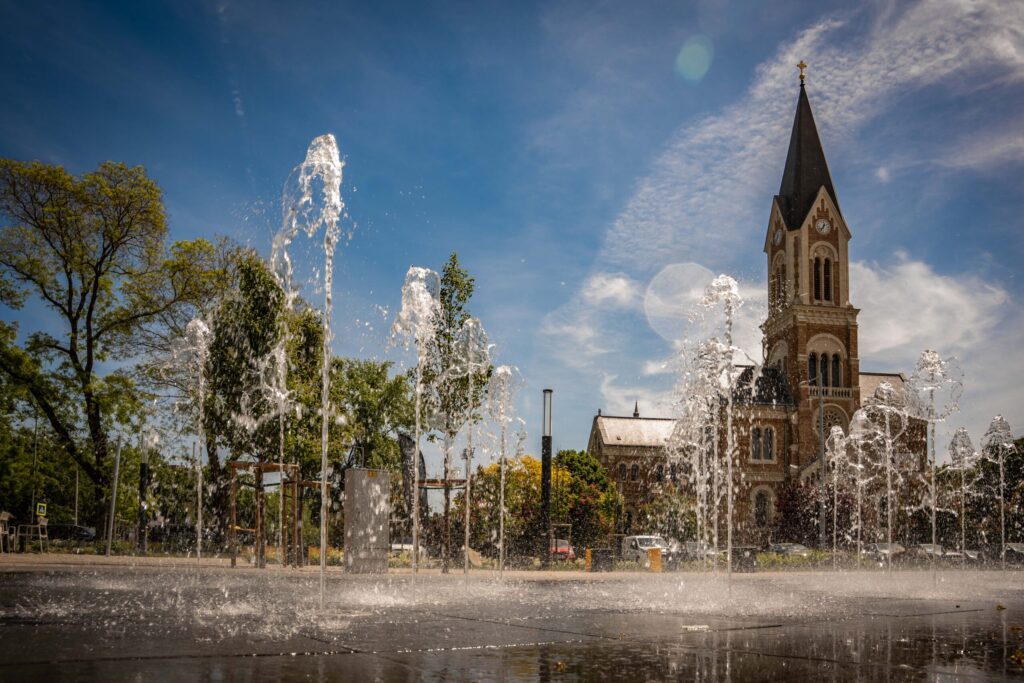 Photo by Gordon Eszter – Csokonai15
Unlike the bustling downtown districts or the elegant hills of Buda, the XV. District has always developed with a stronger connection to its surrounding countryside. Over the centuries it has evolved from independent rural settlements into an integral part of Budapest, while preserving traces of its original identity. Walking through the district today, it is not unusual to find centuries-old churches standing only a short distance from modern apartment blocks or traditional family houses lining streets that still reflect their village origins.
From medieval villages to growing settlements
The roots of the XV. District reach back to the Middle Ages, when the area consisted of small agricultural communities outside the walls of Pest. Rákospalota, the oldest of today’s three neighborhoods, was first documented in the thirteenth century and developed as a farming settlement benefiting from fertile land and its proximity to important trade routes crossing the Great Hungarian Plain. Like many settlements surrounding Buda and Pest, the area suffered heavily during the Ottoman occupation. Population declined, villages were partially abandoned, and agriculture was disrupted for decades. Following the liberation of Buda in the late seventeenth century, new settlers gradually repopulated the region, rebuilding churches, homes, and farmland.
Throughout the eighteenth and nineteenth centuries, Rákospalota steadily expanded as agriculture remained the dominant source of livelihood. Markets connected local producers with the growing city, while vineyards, orchards, and cultivated fields covered much of the surrounding landscape. During this period, Pestújhely also emerged as a separate settlement, developing as a quieter residential area characterized by detached houses and tree-lined streets.
 Photo by Fortepan
Urban expansion and the industrial twentieth century
The rapid industrialization of Budapest during the late nineteenth and early twentieth centuries brought profound changes to the district. Improved railway connections and expanding road networks made the northern outskirts increasingly attractive for both residential and industrial development. Factories, warehouses, and workshops gradually appeared alongside the traditional village centers, providing employment for thousands of local residents.
 Photo by Faragó György – fortepan
The creation of Újpalota after the Second World War marked perhaps the most significant transformation in the district’s history. During the late 1960s and 1970s, one of Budapest’s largest housing estates was constructed to accommodate the capital’s growing population. Rows of modern apartment blocks replaced former agricultural land, creating an entirely new urban landscape designed around schools, shopping facilities, parks, and public transport. Although the panel housing estates dramatically altered part of the district, they never completely erased its earlier identity. Historic neighborhoods such as Rákospalota retained many of their original streets, churches, and family homes, creating a striking contrast between different periods of Budapest’s urban development. Following the political changes of 1989, the district experienced gradual modernization. Former industrial areas slowly found new purposes, public spaces were renewed, and residential neighborhoods continued to develop while maintaining their distinctly local atmosphere.
 Photo by főfotó – fortepan
The district today
Today, the XV. District feels authentic, practical, and deeply residential. It is home to families, long-time residents, and commuters who appreciate its quieter pace and relatively affordable housing compared to the city center. While tourism plays only a small role here, the district offers an opportunity to discover everyday Budapest away from the busiest attractions. Each of its three historic neighborhoods contributes something different. Rákospalota preserves much of its historic small-town character, Pestújhely remains peaceful and predominantly residential, while Újpalota reflects the ambitions of twentieth-century urban planning through its large housing estates and generous public spaces.
Excellent public transport connections make the district easily accessible, yet its atmosphere remains noticeably calmer than central Budapest. Parks, community spaces, local markets, and neighborhood cafés define daily life far more than tourist crowds.
Highlights and local recommendations
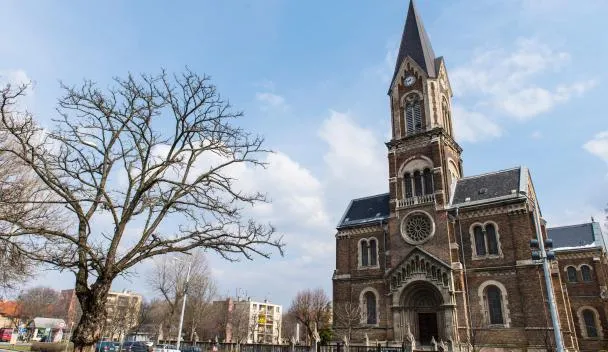
The historic heart of Rákospalota remains one of the district’s greatest attractions for those interested in Budapest’s lesser-known heritage. Walking through its older streets reveals traditional family houses, quiet squares, and churches that preserve the atmosphere of what was once an independent market town. The Great Church of Rákospalota stands as one of the neighborhood’s defining landmarks, reflecting centuries of local history and serving as a reminder of the area’s medieval origins. A short walk away, the district’s smaller streets invite slower exploration, particularly around the former village center, where architectural details reveal layers of eighteenth and nineteenth century development that have largely disappeared from many other parts of Budapest. Rather than grand monuments, the appeal here lies in discovering everyday heritage that continues to shape local identity.
 photo by bpxv.hu
For those interested in architecture and urban planning, Újpalota offers an entirely different experience. Built as one of Budapest’s largest socialist-era housing estates, the neighborhood showcases the ambitions of post-war city planning. Wide pedestrian spaces, generous green courtyards, schools, community buildings, and residential towers create a distinctive environment that remains home to tens of thousands of residents. Walking through the area provides valuable insight into a chapter of Budapest’s twentieth-century history that often receives less attention than its historic center. Green spaces are another defining feature of the district. The expansive Fő tér Park and numerous neighborhood parks provide recreational space for families, joggers, and cyclists, while smaller playgrounds and landscaped gardens are scattered throughout both Újpalota and Pestújhely. Although the district lacks the dramatic hills of Buda or the monumental scale of Városliget, its abundance of everyday green spaces contributes significantly to its relaxed atmosphere.
 Photo by PestBuda
One of the district’s liveliest gathering places is the Újpalota Market, where residents shop for fresh produce, meats, baked goods, flowers, and seasonal specialties. Visiting the market offers a glimpse into daily neighborhood life, far removed from the city’s more tourist-oriented locations. Nearby cafés, traditional bakeries, and long-standing family-run businesses continue to serve generations of locals, reinforcing the district’s strong community character.
The industrial heritage of the XV. District can still be discovered through former factory buildings and railway infrastructure scattered across the area. While many industrial sites have been repurposed or redeveloped, they remain visible reminders of the district’s role in Budapest’s economic growth during the twentieth century. Exploring these quieter streets reveals another layer of the capital’s history, one built around manufacturing, transport, and working-class communities rather than royal palaces or monumental boulevards. Throughout the year, local cultural events, community festivals, and neighborhood markets bring residents together, particularly around the district’s public squares and cultural centers. While these gatherings may not attract international attention, they reflect the authentic community spirit that continues to define life in the XV. District.
The XV. District offers a different perspective on Budapest, one shaped by historic villages, industrial growth, and suburban life rather than grand tourist attractions. From the centuries-old streets of Rákospalota to the expansive housing estates of Újpalota and the peaceful residential character of Pestújhely, the district tells the story of a capital that grew not only through monuments and boulevards but also through the communities that flourished on its outskirts. For those willing to venture beyond the familiar, District XV reveals a quieter, more authentic side of Budapest that continues to evolve while remaining firmly rooted in its local identity.