











Budapest’s Iconic Trams: The Moving Backbone of the City
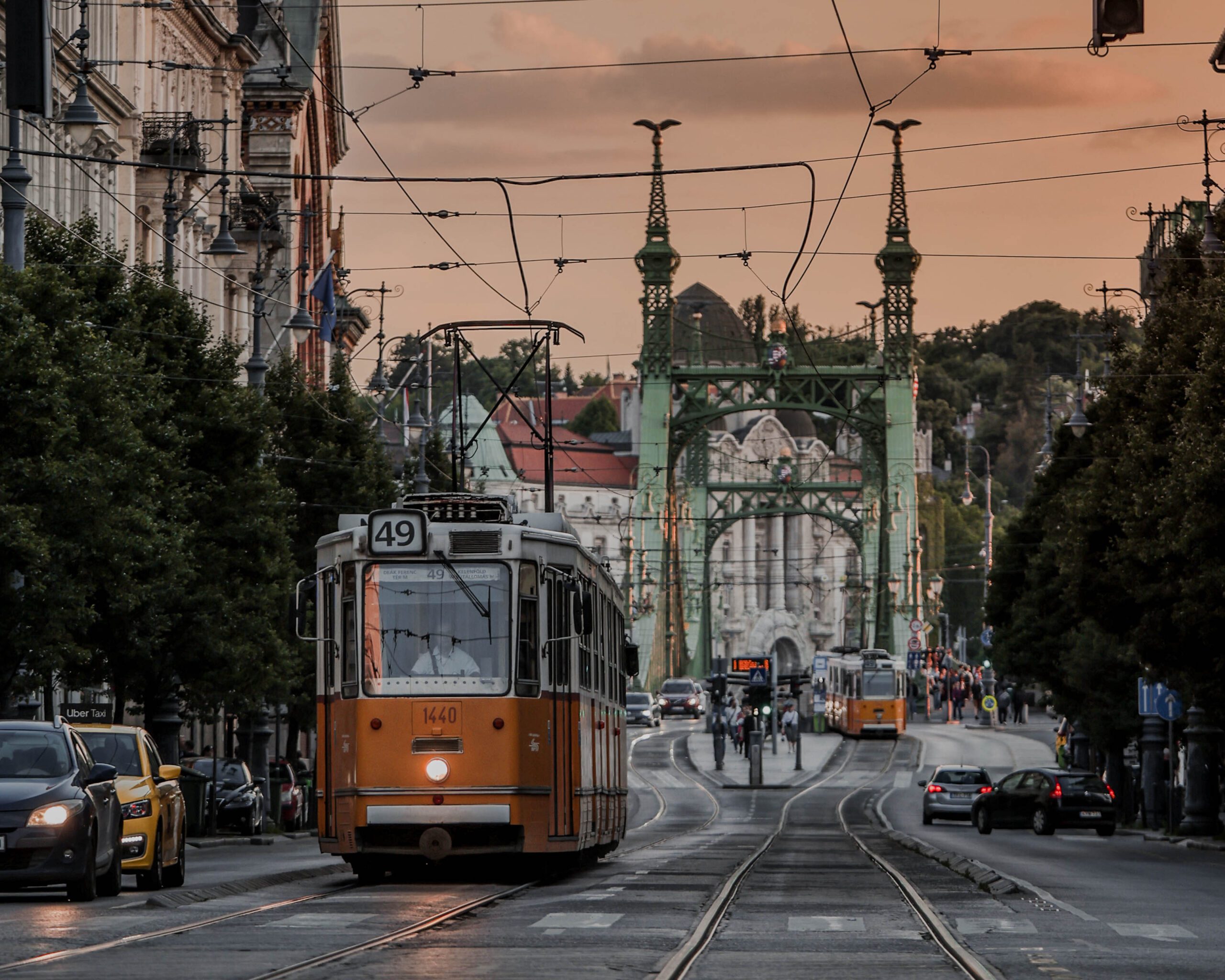
Budapest’s trams are more than just a way to get around, they are part of the city’s identity. The yellow carriages moving through grand boulevards, along the Danube, and across historic neighborhoods create a visual rhythm that defines everyday life here. With roots going back to the 19th century, the network has grown into one of the largest and busiest tram systems in the world, stretching across more than 170 kilometers and carrying millions of passengers every year. For locals, trams are part of the daily routine. For visitors, they offer one of the most scenic and accessible ways to explore the city.
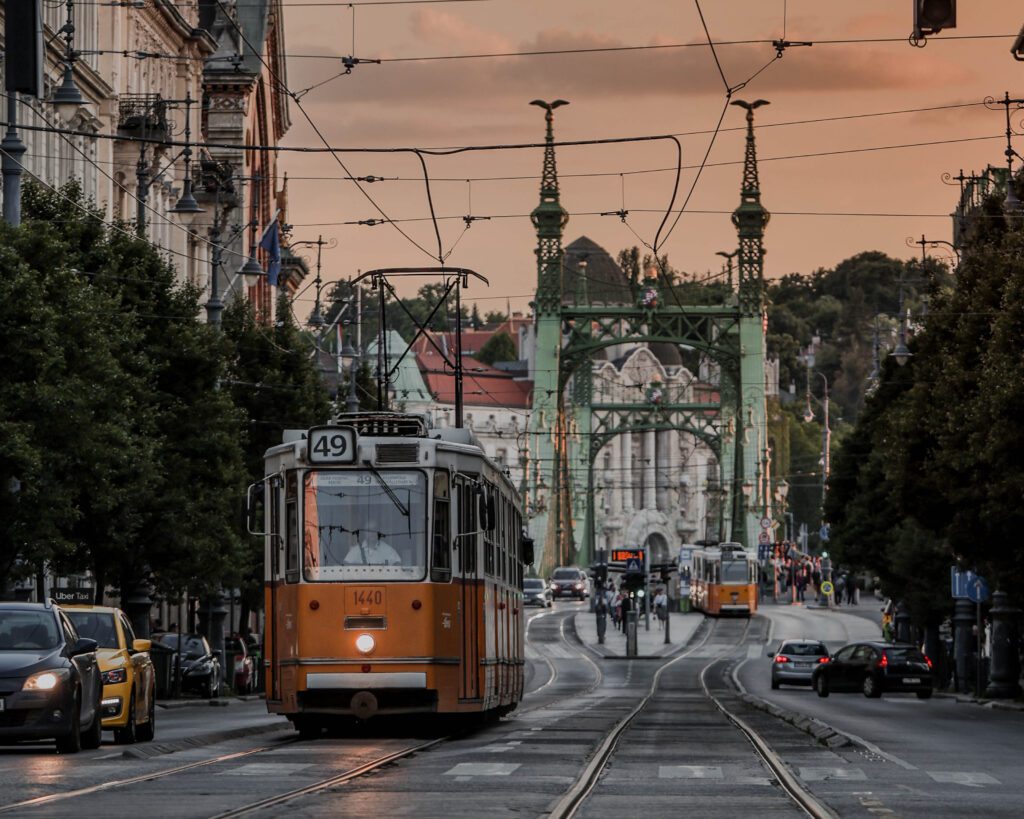
Photo by @norbertlepsik
How Tram Lines Were Created
Budapest’s tram story began in 1866 with horse drawn carriages running along fixed tracks, marking the beginning of organized public transport in the city. As the city rapidly expanded during the late 19th century, these early lines were replaced and upgraded with steam powered vehicles, and soon after, electric trams appeared by the end of the 1880s.
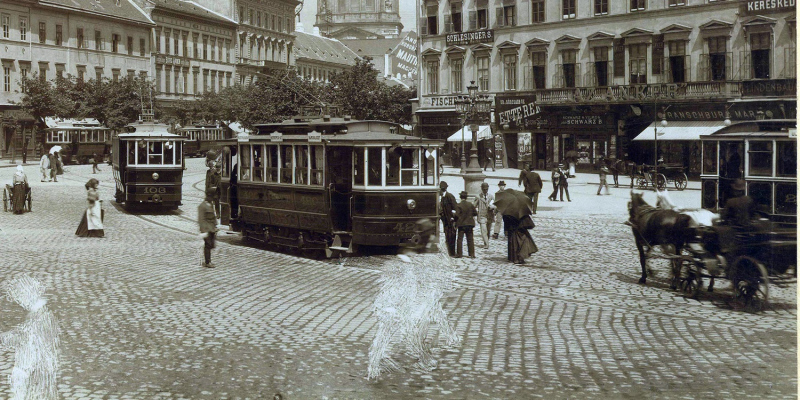
photo by György Klösz (Photo: Fortepan/Budapest Archives. Reference No.: HU.BFL.XV.19.d.1.07.109)
The transition to electric trams completely reshaped urban mobility. Tracks extended along major boulevards, across bridges, and into newly developing districts, connecting Buda, Pest, and Óbuda into one functioning city. Over time, the network became a key layer of Budapest’s infrastructure, second only to buses in overall importance, yet even surpassing the metro in annual passenger numbers.
Today’s system reflects this long evolution, where historic routes still define movement patterns, while modern extensions continue to adapt to the city’s growth.
Tram Line 2, The Most Scenic Route in Budapest
If there is one tram line that captures Budapest in a single journey, it is Tram 2. Running along the Pest side of the Danube, this route offers uninterrupted views of some of the city’s most iconic landmarks.
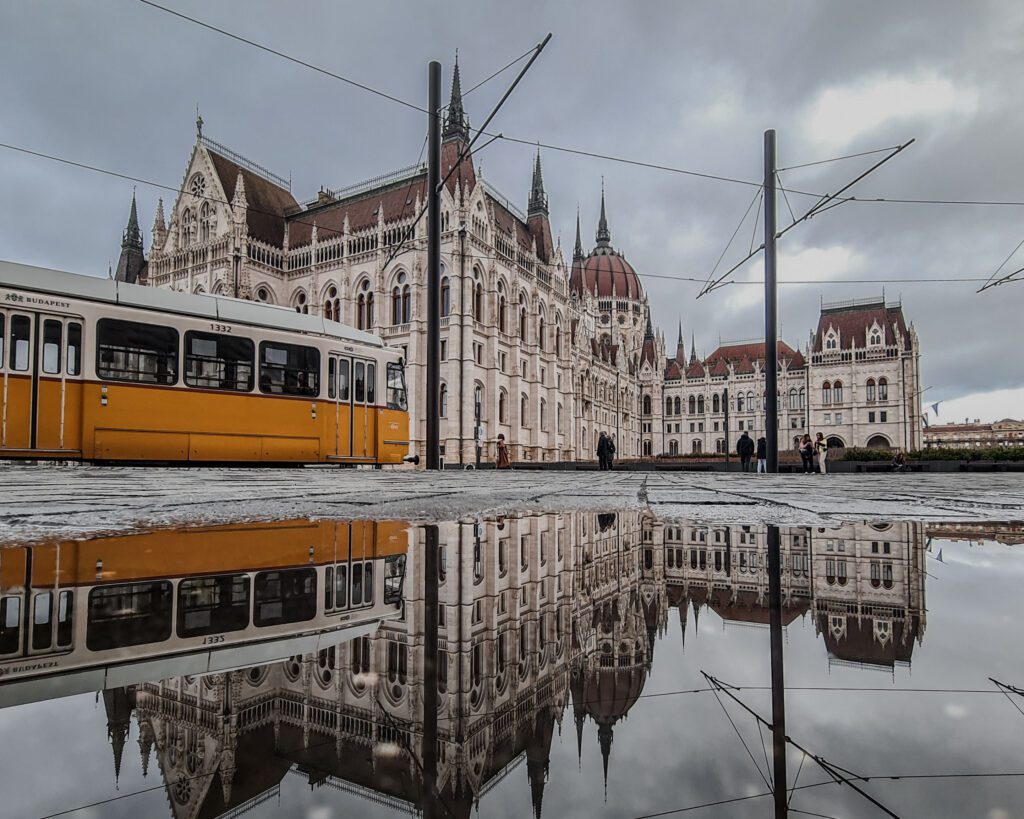
Photo by @norbertlepsik
The Hungarian Parliament rises directly beside the tracks, while across the river, Buda Castle and Fisherman’s Bastion create a layered skyline that feels almost cinematic. The route also passes the Shoes on the Danube Bank memorial and several historic bridges, making it one of the easiest ways to experience Budapest without planning a full itinerary. It is often described as one of the most beautiful tram rides in Europe, and once you sit by the window and follow the river south, it becomes clear why this line is considered essential.
Tram Types in Budapest
Budapest’s tram network is defined not only by its scale, but also by the variety of vehicles that operate across the city. From older, character filled models to modern, high capacity designs, the mix reflects decades of continuous development.
Ganz KCSV–7
Introduced in the late 1990s, the Ganz KCSV–7 represents a transition period in Budapest’s tram design. It combines a more modern structure with the familiar aesthetic of older Hungarian built vehicles, often seen on central and suburban lines.
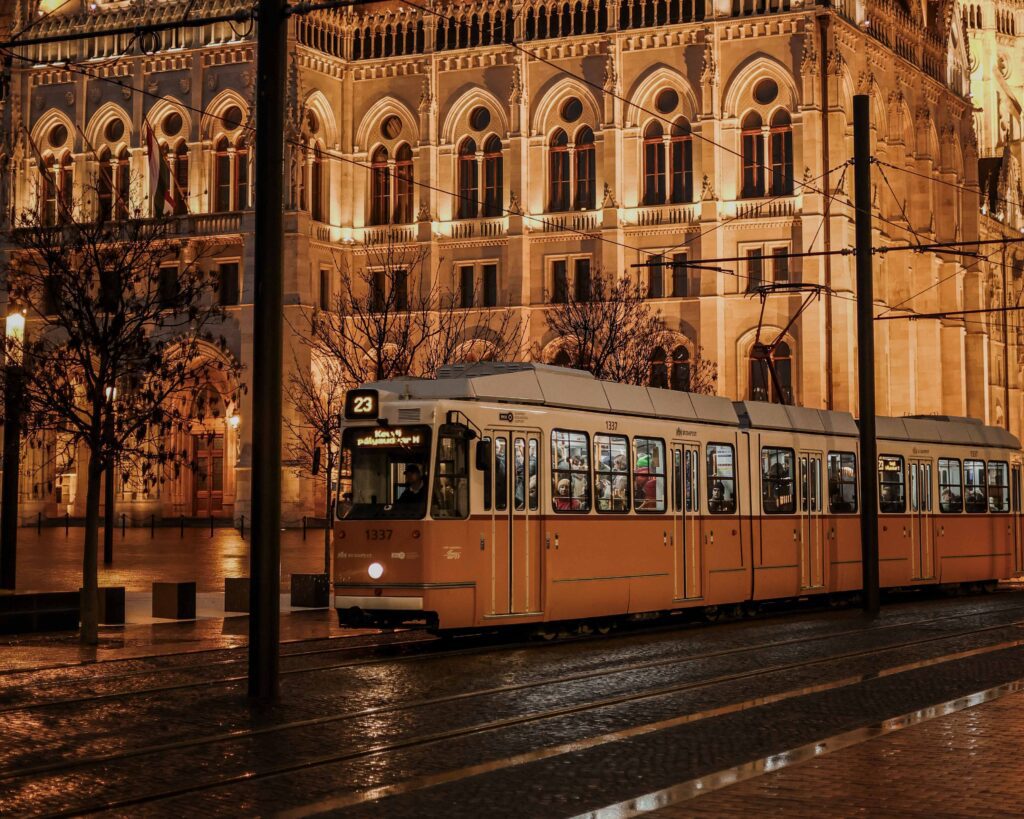
Photo by @norbertlepsik
Siemens Combino
The Siemens Combino trams are among the most recognizable in the city, especially on lines 4 and 6 along the Grand Boulevard. These long, continuous units are designed for high capacity routes and are among the busiest tram vehicles in Europe, operating almost constantly throughout the day.
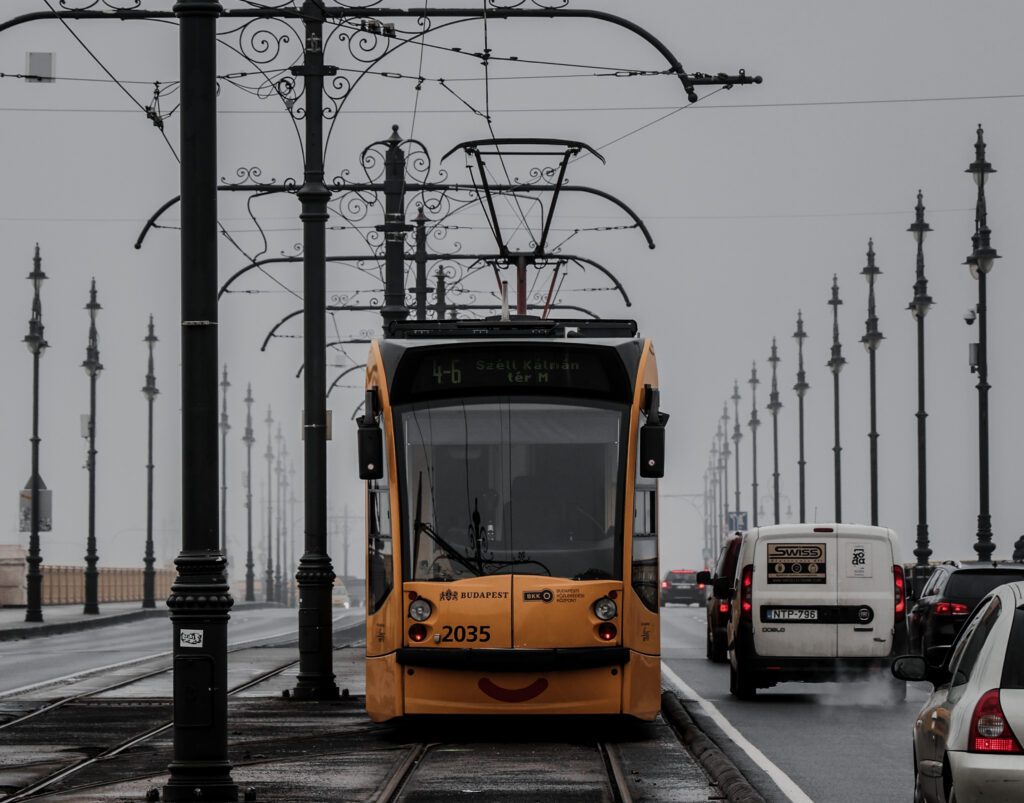
Photo by @norbertlepsik
Ganz CSMG
The Ganz CSMG trams bring a more nostalgic presence to the network. Built in the 1970s, they still operate on several lines, offering a glimpse into the earlier decades of Budapest’s public transport system.
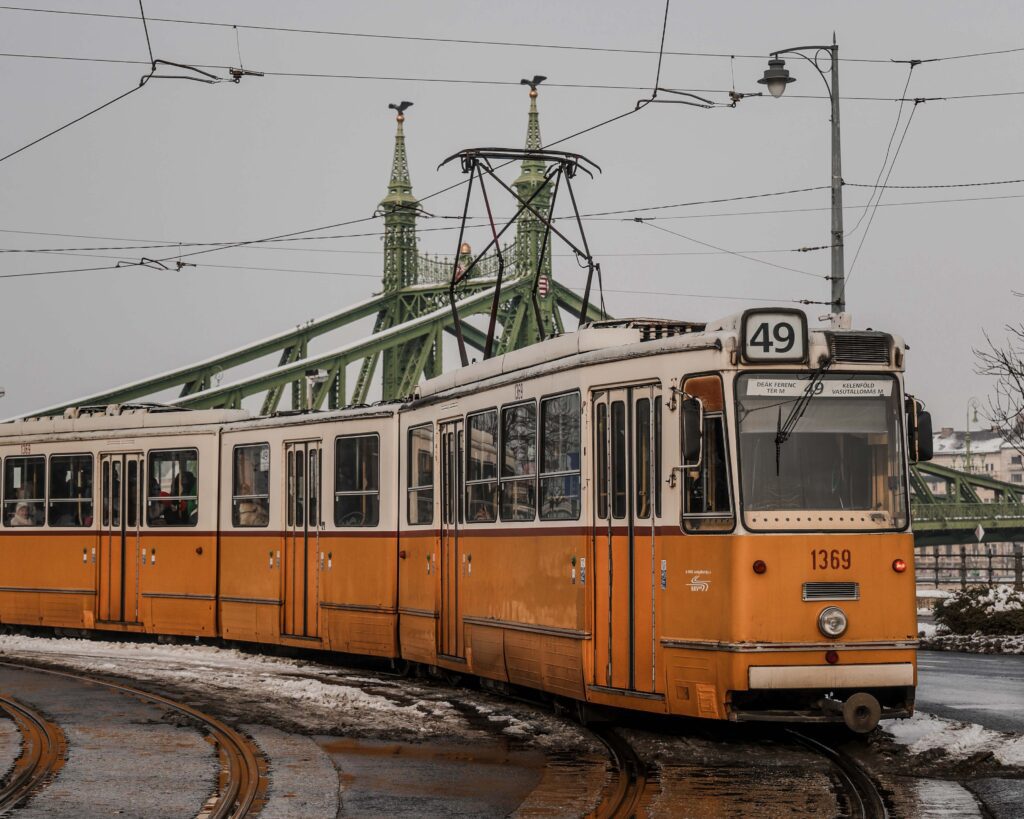
Photo by @norbertlepsik
Tatra T5C5K
Originally produced in Czechoslovakia, the Tatra T5C5K trams are a familiar sight across Budapest. Known for their durability, these vehicles have been modernized over time and continue to serve as a reliable part of the fleet.
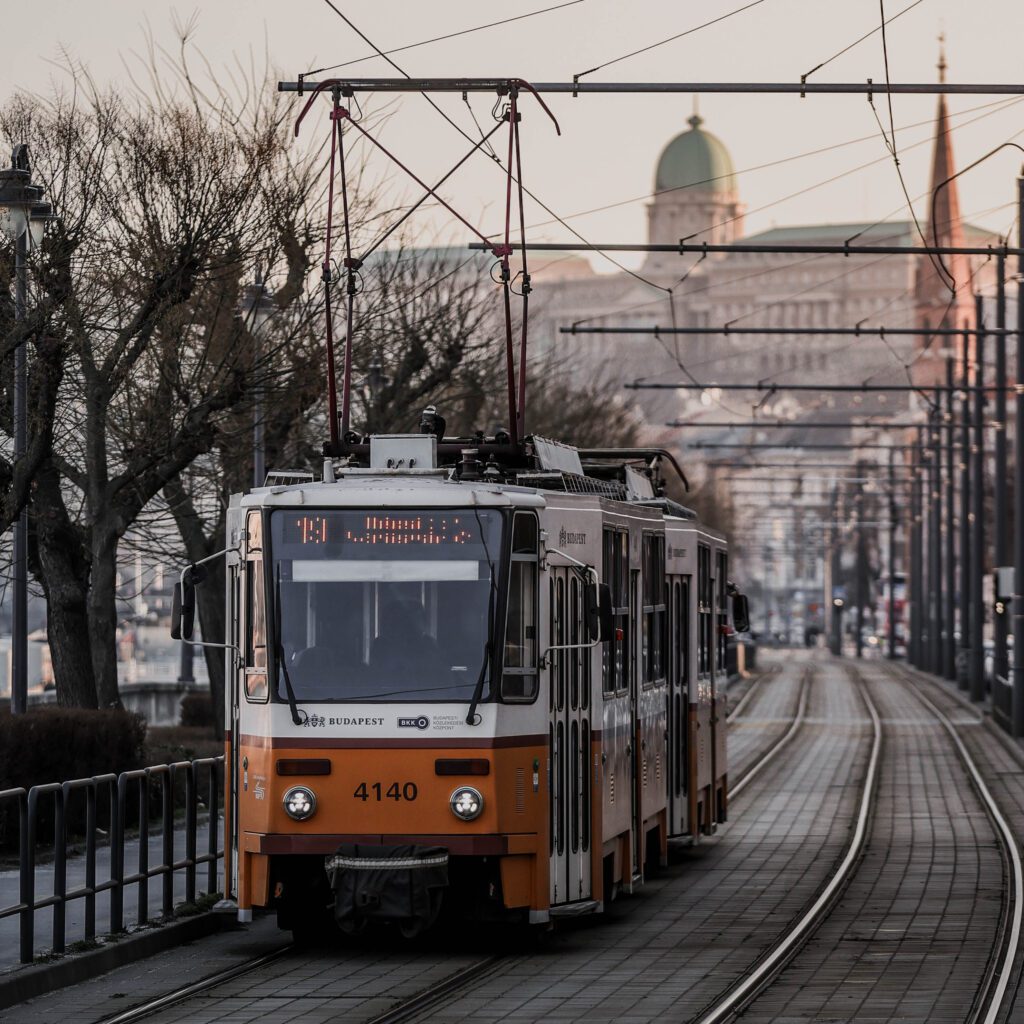
Photo by @norbertlepsik
CAF Urbos 3
The CAF Urbos 3 represents the newest generation of trams in Budapest. These fully low floor, high capacity vehicles are used on major lines such as line 1. Notably, Budapest operates the world’s longest tram of this type, a nine section articulated vehicle measuring nearly 56 meters, making it a standout even on a global scale.
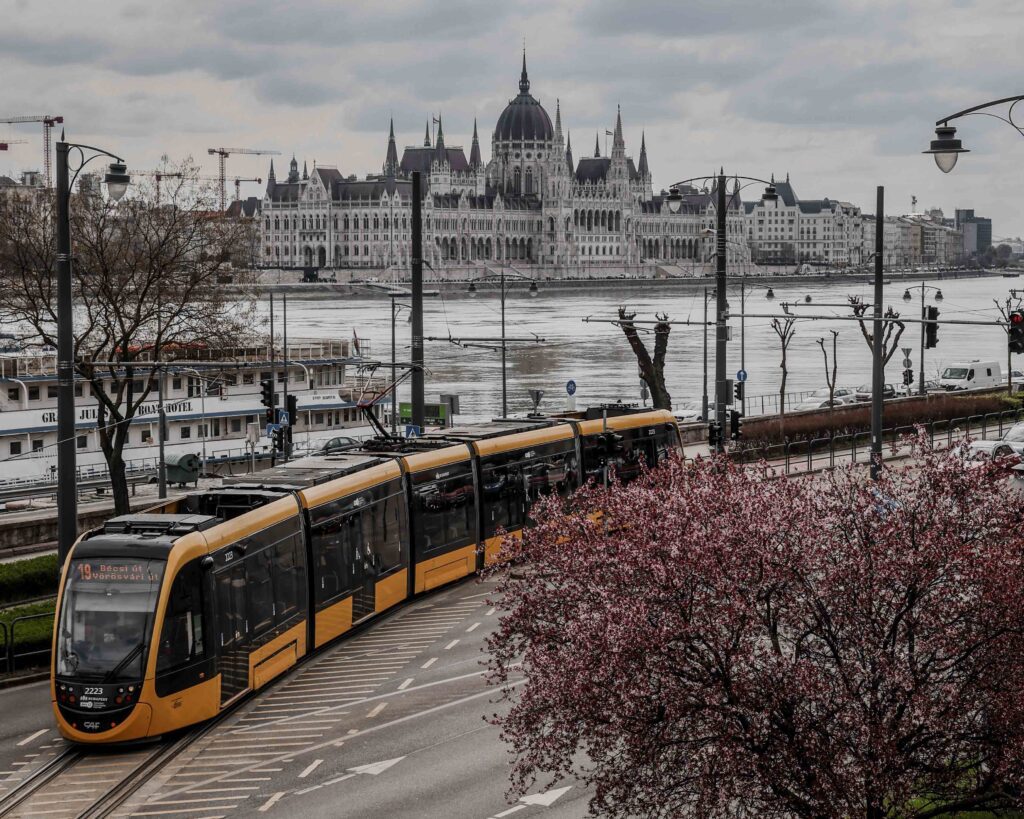
Photo by @norbertlepsik
While many other tram types exist across the network, these are the most commonly encountered and best represent the diversity of Budapest’s fleet.
The Festive Fleet During Christmas
During the Christmas season, Budapest’s tram network transforms into something entirely different. Selected trams are covered in thousands of lights, creating moving installations that travel across the city after dark.
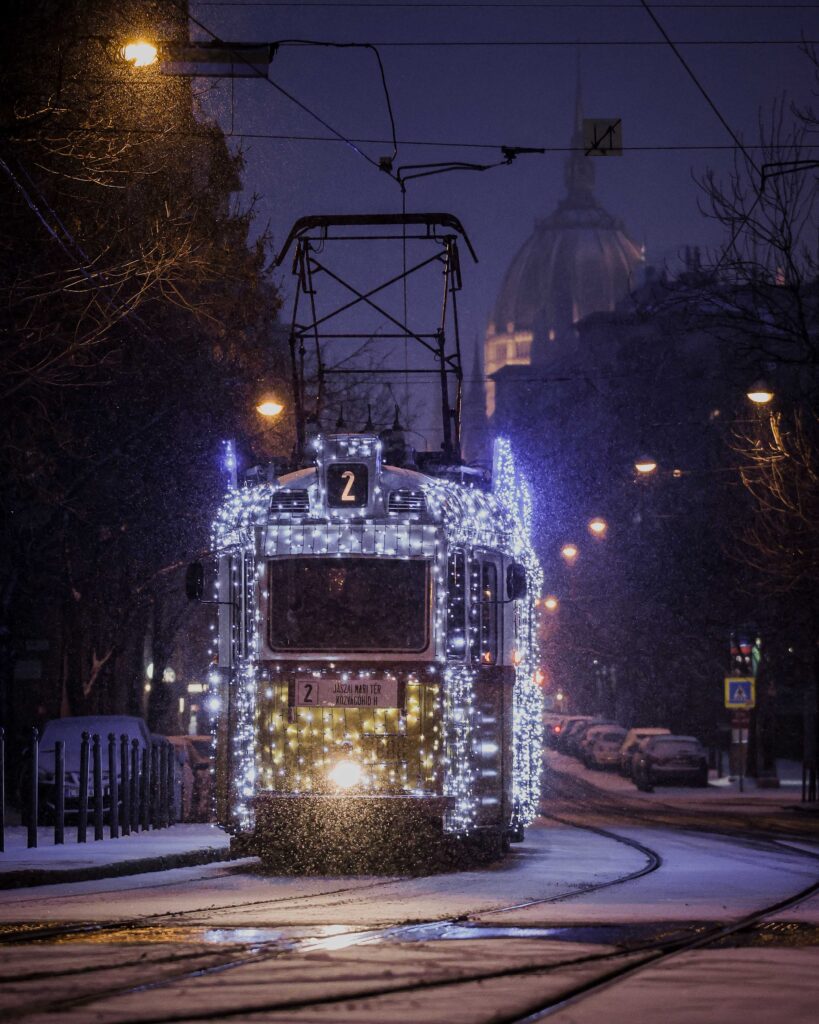
Photo by @norbertlepsik
These festive trams run on different lines each year, turning everyday routes into seasonal experiences. Locals often plan rides specifically to catch them, while visitors see them as one of the most memorable winter highlights. Combined with the city’s Christmas markets and illuminated streets, the festive fleet adds another layer to Budapest’s already atmospheric winter setting.
A City Defined by Its Tracks
Budapest’s trams are not just infrastructure, they are part of how the city is experienced. They connect districts, shape daily routines, and at times, even become attractions in their own right. Whether it is a quiet ride along the Danube, a busy journey through the Grand Boulevard, or a late evening tram glowing with Christmas lights, these vehicles offer a perspective on Budapest that feels both local and timeless.
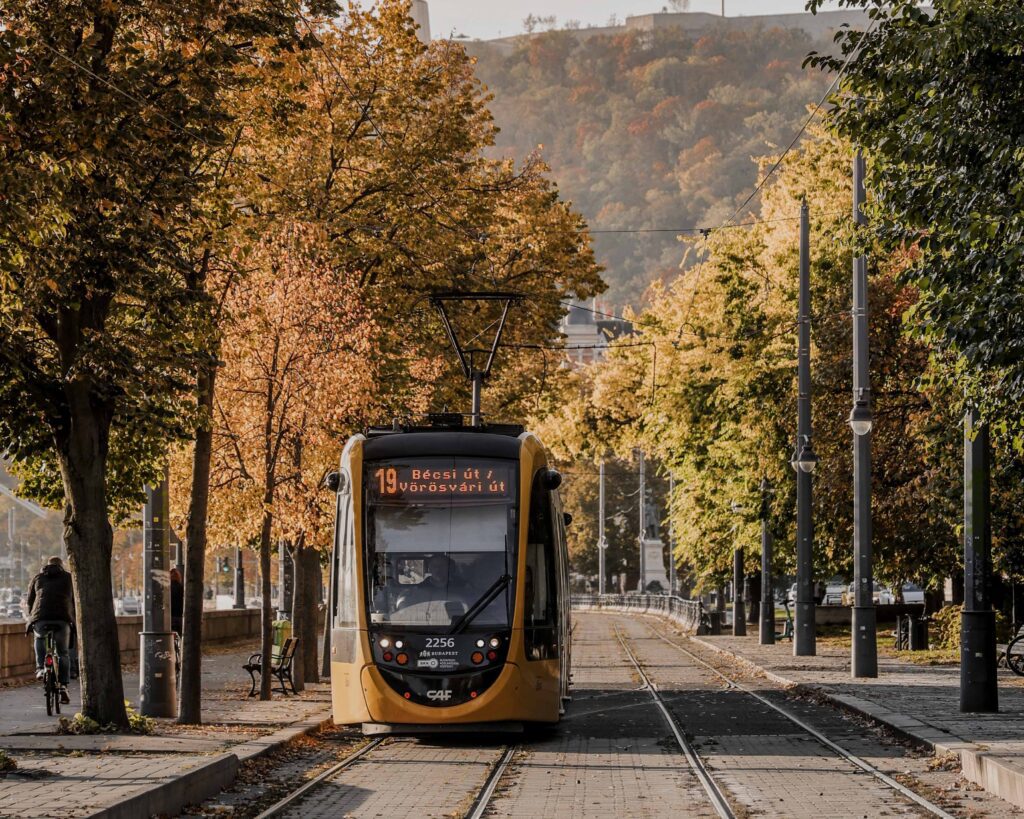
Photo by @norbertlepsik