















Beyond Goulash: The Most Unique Hungarian Dishes to Try in Budapest
Hungarian cuisine often starts and ends with goulash in most conversations. It is understandable, it is iconic, widely available, and deeply rooted in national identity. But once you spend a little more time in Budapest, you realize how much more there is to explore. The city’s food culture is built on rich traditions, seasonal ingredients, and a surprisingly wide range of dishes that go far beyond the familiar bowl of paprika scented stew.
To understand Budapest through food, you have to look past the obvious and step into the everyday plates locals actually order.
Lángos and the Street Food Classic
Few foods capture Budapest’s casual eating culture better than Lángos. Simple at first glance, it is a deep fried flatbread traditionally topped with sour cream and grated cheese, though modern versions go far beyond that. Garlic, ham, vegetables, even sweet variations appear depending on where you try it.

Photo source – Mindtrip
You will find it everywhere from markets to lakeside stalls, especially around places like Central Market Hall. What makes it interesting is not complexity but contrast, crispy edges, soft interior, and toppings that melt into the warm dough almost immediately. It is street food, but with a strong local identity that has not really changed despite its popularity.
Hortobágyi Palacsinta, Not a Sweet Pancake
At first glance, Hortobágyi palacsinta might sound like dessert, but it is anything but. This dish takes a thin pancake and fills it with finely chopped meat, usually veal or chicken, then covers it in a paprika based sauce. The result is rich, soft, and layered in texture.

It is often found in traditional restaurants around Budapest, usually served as a starter, though it is substantial enough to stand on its own. What makes it stand out is how it blends something delicate in structure with something deeply savory in flavor, a combination that feels very specific to Hungarian cooking.
Töltött Káposzta, Slow Comfort Food
Töltött káposzta is one of those dishes that tells you a lot about local cooking philosophy. It is slow, layered, and built around time rather than speed. Cabbage leaves are filled with a mix of minced meat and rice, then cooked in a paprika based sauce, often with smoked meat added for depth.
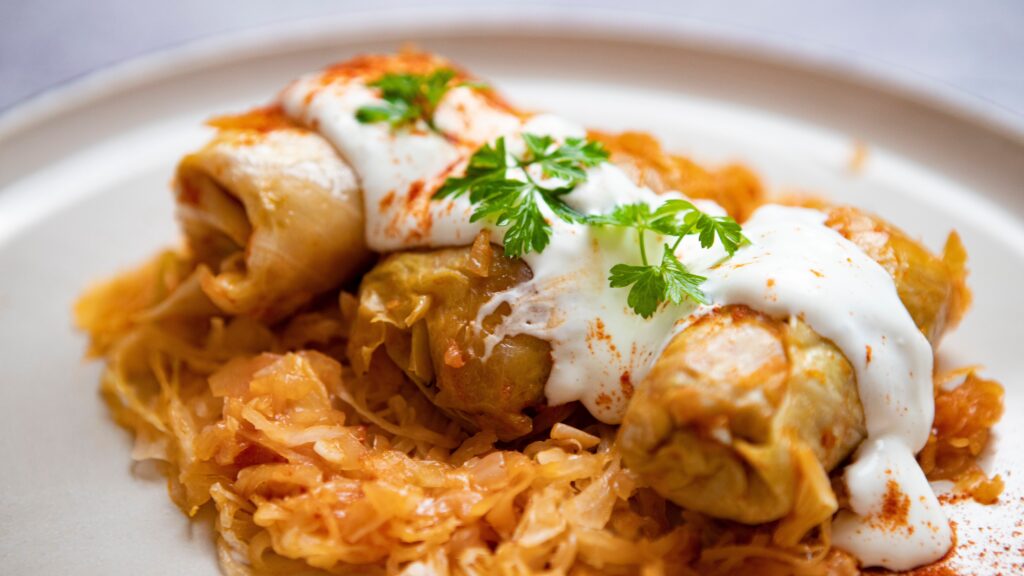
Photo source – Blikk
You will find it in both home style restaurants and more traditional dining spots in Budapest, especially during colder months. It is not a light dish, and it is not meant to be. The flavors are steady and grounded, the kind of food that feels tied to seasonal rhythm rather than trends.
Pörkölt and the Depth of Simplicity
While goulash is often the international reference point, locals frequently lean toward Pörkölt. It is a thick stew made with meat, onions, and paprika, usually served with nokedli, a type of small dumpling similar to spaetzle. The key difference is texture and concentration. Pörkölt is denser, more focused, with less broth and more emphasis on slow cooked depth. It appears across Budapest menus in different variations, pork, beef, sometimes chicken, each restaurant adjusting the balance slightly. It is simple on paper, but the execution makes the difference, and that is where local kitchens tend to show their character.
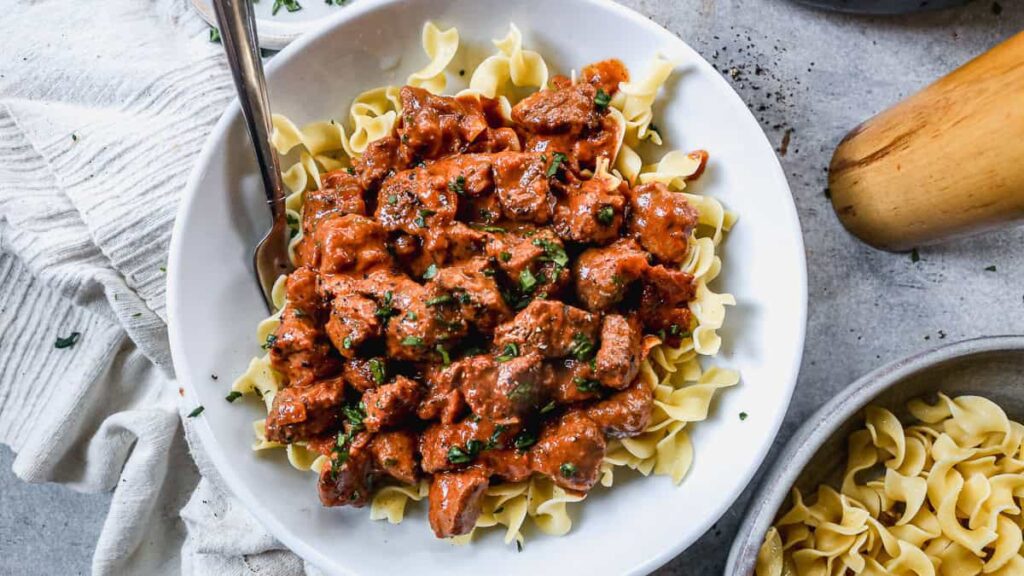
Photo source – Pörkölt (Hungarian Stew) – Tastes Better From Scratch
Túró Rudi and Everyday Sweetness
Not all Hungarian food is heavy or savory. One of the most recognizable everyday snacks is Túró Rudi. It is a chocolate coated bar filled with sweetened curd cheese, slightly tangy, slightly sweet, and widely available in shops and cafés. It does not belong to restaurants or fine dining, but to daily life. You will see it in convenience stores, bakeries, and even train stations. It is one of those small food items that locals grow up with, and visitors often discover by accident.
Dobos Torte and Café Culture
Budapest’s café culture is closely tied to its desserts, and few are as recognizable as Dobos torte. It is a layered sponge cake with chocolate buttercream and a signature caramel top layer that adds a crisp finish. You will find it in traditional cafés across the city, often in interiors that reflect the late 19th century café culture Budapest is known for. Places like New York Café are part of this tradition, where desserts are not just something sweet at the end of a meal, but part of a longer, slower experience.
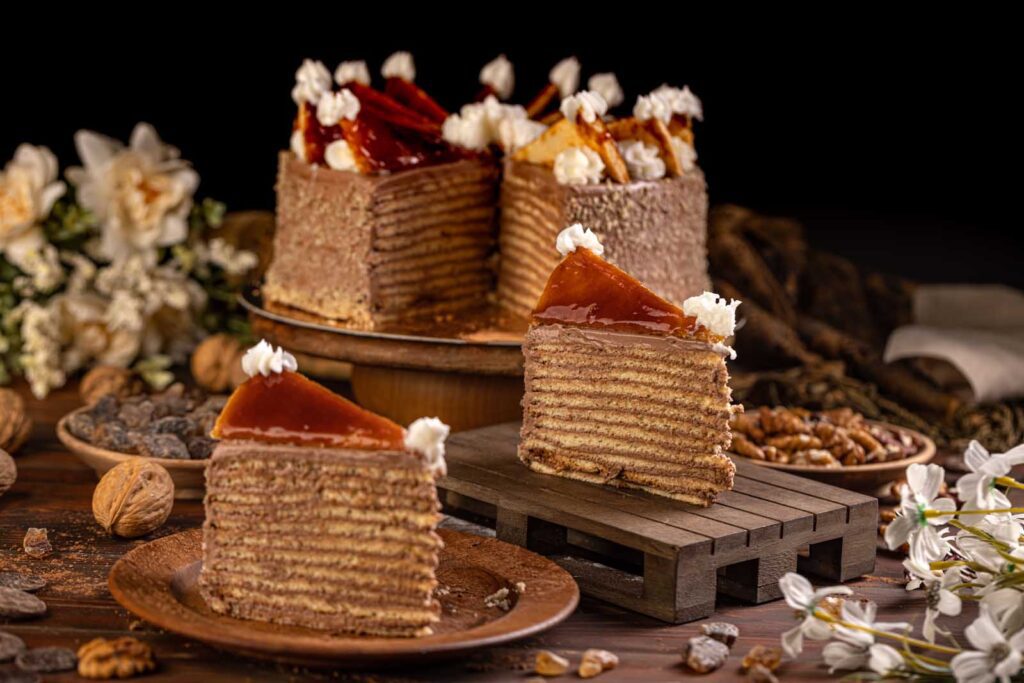
Photo source – the planet d
A Food Culture Built on Layers
What stands out in Budapest is not just the variety of dishes, but how they reflect different layers of history and lifestyle. Street food exists alongside long simmered stews, café desserts sit next to everyday snacks, and traditional recipes continue to evolve without losing their core identity. You can eat something quick on the street, then sit down later for a multi course meal that follows completely different rhythms, and both will still feel distinctly Hungarian.
That is what makes the food scene here interesting. It does not rely on reinvention for the sake of it. It works with what is already there, adjusting slowly, keeping familiar structures while allowing new interpretations to appear. And once you move beyond goulash, you start to see how much more there actually is to taste in Budapest, not just in restaurants, but in everyday life itself.