














August 20th in Hungary: Traditions and Celebrations of St. Stephen’s Day
August 20 is one of the most important days in the Hungarian calendar. Known as St. Stephen’s Day and the Day of the Foundation of the State, it is Hungary’s official state holiday and a day when history, tradition, food and large public celebrations come together. For visitors, it is also one of the most exciting times to experience Budapest, especially when the Danube becomes the stage for the country’s famous evening fireworks.
But there is much more to August 20 than the spectacular show in the capital. Across Hungary, towns and villages hold their own celebrations, new bread is blessed, the annual Cake of Hungary is presented, and people gather to mark the legacy of King Stephen I, the first king of Hungary.
What Does August 20 Celebrate?
August 20 commemorates King Stephen I, who established the foundations of the Hungarian Christian state around the turn of the first millennium. Crowned around the year 1000, Stephen introduced a centralised state structure and helped establish Hungary as a Christian kingdom within medieval Europe. He was canonised on August 20, 1083, which is why the date became associated with his feast day.
Today, the holiday officially commemorates both the foundation of the Hungarian state and St. Stephen, the country’s first king. Unlike March 15 and October 23, which remember specific revolutions and historical struggles, August 20 is closely connected to the beginnings of the Hungarian state itself. The day has also developed a strong connection with the harvest and the arrival of the new wheat. This is where another important Hungarian tradition comes in: the celebration of the new bread.
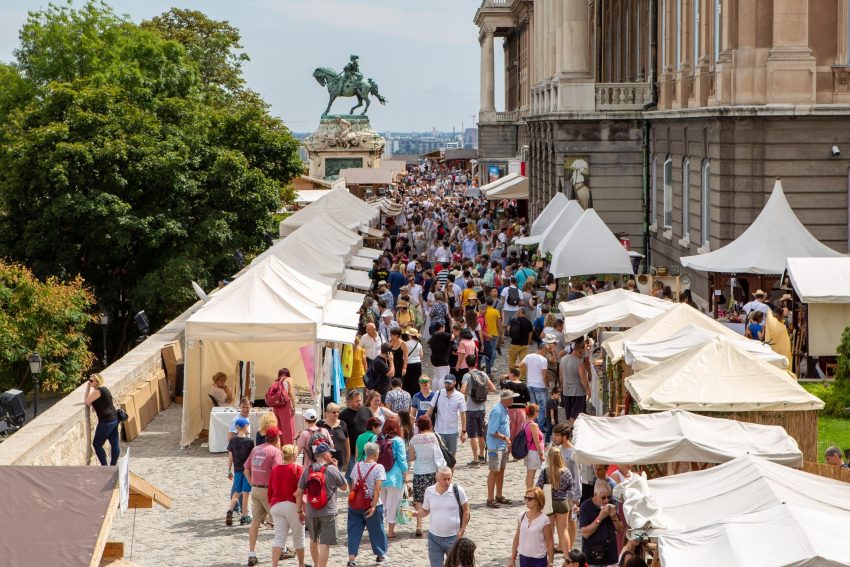 Photo by funzine
The New Bread and the Country’s Bread
For generations, bread has held a special place in Hungarian culture, and August 20 is traditionally connected with the celebration of the new harvest. The freshly harvested grain represents the work of farmers and the year’s harvest, while the new bread is a symbol of nourishment and prosperity. One of the modern traditions surrounding the holiday is the selection of the Country’s Bread (Ország Kenyere). Every year, bakers compete to create the bread associated with the August 20 celebrations. The winning bread is then presented as part of the national festivities and can be tasted at selected events around the country.
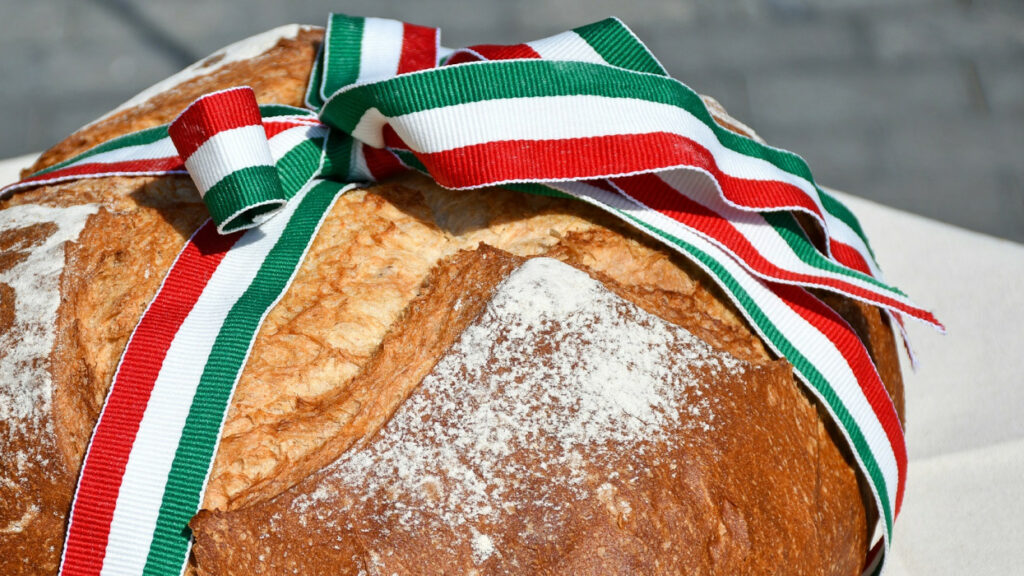 Photo by minálunk
The annual St. Stephen’s Day Bread Competition also includes other categories, with bakers competing in areas such as innovative breads and festive pastries. The 2026 competition received a record number of entries, continuing a tradition that has become an important part of the country’s August 20 food culture. For Hungarians, this is not simply about choosing a particularly good loaf of bread. It connects the national holiday with something much more familiar: the bread that has a place on almost every Hungarian table.
The Country’s Cake
And then there is the sweeter side of August 20. Every year, the Hungarian Confectioners’ Industry Association organises the Country’s Cake (Magyarország Tortája) competition, inviting Hungarian pastry chefs to create a cake that represents the country’s flavours and culinary creativity. The competition has become one of the most eagerly anticipated gastronomic traditions of the holiday. New cakes are announced each year, and from August 20 onwards, the winning creation becomes available at selected pastry shops around Hungary.
The 2026 competition is particularly notable as its 20th edition, with a record 60 entries submitted by pastry chefs. The competition’s theme this year focuses on traditional Hungarian curd cheese and sour cream, ingredients with a long history in Hungarian cuisine. There is also usually a sugar-free cake selected alongside the main winner, giving even more people a chance to take part in one of the country’s favourite August 20 traditions. So if you happen to be in Hungary around August 20, trying the Country’s Cake is practically part of the programme. Consider it the sweetest way to celebrate.
 Photo by StreetKitchen
How Hungary Celebrates August 20
August 20 is celebrated throughout the country, not just in Budapest. Local festivals, concerts, markets, folk programmes, food events and community celebrations take place in towns and villages across Hungary. Some celebrations are intimate, centred around a town square or church, while larger cities organise full-day programmes. Traditional Hungarian food and drink are usually part of the festivities, and events connected to the new bread and harvest remain an important element.
In previous years, celebrations have also included folk art festivals, gastronomic promenades, concerts, military ceremonies, church services and processions. The exact programme changes every year, but the combination of national traditions and local celebrations remains a constant part of August 20. This is one of the nicest things about experiencing the holiday outside Budapest. The celebrations may be smaller, but they often feel much more connected to local communities and traditions.
August 20 in Budapest
Budapest takes the celebrations to another level. The capital hosts several days of concerts, cultural programmes, food events and family activities around August 20. In 2026, the official St. Stephen’s Day programme runs from August 15 to 21, with events spread across almost 20 locations, including Buda Castle, the Castle Garden Bazaar, Tabán and the Danube Promenade. The official celebrations traditionally include a ceremonial flag-raising and military events around Parliament, while other parts of the city host concerts, cultural programmes and gastronomic events.
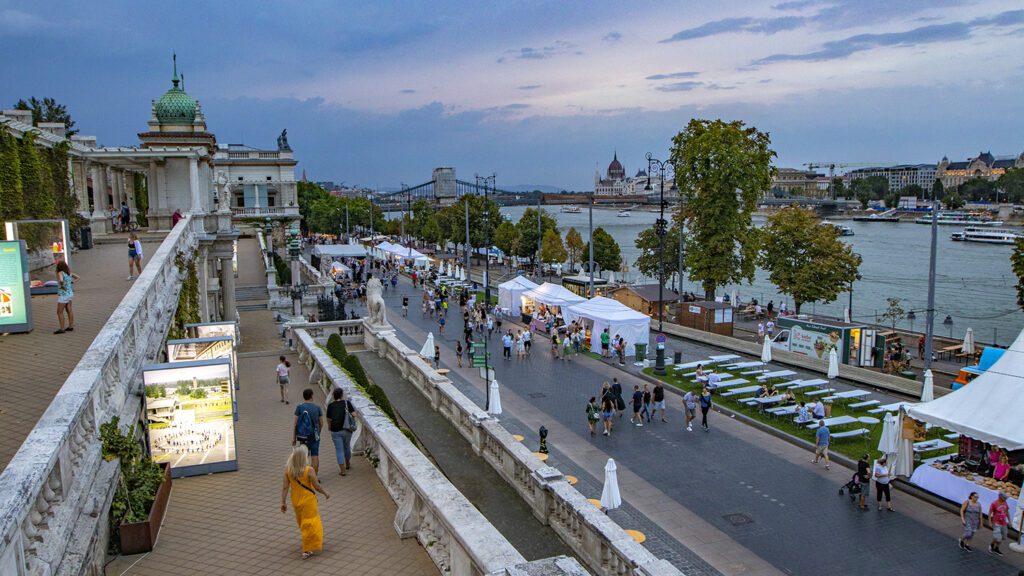 Photo by CsodálatosMagyarország
The Hungarian Flavours Street (Magyar Ízek Utcája) is another popular part of the celebrations, bringing Hungarian dishes, local products, the Country’s Bread and the Country’s Cake together in one place. It is a particularly good stop if you want to experience the gastronomic side of August 20 in Budapest. For visitors, the great thing about the Budapest celebrations is the sheer variety. You can spend the day exploring the city, stop for something to eat, listen to live music, visit one of the cultural programmes and then make your way towards the Danube for the evening.
The August 20 Fireworks in Budapest
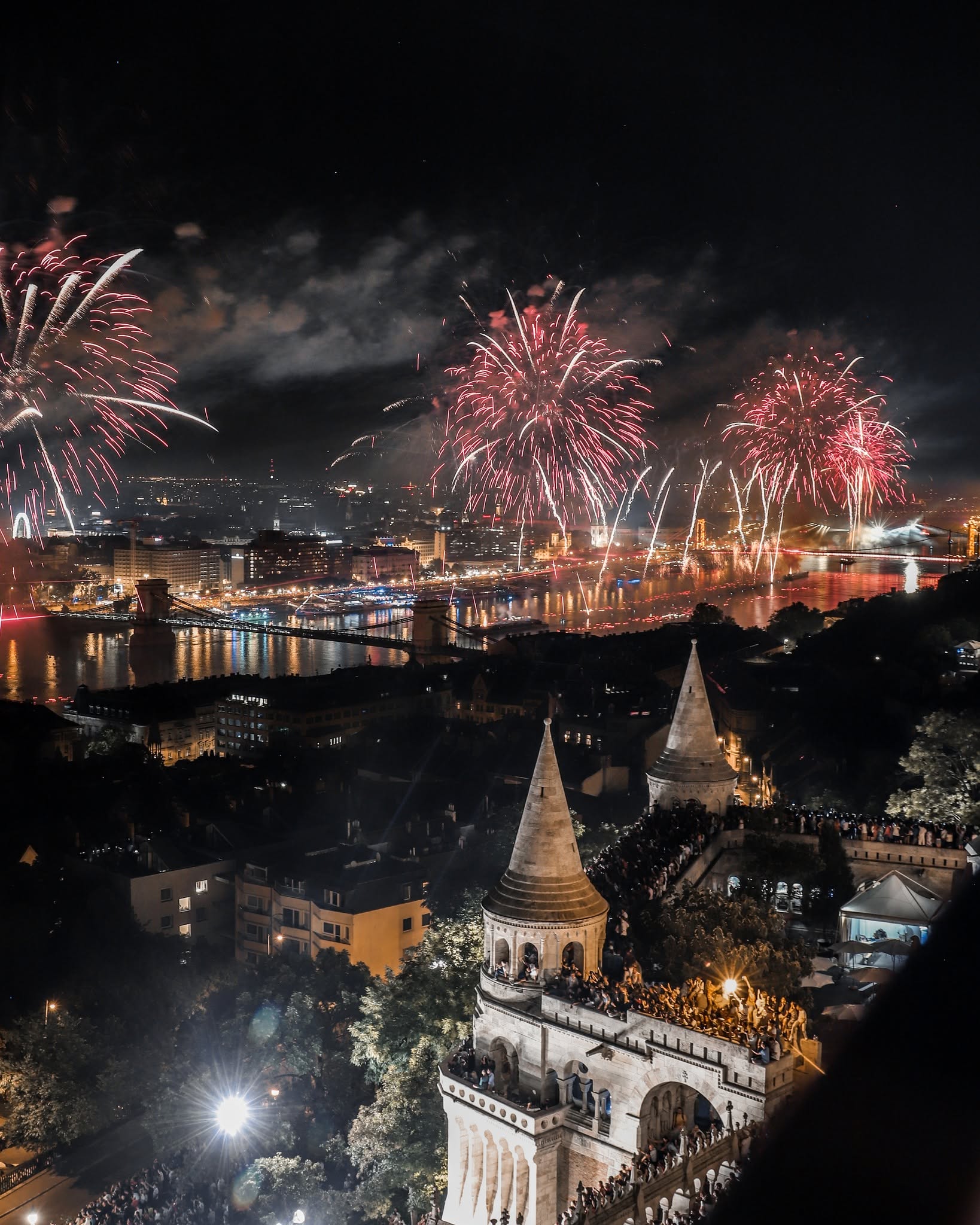
And then comes the part that most people associate with August 20: the fireworks. As darkness falls, the Danube becomes the centre of attention. The fireworks are launched above the river, with the illuminated Parliament, Buda Castle, bridges and historic riverfront creating the backdrop. The tradition of celebrating August 20 with fireworks goes back to the 19th century, although the event has been interrupted at various points in Hungarian history. Since 1966, fireworks have taken place almost every year, with the exception of 2020.


Photo by Norbert Lepsik
Modern August 20 celebrations have grown far beyond a traditional fireworks display. The show combines pyrotechnics with music, lighting, projections, lasers and drone elements, creating a large-scale spectacle across the Danube. In 2026, the official programme again describes the fireworks and accompanying drone show as the highlight of the celebrations. The best part is that you do not necessarily need a special viewpoint. The Danube riverbanks offer views from both sides of the city, while elevated locations around Buda can provide a wider panorama. For an especially memorable experience, a Danube river cruise gives you a completely different perspective. Instead of watching the fireworks from the crowded riverbanks, you can see the show from the water, with Budapest’s illuminated skyline surrounding you. It is one of those evenings when the city’s famous riverfront suddenly feels like a purpose-built stage.
A Holiday That Brings Together Past and Present
August 20 manages to combine some of Hungary’s oldest traditions with a distinctly modern celebration. The story begins with King Stephen and the foundation of the Hungarian state, continues with the blessing of new bread and the country’s culinary traditions, and ends with thousands of people gathering around the Danube to watch lights, drones and fireworks fill the Budapest sky. That contrast is part of what makes the day so interesting. You can taste a centuries-old food tradition in the afternoon, walk through streets filled with music and celebrations, and then watch one of Europe’s biggest fireworks displays at night. For Hungarians, August 20 is a day to look back at where the country began. For visitors, it is an opportunity to see Hungary celebrating its history, culture and traditions in one of the most spectacular ways possible.