











Budapest’s Role in Historical Events: A Deep Dive
Budapest is a city where history is never far away. Every bridge, square, and hill has witnessed moments that shaped not only Hungary, but also Central Europe. From Roman settlements and medieval kingdoms to revolutions, world wars, and the fall of communism, the Hungarian capital has stood at the crossroads of cultures, empires, and political change for nearly two thousand years.
For visitors, Budapest’s beauty often comes first. The Parliament dominates the Danube, grand boulevards stretch through the city centre, and elegant buildings tell the story of a prosperous capital. Yet behind these impressive façades lies a much deeper narrative. The city has been rebuilt more than once, occupied by different powers, divided by ideology, and transformed by generations determined to shape its future.
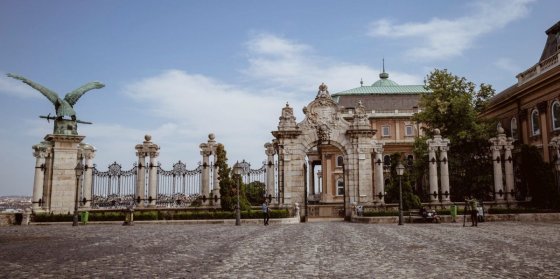
Understanding Budapest’s history adds another dimension to every walk through the city. Many of its most famous landmarks are not simply architectural masterpieces, but silent witnesses to defining moments in Hungarian history. Whether you are exploring Castle Hill, standing in Heroes’ Square, or crossing the Danube, you are following the footsteps of centuries of political, cultural, and social change.
Roman Beginnings: Aquincum
Long before Budapest existed, the Romans established the city of Aquincum on the western bank of the Danube during the first century AD. As the capital of the province of Pannonia Inferior, Aquincum became an important military and administrative centre along the northern frontier of the Roman Empire. The remains of this ancient settlement can still be explored today in northern Buda, where visitors will find streets, baths, temples, and amphitheatres that offer a glimpse into everyday Roman life. Even after nearly two thousand years, Aquincum reminds us that Budapest’s strategic location has attracted civilizations for centuries.
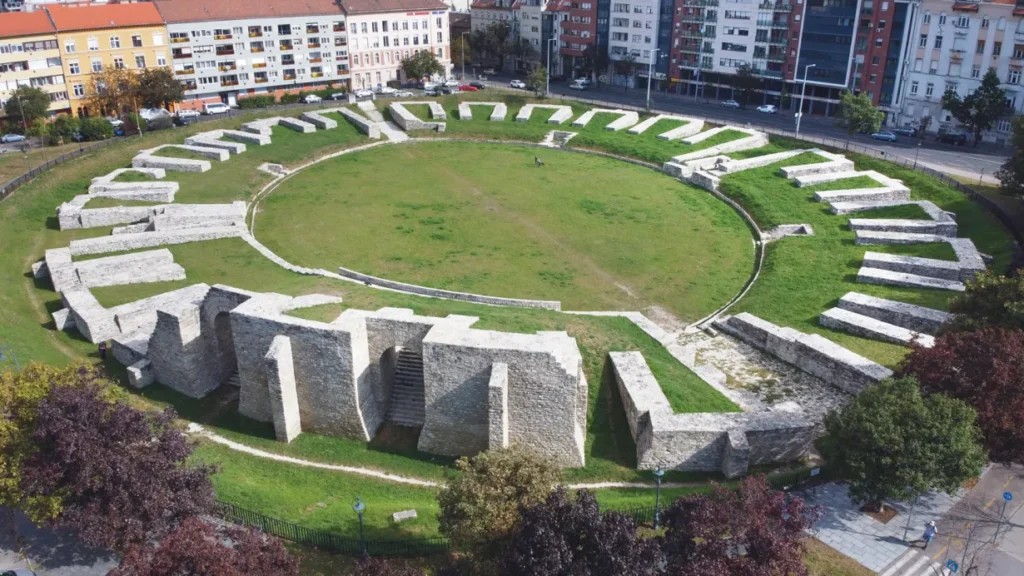
Photo by The Past
The Birth of the Hungarian Kingdom
The arrival of the Hungarian tribes in the Carpathian Basin at the end of the 9th century laid the foundations for the Hungarian state. Under King Stephen I, who was crowned around the year 1000, Hungary became a Christian kingdom that would play an increasingly important role in medieval Europe. Buda gradually developed into a royal centre, particularly after the Mongol invasion of 1241, when King Béla IV ordered stronger stone fortifications to protect the kingdom. Castle Hill would soon become one of Hungary’s most significant political and cultural centres.
Buda Under Ottoman Rule
One of the defining chapters of Budapest’s history began in 1541, when the Ottoman Empire captured Buda. For nearly 150 years, much of central Hungary remained under Ottoman control. The Ottoman period introduced a lasting bathing culture that still defines Budapest today. Several thermal baths built during this era remain in operation, including Rudas Bath (Rudas Gyógyfürdő) and Király Bath (Király Gyógyfürdő). These buildings represent one of the most visible architectural legacies of Ottoman rule. Although this period brought conflict and political uncertainty, it also added another cultural layer to the city’s identity.
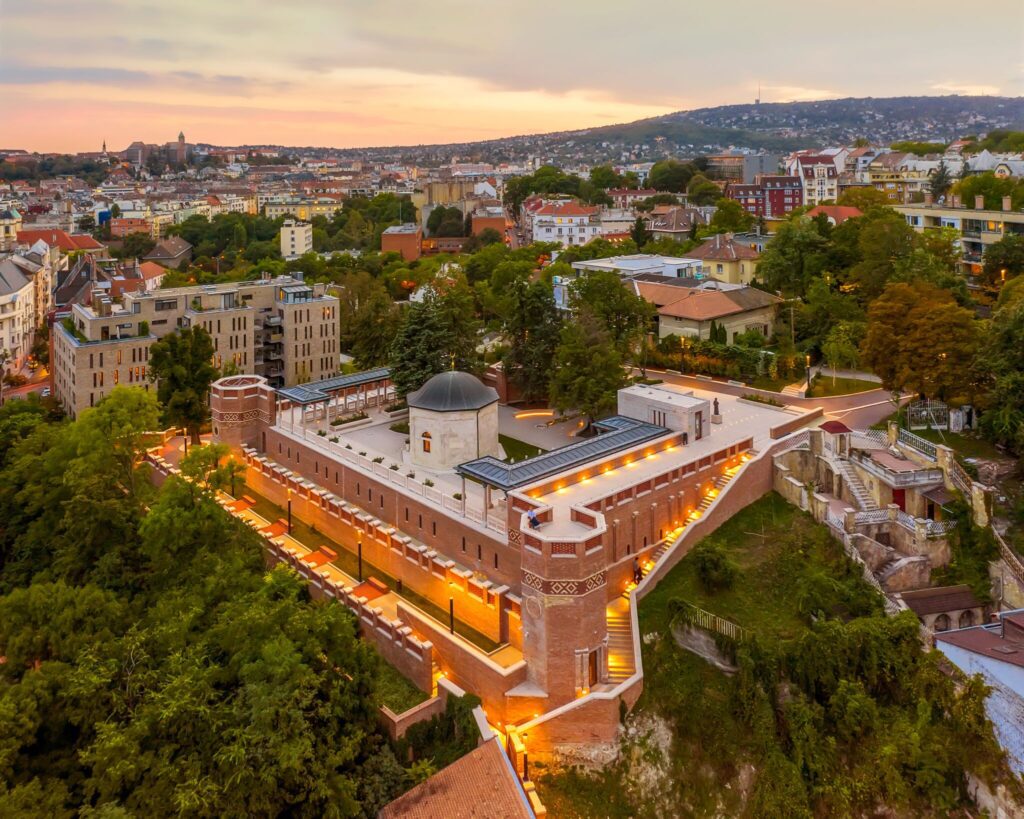 Photo by szallas.hu
Habsburg Rule and the Rise of Budapest
Following the liberation of Buda in 1686, the Habsburg Monarchy gradually rebuilt the city. During the 18th and 19th centuries, Buda, Pest, and Óbuda expanded rapidly as commerce, industry, and culture flourished.
A turning point came in 1873 when the three independent cities officially united to form Budapest. This marked the beginning of an extraordinary period of development. Grand boulevards, elegant apartment buildings, impressive public institutions, and the city’s famous bridges transformed Budapest into one of Europe’s great capitals. Many of the landmarks visitors admire today, including the Parliament Building, Heroes’ Square, and Andrássy Avenue, were created during this remarkable period of growth.
Photo by PestBuda
The Revolution of 1848
The Hungarian Revolution of 1848 remains one of the country’s defining moments. Inspired by revolutionary movements across Europe, Hungarians demanded political reform, freedom of the press, and greater independence from Habsburg rule.
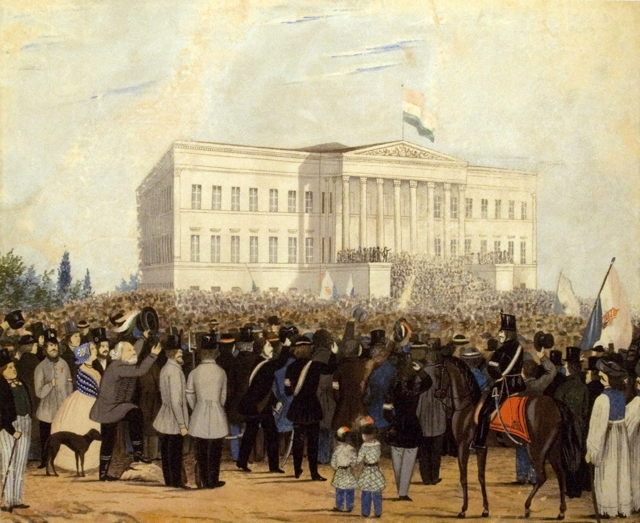 Photo by cultura.hu
Many key events unfolded in Pest, where crowds gathered to hear the famous demands known as the Twelve Points. Although the revolution was ultimately suppressed, it became a lasting symbol of national identity and the desire for self determination. Several monuments throughout Budapest commemorate the events and figures of 1848, reminding visitors how strongly this chapter continues to shape Hungarian memory.
Budapest During World War II
The Second World War brought devastating destruction to Budapest. As the conflict reached Hungary in 1944 and 1945, the city became the site of one of the longest and most destructive urban battles of the war.
The Siege of Budapest lasted more than three months, leaving much of the city heavily damaged. Every bridge crossing the Danube was destroyed during the retreat of German forces, while countless historic buildings suffered severe damage. The war also marked one of the darkest periods in Hungarian history. The persecution and deportation of Budapest’s Jewish population led to immense human loss. Today, memorials such as the Shoes on the Danube Bank stand as powerful reminders of these tragedies and encourage reflection on the importance of remembrance.
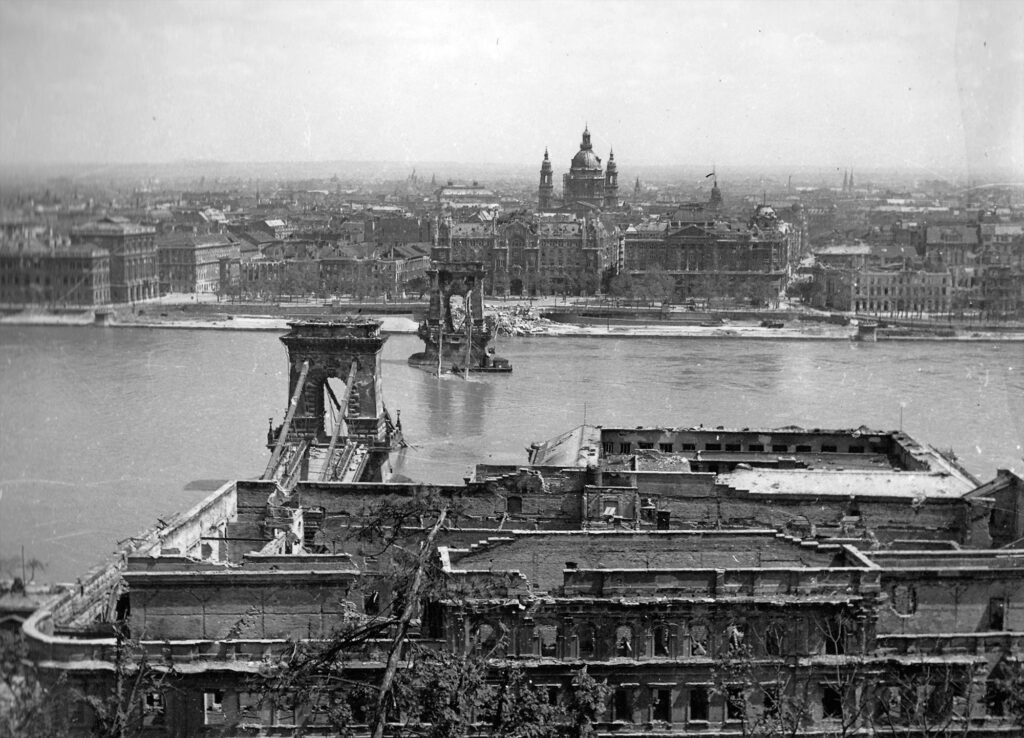 Photo via radio free europe
The Hungarian Revolution of 1956
Perhaps no modern event is more closely associated with Budapest than the Hungarian Revolution of 1956. In October 1956, students and citizens gathered peacefully to demand political reforms and greater freedom from Soviet influence. What began as a demonstration quickly developed into a nationwide uprising.
For several days, Budapest became the centre of intense fighting as ordinary citizens resisted Soviet forces. Although the revolution was eventually suppressed, it became an enduring symbol of courage and the pursuit of freedom. Many locations across the city still bear traces of these events, while monuments and exhibitions preserve the memory of those who took part.
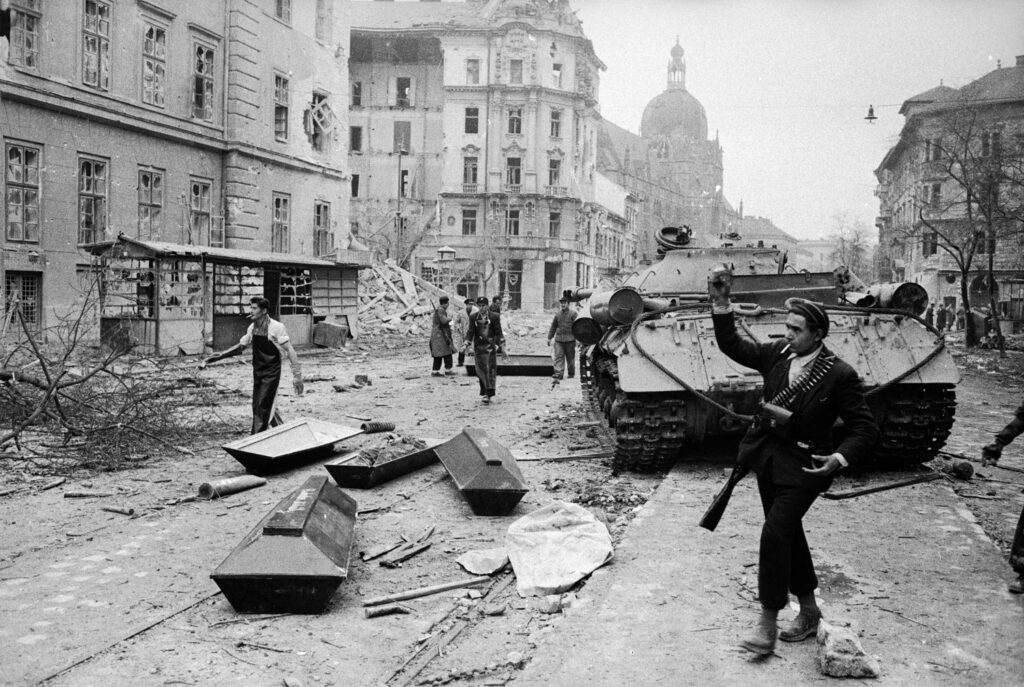 Photo via TIME
From Communism to Democracy
Following decades of communist rule, Hungary experienced another historic transformation in 1989 with the peaceful transition to democracy. Budapest once again became the stage for political change. Public demonstrations, negotiations, and symbolic events marked the end of one era and the beginning of another. The removal of border restrictions between Hungary and Austria also played a significant role in the wider political changes taking place across Central and Eastern Europe. Today’s Budapest reflects both its historical heritage and its modern European identity, balancing centuries of tradition with continuous renewal.
Where to Experience Budapest’s History Today
One of Budapest’s greatest strengths is that history remains visible throughout the city. Castle Hill tells the story of medieval kings and royal courts. Heroes’ Square celebrates the nation’s founding figures. The Parliament represents Hungary’s constitutional history, while the House of Terror Museum explores the country’s experiences under both Nazi and communist dictatorships. Along the Danube, memorials preserve the memory of wartime victims, and the surviving Ottoman baths continue traditions that began centuries ago. Walking through Budapest often feels like moving between different historical periods, each leaving its own architectural and cultural imprint on the city.
A City That Continues to Remember
Budapest has experienced conquest, prosperity, revolution, occupation, destruction, and renewal. Each chapter has left visible marks on the city, creating the layered character that makes the Hungarian capital so fascinating today.
Its history is not confined to museums or monuments. It lives in the streets, the bridges, the castle walls, and the thermal baths that continue to welcome visitors centuries after they were first built. Exploring Budapest means discovering a city that has constantly adapted while preserving the stories that shaped its identity. That balance between memory and everyday life is one of Budapest’s defining qualities, and one of the reasons why every visit reveals something new beneath its beautiful skyline.