












The Architecture of Budapest: Walking Through Styles and Eras
Budapest is a city you read as you walk. Not in a straight line, and never in a single style, but through shifts in scale, detail, and atmosphere that reveal how different periods have settled into the same urban fabric. A wide boulevard gives way to a quieter street, a formal façade opens into a lived-in courtyard, a historic structure carries traces of multiple rebuilds. Nothing feels isolated. The layers connect, sometimes clearly, sometimes only through small details you catch along the way.
Medieval Foundations on the Buda Hills
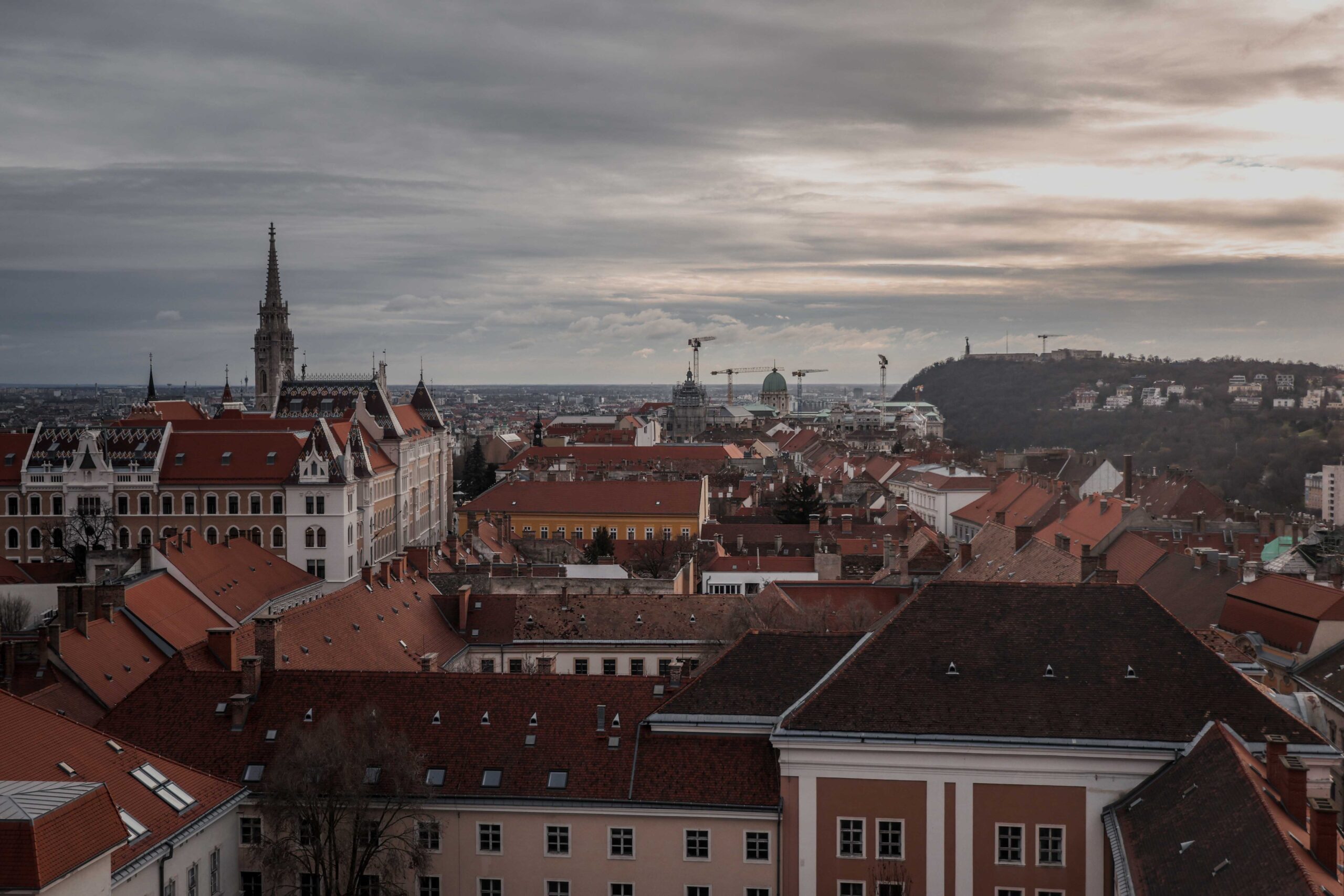
On the Buda side, the city slows down and the structure of the past becomes easier to read. Around Buda Castle and the Castle District, the street network still follows a medieval logic, shaped by terrain rather than strict planning. Narrow streets curve around the hill, small squares open unexpectedly, and viewpoints toward the Danube appear almost without warning. It feels contained, more inward than the city below.
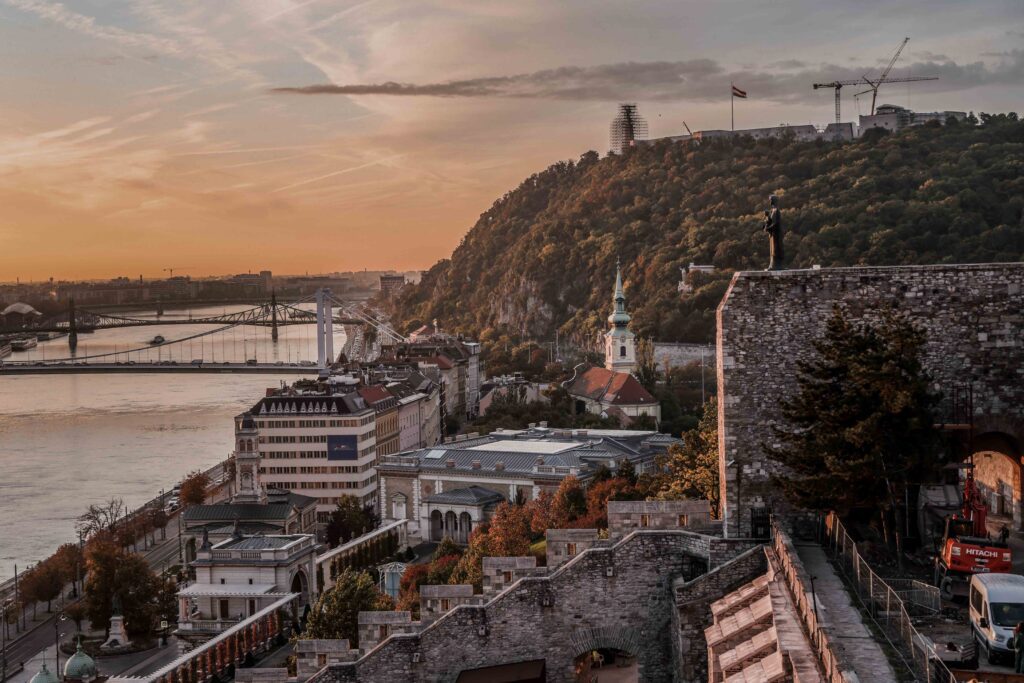
Photo by @norbertlepsik
What you see today is the result of several rebuilds, especially after the Ottoman period and the heavy damage of World War II. Yet the atmosphere holds because the scale and layout remain consistent. Buildings rarely overpower the streets, and the rhythm feels human, almost domestic despite the historic setting.
Matthias Church adds another layer to this story. While it carries medieval origins, much of its current appearance comes from a 19th century reconstruction that reshaped it in a Neo-Gothic style. The patterned roof, the sharpened towers, the decorative elements all suggest age, but they are also carefully reinterpreted. It is a good example of how Budapest often treats history, not as something frozen, but as something adjusted to fit a later vision while keeping its identity intact.

Photo by @norbertlepsik
Ottoman Traces in Everyday Spaces
Budapest’s Ottoman past does not dominate the streets, but it remains present in spaces you experience rather than observe from a distance. Instead of large urban interventions, this period left behind architecture that turns inward, focused on function, proportion, and atmosphere.
At Rudas Baths and Király Baths, the layout is centered around domed halls and geometric pools. Light enters through small openings, creating a controlled, almost calm environment. The scale is different from the rest of the city, more compact, more focused. It feels quieter, even when occupied. What makes these places stand out is that they are still part of daily life. They are not preserved as static monuments, but used as they were intended. This continuity keeps the Ottoman layer grounded in the present, not separated from it. You move from a busy street into one of these spaces, and the shift is immediate, not just visually, but in how the space is experienced.
Imperial Expansion and Urban Order
Crossing to Pest, the city opens up and becomes more structured. The late 19th century reshaped Budapest into a modern capital within the Austro-Hungarian Monarchy, and that ambition is still clearly visible today. Along Andrássy Avenue, the architecture follows a consistent rhythm. Neo-Renaissance façades line the boulevard with balanced proportions, detailed but not excessive. The street itself was designed with intention, connecting the inner city to Heroes’ Square, where the scale expands and the composition becomes more monumental.
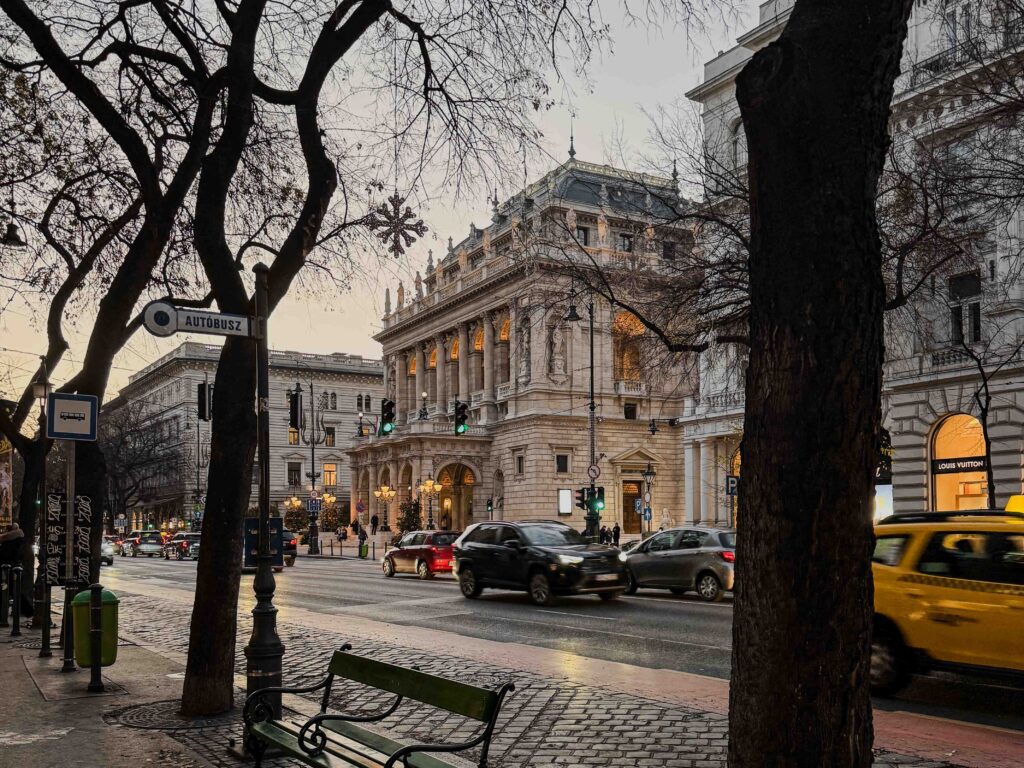
Photo by @norbertlepsik
The Hungarian Parliament Building anchors this period along the Danube. Its Neo-Gothic style draws from Western European references, yet its position and symmetry make it feel entirely tied to Budapest. It defines the riverfront without overwhelming it, creating one of the most recognizable views in the city. This era brought coherence. Streets aligned, façades followed a shared language, and the city gained a sense of order that still shapes how it is experienced today.
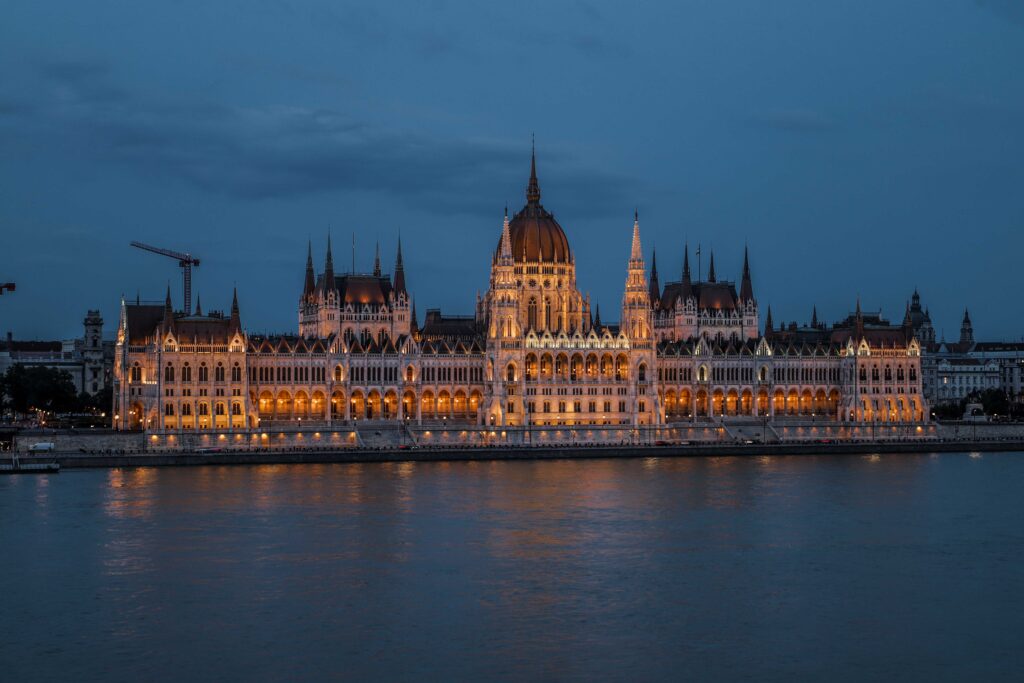
Photo by @norbertlepsik
Secession and a Search for Identity
By the early 20th century, Budapest began to move beyond simply adopting Western styles. A new direction appeared, one that looked for a more local expression while still remaining connected to broader European trends. Hungarian Art Nouveau, often associated with Ödön Lechner, introduced a more expressive approach. The Museum of Applied Arts is one of the clearest examples. Its ceramic tiles, curved forms, and decorative patterns create a façade that feels lighter and more detailed, with influences drawn from Hungarian folk art as well as from further east.
This style appears across the city in varying intensity. Sometimes it defines entire buildings, sometimes it is limited to rooftop details or ornamental elements above entrances. It rewards slower observation. You might pass it at first, then notice it later in reflection or in contrast to the more restrained buildings nearby. This period marks a shift in attitude. Instead of following established models, Budapest begins to adapt them, creating something that feels more specific to its own cultural context.
The Communist Era and Functional Simplicity
The mid 20th century introduced a very different layer. After World War II, reconstruction was driven by necessity, limited resources, and a new political system that favored function over ornament. Across parts of the city, especially outside the historic core, this period is visible in residential blocks and public buildings that prioritize efficiency. Prefabricated panel housing estates, known locally as panelházak, appear in districts further from the center, offering a uniform and practical solution to housing shortages.
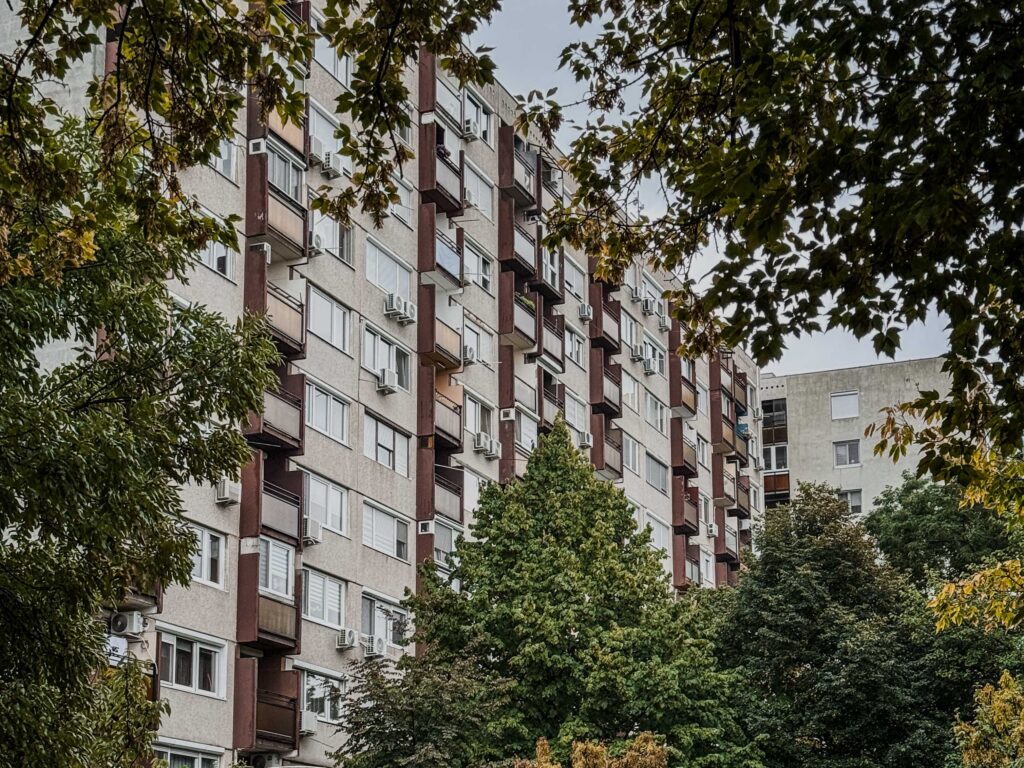
Photo by @norbertlepsik
Even within central areas, some gaps left by wartime destruction were filled with simpler, more restrained buildings. These structures rarely draw attention, but they play an important role in the city’s fabric. They reflect a period when architecture was less about representation and more about meeting immediate needs. While this layer is often seen as less appealing, it adds contrast. It shows how the city adapted under pressure, and how different priorities shaped its appearance at a certain moment in time.
Contemporary Additions and a Changing Skyline
In recent years, Budapest has started to introduce more contemporary architecture, carefully, and often with a sense of restraint compared to other capitals. The goal is not to redefine the skyline, but to extend it. Projects like the House of Music Hungary in City Park bring a more open and fluid design language into the city. Large glass surfaces, organic forms, and integration with green space create a different kind of presence, one that feels lighter and more connected to its surroundings.

Photo by @norbertlepsik
Nearby, the Hungarian National Museum remains a reference point for earlier classical architecture, highlighting the contrast between past and present within a relatively small area. New developments tend to work within existing scales, respecting sightlines and the overall rhythm of the city. This contemporary layer is still forming. It does not dominate, but it signals a gradual shift, showing how Budapest continues to evolve without losing its balance.
A City That Stays Layered
Budapest’s architecture is not defined by a single era or style. It is shaped by how these periods sit next to each other, sometimes in harmony, sometimes in quiet contrast. Medieval layouts, Ottoman spaces, imperial boulevards, decorative experiments, functional mid century structures, and contemporary additions all remain visible.
Walking through the city, you do not move from one chapter to another in a clear sequence. You move through overlaps. A historic façade next to a simpler one, a narrow street opening into a formal square, a quiet courtyard behind a busy avenue. Even a short crossing like Liberty Bridge becomes part of this experience, marking a shift in scale and perspective.
That is what keeps Budapest interesting over time. It does not simplify its story or hide its changes. It lets each layer remain, connected to the next, allowing you to piece it together gradually. And once you start noticing these transitions, every walk begins to feel slightly different from the last.